Renting vs Buying in Qatar 2026: Expat Cost Guide

Here is the short answer on renting versus buying in Qatar in 2026: renting is generally the more practical option if you are unsure how long you will stay, want to preserve your savings or need the flexibility to relocate.
Buying may suit long-term residents with stable finances, sufficient upfront cash and a specific property that is legally available for non-Qatari ownership. It may also appeal to buyers interested in property-linked residency.
There is no universal rule that buying becomes financially worthwhile after seven years. The real break-even point depends on the property price, comparable rent, mortgage terms, service charges, resale costs and how the property’s value changes.
Whether you are comparing a two-bedroom apartment in Lusail, an eligible villa or an apartment on The Pearl, the decision comes down to three things: how long you expect to stay, how much cash you can commit and whether you value flexibility or ownership more.
Renting vs buying in Qatar 2026: the quick answer
Renting generally requires less upfront cash and gives you more flexibility. You can change neighbourhoods, move closer to work or schools, downsize or leave Qatar without having to sell a property.
Buying creates the potential to build equity through mortgage-principal repayments and may provide property-linked residency benefits if the investment meets the required conditions. However, it also requires a substantial deposit, transaction costs, ongoing service charges and a longer-term commitment.
For someone on a two- or three-year employment package, renting will usually be the more practical option because of the lower commitment and easier exit.
For a long-term resident with stable income, adequate savings and a carefully selected property, buying may produce financial and lifestyle benefits over time.
Neither option automatically wins. The result depends on the specific property and the buyer’s circumstances.
Can expats buy property in Qatar?
Yes. Non-Qataris can own eligible property in designated ownership areas and may obtain long-term usufruct rights in other qualifying areas or developments.
Under Qatar’s legal framework, usufruct rights may extend for up to 99 years and can generally be renewed according to the applicable conditions.
Freehold ownership gives the purchaser registered ownership rights over the property. In an apartment development, this generally means ownership of the individual unit together with an associated interest in the building’s shared areas, rather than personal ownership of the entire plot of land.
Not every property within a large district is automatically available to foreign buyers. Before paying a reservation fee or deposit, confirm the specific development, plot and title through the official Aqarat ownership map and the Ministry of Justice’s Real Estate Registration Department.
Buying qualifying property may also make a non-Qatari owner eligible to apply for property-linked residency.
The main value thresholds currently used are:
- Property valued at QAR 730,000 or more may support an application for property-linked residency.
- Property valued at QAR 3.65 million or more may qualify for the higher tier of permanent-residency benefits, subject to official conditions and approval.
Residency is not automatically issued when a sale agreement is signed. The property, registration, valuation and applicant must satisfy the relevant requirements.
Freehold zones expats should know
Qatar updated its schedule of areas available for non-Qatari property ownership in 2026.
The listed ownership areas include:
- West Bay Lagoon–Legtaifiya, Zone 66
- The Pearl, Zone 66
- Al Khor Resort, Zone 74
- Al Dafna Administrative Area, Zone 60
- Al Dafna Administrative Area, Zone 61
- Onaiza Administrative Area, Zone 63
- Lusail, Zone 69
- Al Kharayej, Zone 69
- Jabal Thuaileb, Zone 69
- Simaisma Beach and Resort Project, Zone 70
The Pearl remains one of Qatar’s best-known foreign-ownership communities, offering apartments, townhouses, hospitality residences and marina-based living.
Lusail also contains several eligible developments, but buyers should not assume every property across the entire city is automatically available for non-Qatari ownership.
West Bay Lagoon–Legtaifiya is another established high-end ownership area.
Al Qassar should not be treated as a separate ownership zone unless the specific property appears within an eligible area on the official map.
Similarly, a standard villa in Al Waab should not be presented as an expatriate purchase option without first confirming that the specific development and title are available for non-Qatari ownership.
The real cost of renting in Qatar 2026
Rents vary substantially according to the neighbourhood, building, property size, furnishing, view, facilities and whether utilities are included.
The advertised rent may also be affected by rent-free months, promotional contracts and the number of post-dated cheques required.
Broad rental estimates should therefore be treated as sample asking prices rather than official market averages.
When comparing listings, look at:
- Exact neighbourhood and building
- Furnished or unfurnished condition
- Floor area
- Number of bathrooms
- Parking
- Facilities
- Utilities included
- Contract duration
- Rent-free incentives
- Agency commission
- Maintenance responsibilities
Areas such as The Pearl, Msheireb and prime sections of West Bay generally include premium rental options. Lusail contains both higher-end and more accessible developments, depending on the district and building.
Older buildings in central neighbourhoods may be more affordable, but rent still depends heavily on the property’s condition, facilities and exact location.
Use current listings from the same period and compare similar homes rather than relying only on a city-wide bedroom average.
Upfront and hidden renting costs
Security deposit
A security deposit equal to one month’s rent is common, but it is not a universal fixed amount.
The tenancy agreement should state how much is required, when it can be deducted and how it will be returned after the final inspection.
Agency commission
Some property agents charge the tenant approximately one month’s rent, while others use a fixed fee, percentage or landlord-paid model.
Confirm the commission and who is responsible for paying it before signing or making a reservation payment.
Kahramaa connection and deposit
Electricity and water arrangements differ between properties.
In some cases, the tenant registers the account and pays the applicable connection or security deposit. In others, utilities remain under the landlord, building operator or property manager.
Check the current Kahramaa requirements for the specific home rather than budgeting one standard deposit amount.
Utilities and internet
Monthly costs may include electricity, water, cooling charges and home internet.
Internet package prices vary according to the provider, speed, contract term and current promotion. District-cooling charges may also apply separately in some managed developments.
Post-dated cheques
Some landlords request several post-dated cheques covering the tenancy period. Others accept monthly transfers, standing instructions or different payment arrangements.
Confirm the schedule before signing so you understand the cash-flow requirements.
Renting generally provides a simpler exit than selling a property, but tenants must still comply with the notice period, settle final bills, complete the handover inspection and meet any reinstatement requirements in the lease.
The real cost of buying in Qatar 2026
Buying requires more than the advertised sale price.
Before committing, calculate the one-off transaction costs, financing expenses and ongoing ownership costs attached to the specific property.
Purchase and registration fees
Property price
Purchase prices vary significantly between completed units, resale properties, off-plan developments, hotel residences and different neighbourhoods.
Do not assume that every two-bedroom apartment on The Pearl or in Lusail sits within the same price bracket.
Compare properties using:
- Price per square metre
- Total floor area
- View and floor level
- Building age
- Service charges
- Parking
- Payment plan
- Completion status
- Rental potential
- Current occupancy
- Developer and building-management record
Registration and transfer charges
Title-registration and transfer charges apply when ownership is recorded.
The blanket estimate of 2–4% should not be used as a government registration rate in Qatar. Confirm the current fee, calculation method and required documents through the Ministry of Justice, SAK or the authorised property-registration process for the specific transaction.
Agency and brokerage fees
Brokerage arrangements differ between transactions.
The buyer, seller or developer may cover the fee depending on the agreement. Confirm the percentage or fixed amount in writing before proceeding.
Mortgage arrangement costs
Mortgage lenders may charge valuation, processing and administrative fees.
Before paying a non-refundable property deposit, obtain written mortgage pre-approval and request details covering:
- Required down payment
- Interest or profit rate
- Effective borrowing cost
- Valuation fee
- Processing fee
- Insurance requirements
- Maximum loan term
- Early-settlement charges
- Total expected repayment
Non-Qatari buyers normally need to provide a substantial contribution from their own funds, but the required percentage depends on the bank, applicant, income, age, residency status, loan term and property valuation.
Do not assume every expatriate buyer will qualify with a 20–30% down payment.
Ongoing ownership costs
Service charges
Apartments and managed communities normally charge annual fees for common-area maintenance, security, facilities, landscaping, building management and other shared services.
Service charges vary significantly by building and are often calculated according to the unit’s floor area.
Before purchasing, request:
- The current service-charge rate
- Recent service-charge statements
- Any unpaid amount attached to the unit
- Details of the reserve or sinking fund
- Planned major works
- Possible special assessments
- A clear list of what the charge covers
Do not rely on one general annual figure for The Pearl or Lusail.
Maintenance and repairs
Owners are generally responsible for repairs inside their unit, although responsibility may be divided between the owner, building operator and owners’ association.
Budget for AC repairs, appliances, plumbing, water heaters, fixtures and periodic refurbishment.
Utilities
Owners still pay electricity, water, internet and any applicable cooling charges.
Mortgage interest
Only the principal portion of a mortgage repayment reduces the outstanding loan and builds the owner’s stake in the property.
Interest, insurance, processing charges, service charges and maintenance costs do not build equity.
The property’s value may also rise or fall, so the owner’s equity is not guaranteed to increase simply because monthly payments are being made.
Renting vs buying: a side-by-side money comparison
Here is the core trade-off using a comparable apartment as the example.
Upfront cash to rent
A tenant may need to pay the security deposit, agency fee where applicable, utility connection costs and the first rent payment.
The amount depends on the lease and payment schedule.
Upfront cash to buy
A buyer may need to pay the down payment, registration costs, valuation fees, bank charges, brokerage fees and other transaction expenses.
This can require a substantial six-figure QAR commitment depending on the property.
Monthly outlay when renting
The tenant pays rent, utilities and any maintenance or service obligations assigned under the lease.
Rent may remain fixed during the contract but can change when the tenancy is renewed.
Monthly outlay when buying
The owner may pay the mortgage, service charges, utilities, insurance and maintenance.
The monthly cost can be higher or lower than the rent for a comparable property depending on the purchase price and loan terms.
Flexibility
Renting generally provides greater flexibility when changing neighbourhoods, relocating for work or leaving Qatar.
The tenant must still comply with the contract’s notice and handover requirements.
Equity
Buying creates the opportunity to build equity through principal repayments and potential property-value growth.
However, price declines, selling costs and ownership expenses can reduce or eliminate that advantage.
When renting makes more sense
Renting may be more suitable when:
- You are on a fixed employment contract.
- You are uncertain how long you will stay in Qatar.
- You may need to relocate for work, schools or family reasons.
- You want to preserve cash for other investments or emergencies.
- You do not want exposure to property-price movements.
- You prefer not to manage service charges, repairs and resale.
- You want a simpler exit when leaving the country.
When buying makes more sense
Buying may be more suitable when:
- You expect to stay in Qatar for the long term.
- You have sufficient savings after paying the deposit and transaction costs.
- You have an emergency fund separate from the property purchase.
- You have confirmed that the specific property is available for non-Qatari ownership.
- You are comfortable with service charges, repairs and market fluctuations.
- You want a stable long-term home.
- You are interested in property-linked residency and meet the required conditions.
- The cost of buying compares favourably with renting a similar property.
A long expected stay can improve the case for buying, but there is no fixed number of years that guarantees a better financial outcome.
How to work out your personal break-even
The most reliable way to decide is to model the specific home you are considering.
Step 1: Calculate the upfront buying costs
Include:
- Down payment
- Registration and transfer charges
- Valuation fees
- Mortgage-processing fees
- Brokerage costs
- Any legal or administrative expenses
The down payment is not entirely a cost because it becomes part of your ownership stake, but it is money that becomes tied up in the property.
Step 2: Calculate unrecoverable ownership costs
Include:
- Mortgage interest
- Service charges
- Maintenance
- Insurance
- Registration and transaction expenses
- Selling costs
- Possible special assessments
Do not count the full mortgage payment as a cost because the principal portion reduces the outstanding debt.
Step 3: Compare with renting
Calculate the rent for a genuinely comparable home, including:
- Annual rent
- Agency fees
- Utilities
- Expected rent increases
- Any included maintenance or facilities
Step 4: Include the opportunity cost
Estimate what your down payment and other upfront cash could have earned if invested elsewhere.
This can materially change the result.
Step 5: Estimate the exit value
Calculate:
- The possible future sale price
- Remaining mortgage balance
- Brokerage and sale expenses
- Any outstanding service charges
- Net proceeds after selling
Run at least three scenarios:
- No property-price growth
- Moderate growth
- A decline in value
Step 6: Compare the result with your expected stay
Buying may be financially stronger if the rent saved and net property value exceed all unrecoverable ownership costs and the investment return forgone on your upfront cash.
Depending on the assumptions, the break-even may occur in fewer than seven years, after more than ten years or not at all.
That is why the decision should be based on a specific property and financing offer rather than one general rule for all expatriates.
FAQs
Is it better to rent or buy in Qatar in 2026?
There is no single answer for every resident.
Renting generally suits people with shorter or uncertain stays, limited upfront cash or a strong need for flexibility.
Buying may suit long-term residents who have adequate savings, accept the market risk and find an eligible property whose ownership costs compare favourably with renting.
Can foreigners own property in Qatar?
Yes. Non-Qataris can own eligible property in the areas listed under Qatar’s current ownership framework and may obtain long-term usufruct rights in other qualifying areas or developments.
Always verify the specific property through Aqarat and the Ministry of Justice before making a payment.
What upfront costs come with buying in Qatar?
Buyers should budget for the down payment, registration and transfer charges, valuation, bank processing, brokerage where applicable and other administrative expenses.
The exact amount depends on the property and financing agreement. Do not use a blanket 2–4% government registration estimate.
Does buying property give me residency in Qatar?
Purchasing qualifying property valued at QAR 730,000 or more may allow a non-Qatari owner to apply for property-linked residency.
Property valued at QAR 3.65 million or more may qualify for the higher tier of permanent-residency benefits, subject to official requirements and approval.
Residency is not automatically granted simply because a purchase contract has been signed.
What are the hidden costs of renting in Qatar?
In addition to monthly rent, tenants may need to budget for a security deposit, agency commission, utility connection costs, internet, cooling charges and moving expenses.
The exact costs depend on the lease and property. Some landlords may also require several post-dated cheques.
How long should I plan to stay before buying is worth it?
There is no fixed minimum period.
Calculate the break-even using the specific purchase price, comparable rent, mortgage interest, service charges, maintenance, selling costs and possible property-value change.
A longer stay generally gives the buyer more time to spread transaction costs, but it does not guarantee that buying will outperform renting.
Ready to run your own numbers? Browse the latest properties for sale and rent on Qatar Living and compare real listings before you decide.
---
About Qatar Living :
Since 2005, Qatar Living has been the trusted destination for everything Qatar. As the country's largest online community and marketplace, Qatar Living connects people with opportunities through jobs, property, vehicles, services, classifieds, events, local insights, and breaking news. Trusted by residents, newcomers, visitors, and businesses alike, Qatar Living brings Qatar together in one place.
Follow Qatar Living for daily updates:
Instagram - @qatarliving
X - @qatarliving
Facebook - Qatar Living
YouTube - qatarlivingofficial
Up Next

Qatar Property Sales Reach QAR1.69bn in June
Qatar's real estate market saw property sales reach QAR1.69bn in June, with Doha, Al Rayyan, and Al Wakrah leading in transaction values.
Jul 21,2026
Villa Rental in Qatar: Furnished vs Unfurnished Guide
Villa rental in Qatar made simple: furnished vs unfurnished, monthly QAR costs, top neighbourhoods, contracts and bills explained for expats.
Jul 12,2026
TAAMEER Development Group Launches “Valencia” in Lusail Boulevard, Advancing Its Vision to Create Communities That Deliver Lasting Value
TAAMEER Development Group launches Valencia in Lusail Boulevard, offering modern residential units with premium amenities and lasting community value.
Jul 6,2026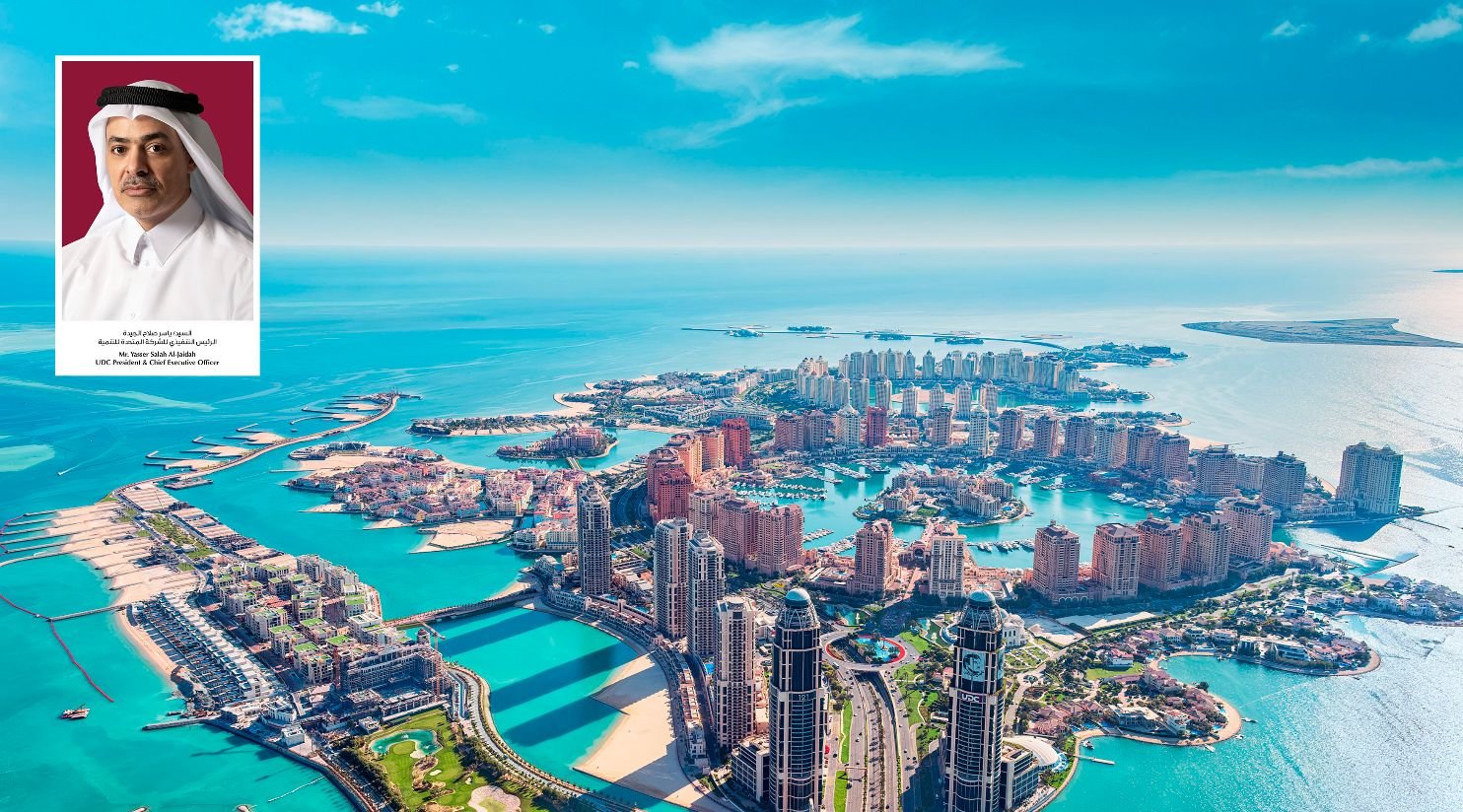
United Development Company Reduces Master Community Service Charges for 2026 Across The Pearl and Gewan Islands
United Development Company reduces 2026 service charges for The Pearl and Gewan Islands, enhancing value and efficiency for owners and investors.
Jul 5,2026