Bringing Medication Into Qatar: Rules & Permits

Last reviewed: 22 November 2026
Planning to travel with medicine? Bringing medication into Qatar is straightforward for most ordinary prescription tablets—you simply carry them with a copy of your prescription. But if your medicine contains a narcotic or psychotropic (controlled) substance—think strong painkillers, and certain sleep, anxiety or ADHD medicines—you should apply in advance for an electronic permit from the Ministry of Public Health's Pharmacy and Drug Control Department, or at the very least declare the medicine on arrival with the right paperwork. Here's exactly how to do it, in the order you'll need it.
The short answer: what you need to know before you fly
Qatar regulates controlled medicines strictly under Law No. 9 of 1987 on narcotic drugs and dangerous psychotropic substances. Carrying such medicines for genuine personal medical use is allowed, but only under the law's conditions—which means a valid prescription and, ideally, a prior permit.
If your medication is a normal, non-controlled prescription (routine blood-pressure or cholesterol tablets, for example), you don't need a special permit. Keep the medicine in its original packaging and carry a copy of your prescription in case Customs asks. If your medicine is controlled, read on—this is where the permit matters.
Step 1: Check whether your medicine is controlled
The first thing to establish is whether your medicine falls into the narcotic or psychotropic category. These are the ones that need extra care at the border. Common examples include strong opioid painkillers, certain sedatives, some anxiety and sleep medications, and some stimulants prescribed for ADHD.
If you're not sure, ask your prescribing doctor or pharmacist at home for the scientific (generic) name of the active ingredient and whether it's classed as a controlled substance. That scientific name is exactly what Qatar's authorities will look for on your documents.
Step 2: Confirm who needs a permit
Any traveller carrying narcotic or psychotropic medicines for personal use may apply for a prior electronic permit to bring them into—or take them out of—Qatar. This applies to residents and visitors alike.
Applying in advance is the safest route. If you don't apply beforehand, you're not automatically barred, but you must declare the medicine at the port of entry and present your prescription and medical report there. Getting the permit first simply removes the uncertainty.
Step 3: Gather your documents
Before you start the application, prepare the following. Having everything ready makes the online submission quick:
- A valid prescription or detailed medical report approved by the healthcare facility that treated you. It must have been issued within the previous six months.
- The document must clearly state: the patient's identity, the diagnosis or treatment plan, the medicine's scientific name, the pharmaceutical form (tablet, injection, etc.), the dose, the quantity, and the treatment duration.
- It must be signed and stamped or otherwise formally recognised by the issuing healthcare facility.
- Language: the prescription or medical report should be in Arabic or English. If yours is in another language, arrange an approved translation before you travel.
- A copy of your passport or Qatar ID.
- A signed undertaking confirming the medicine is solely for your personal use.
Step 4: Apply through the Controlled Medicines System
The Ministry of Public Health runs an electronic Controlled Medicines System for Travellers, which lets you apply for a permit, track its status, and receive the issued permit electronically. Here's how to use it:
- Access the Controlled Medicines System via Qatar's National Authentication System (the same login used across many government e-services).
- Complete the online application form with your travel and medicine details.
- Upload the required documents—above all your valid prescription or medical report.
- Submit, then track the application and download your permit from within the system once it's issued.
The service is online, so you can apply at any time; if you hit a technical snag, the MOPH user guide for the Controlled Medicines System walks through each screen, and you can contact the Pharmacy and Drug Control Department for further support.
Step 5: Know the fees and processing time
MOPH advises submitting your application at least five working days before your planned entry to Qatar. Build that buffer into your plans—don't leave it to the day before your flight.
On fees: the official MOPH sources for this traveller service don't state an application or permit fee. Because we never guess a figure, we won't quote one here. To confirm whether any charge applies, check directly with the Pharmacy and Drug Control Department before travelling.
Step 6: Understand how much you can bring
This is where travellers most need to pay attention, because the official MOPH guidance sets out differing figures across its guidelines:
- One MOPH traveller guideline states that narcotic and psychoactive medicines may be allowed for up to 30 days or the duration of your stay, whichever is shorter.
- Another MOPH traveller guideline states a maximum of 10 days for narcotic medicines and 60 days for psychotropic medicines.
The official guidance differs, so the safest approach is to carry only what you genuinely need for your trip, keep the quantity consistent with the dose and duration written on your prescription, and confirm the current limit for your specific medicine with the Pharmacy and Drug Control Department before you fly. Note too that the medicine must remain valid (in date) for the duration of your stay.
Step 7: What happens at the airport
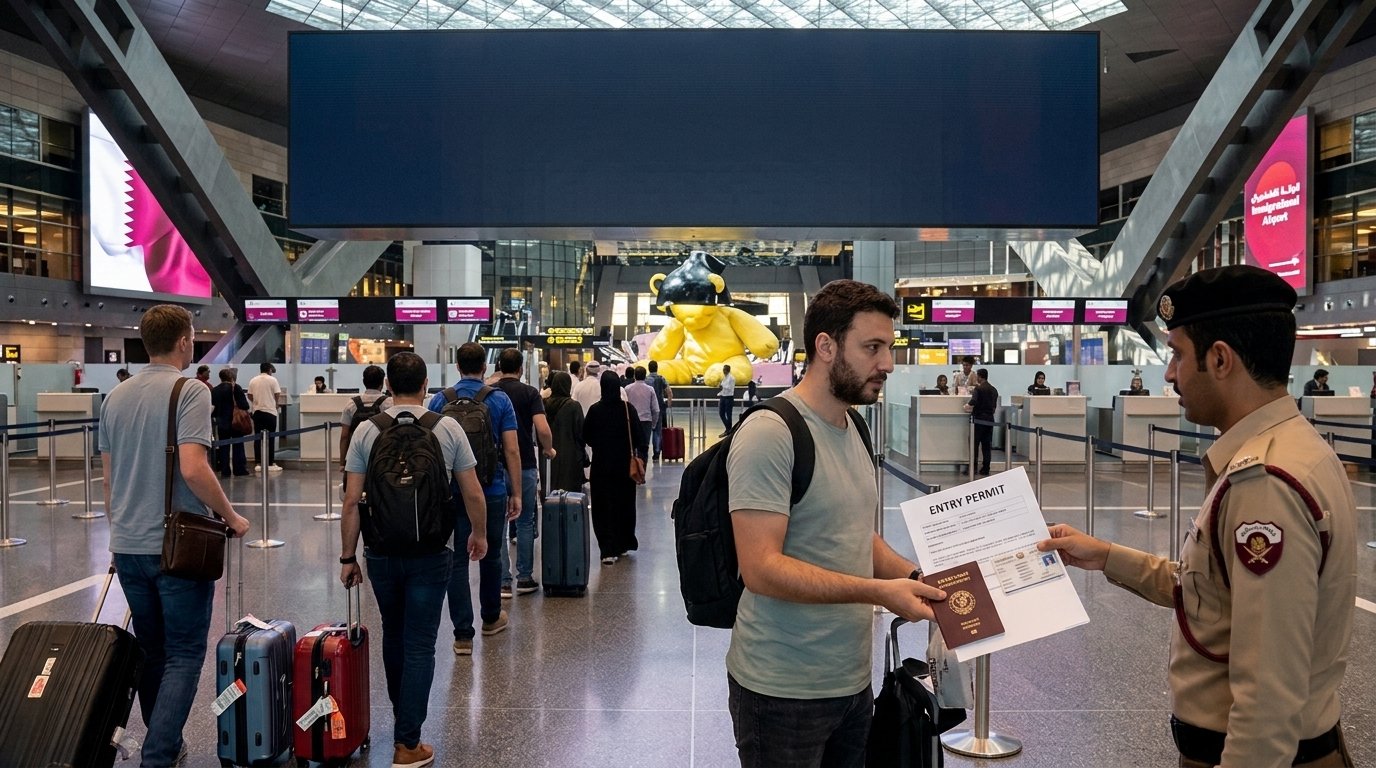
When you arrive at Hamad International Airport, carry your medicines in your hand luggage in their original packaging, together with your prescription and permit (if you obtained one).
If you did not obtain prior approval, you must declare any narcotic or psychotropic medicines at the port of entry and present your prescription and medical report to Customs. Controlled medicines identified by Customs require MOPH clearance or a valid permit before they can be released, so declaring them openly and having your paperwork ready is essential. Never attempt to carry controlled medicines undeclared.
Sorting out your move to Qatar? Browse Qatar Living's guides to residency, QID renewal, and other essential procedures in our legal and government-services hub.
FAQs
Do I need a permit for ordinary prescription medicines?
The official MOPH traveller sources set out detailed procedures for narcotic and psychotropic (controlled) medicines but don't describe a separate permit, fee or deadline for ordinary prescription medicines. For non-controlled prescriptions, carry the medicine in its original packaging with a copy of your prescription. If you're unsure whether your medicine is controlled, check with the Pharmacy and Drug Control Department.
How far in advance should I apply?
MOPH advises submitting your controlled-medicine application at least five working days before your planned entry to Qatar. Apply as early as you can to allow for any follow-up.
How recent must my prescription be?
Your prescription or detailed medical report must have been issued within the previous six months, be in Arabic or English, and be signed and stamped by the treating healthcare facility.
Is there a fee for the permit?
The official MOPH sources cited here don't state an application or permit fee. Contact the Pharmacy and Drug Control Department directly if you need certainty.
What if I didn't apply before travelling?
You must declare your narcotic or psychotropic medicines at Qatar's port of entry and present your prescription and medical report. Controlled medicines flagged by Customs require MOPH clearance or a valid permit before release.
How many days' supply can I bring?
Official MOPH guidelines differ—one allows up to 30 days or the length of your stay (whichever is shorter), while another sets 10 days for narcotics and 60 days for psychotropics. Carry only what your prescription supports and confirm the current limit for your medicine with MOPH before you fly.
Official sources
- Ministry of Public Health — Guideline of Controlled Drugs for Travellers
- Ministry of Public Health — Controlled Medicines System for Travellers
- Ministry of Public Health — Traveller Guidelines (English)
- Ministry of Public Health — Controlled Medicines System User Guide
- Ministry of Public Health — Pharmacy and Drug Control Department
- Al Meezan — Law No. 9 of 1987 on Narcotic Drugs and Dangerous Psychotropic Substances
This guide is general information, not legal advice. Rules and fees can change — always confirm with the official sources linked above before you act.
Stay updated with the latest news, events, sports updates, business insights, real estate and lifestyle stories on Qatar Living — the leading online platform for residents, expats, and visitors in Qatar.
Follow Qatar Living for daily updates:
- Instagram - @qatarliving
- X - @qatarliving
- Facebook - Qatar Living
- YouTube - qatarlivingofficial
Up Next

How to File a Labour Complaint in Qatar: Guide
How to file a labour complaint in Qatar step by step — documents, the MOL process, deadlines and how to track your complaint online.
Nov 22,2026
Parking Violations & Towed Cars in Qatar: How to Pay
Got a parking fine or towed car in Qatar? Here's how to check, pay and release your vehicle via MOI, Metrash and impound — fees and deadlines explained.
Nov 22,2026
Managing Family Services on Metrash as a Sponsor
Step-by-step guide to managing your family's services on Metrash as a sponsor in Qatar — eligibility, documents, how to apply and fees.
Nov 22,2026
How to Register & Activate Metrash in Qatar
Register and activate the Metrash app in Qatar: who can apply, documents needed, how to subscribe via MOI, fees and 24-hour activation.
Nov 22,2026