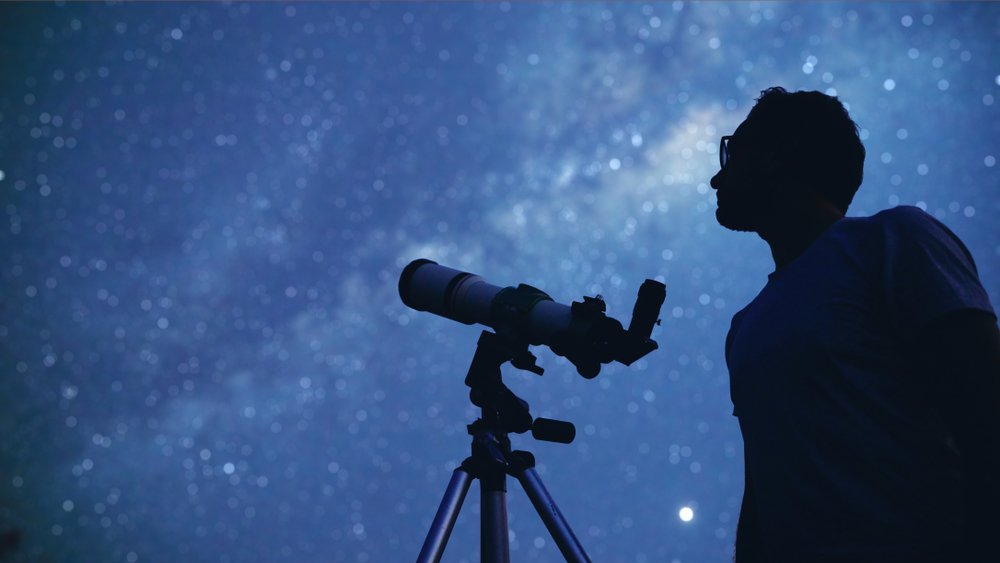
Do you know about Qatar's natural calendar written in the sky?

For generations, Qatar’s night sky has served as a natural calendar, guiding people through the rhythms of heat, rain, and cooler weather. Long before modern forecasting, the rising and setting of key stars offered reliable signals of seasonal change, shaping expectations for agriculture, travel, and daily life.
Suhail (Canopus)
At the centre of this traditional system is Suhail, the second-brightest star in the night sky. Its annual appearance over Qatar, typically around August 24, marks a key turning point in the year. Rising low on the southern horizon, Suhail signals the gradual retreat of the most intense summer heat.
Over the following 52 days, nights begin to cool while daytime temperatures slowly ease. In regional folklore, its arrival is also associated with an increased likelihood of rainfall as conditions shift away from peak summer.
Suhail also marks the beginning of the broader Suhail year, a traditional cycle spanning 365 to 366 days, which tracks seasonal transitions through a sequence of observed celestial changes.
Stars of the Suhail Year
The Suhail year is divided into four main traditional phases — Al-Murabba’iyah, Al-Wasmi, Al-Safri and Al-Kanna — each representing a distinct stage in the seasonal cycle.
These phases reflect the progression from cooling temperatures to the main rainy period, followed by transitional conditions and a return to rising heat. While well-established in regional tradition, these periods are not tied to fixed modern calendar dates, instead unfolding in alignment with observed star patterns.
Thuraya (Pleiades)
Thuraya, the Arabic name for the Pleiades star cluster, holds an important place in classical Arab astronomical traditions. It is widely referenced in ‘anwa’ systems, where stars are used to track rainfall patterns and seasonal shifts.
In broader Arab lore, the movement of Thuraya — particularly its setting and reappearance — is associated with transitions between wetter and drier periods. While its significance is well documented across the region, interpretations of its timing and impact vary, and it is best understood as a general seasonal indicator rather than a fixed calendar marker in Qatar.
Al-Sarfa (Al Sarfah)
Al-Sarfa is traditionally linked to the closing phase of the Suhail cycle. Highlighted in local observations, the star becomes especially prominent over Qatar during April and May, a period that coincides with the transition toward hotter pre-summer conditions.
Its visibility is widely regarded as a sign that the cooler and milder phases of the year are drawing to a close, marking a shift toward rising temperatures.
A Living Tradition
Together, these celestial markers form a system that reflects a deep connection between the sky and everyday life. Rather than functioning as a rigid calendar, this traditional framework operates as a sequence of natural indicators, helping communities interpret gradual environmental changes across the year.
While modern meteorology now provides precise forecasts, these star-based traditions remain an important part of Qatar’s cultural heritage — a reminder of how earlier generations read the skies to understand the world around them.
---
Stay updated with the latest news, events, sports updates, business insights, real estate and lifestyle stories on Qatar Living - the leading online platform for residents, expats, and visitors in Qatar.
Follow Qatar Living for daily updates:
Instagram - @qatarliving
X - @qatarliving
Facebook - Qatar Living
YouTube - qatarlivingofficial
Up Next
Kahramaa enhances digital fault reporting to boost efficiency
Kahramaa enhances digital services with mobile app, WhatsApp, and IVR systems to ensure faster fault reporting, real-time tracking, and improved customer service across Qatar.
Apr 14,2026
Lulu Hypermarket Qatar participates in Earth Hour, reinforcing commitment to sustainability
Lulu Hypermarket Qatar joins Earth Hour to emphasize sustainability commitment and energy conservation efforts.
Mar 29,2026
Social events can now be held in open spaces, says Ministry of Interior
Ministry of Interior allows social events in open spaces starting March 25. Follow regulations for safe gatherings. Stay informed with Qatar Living.
Mar 26,2026