How the Father Amir Opened a New Chapter for Women in Qatar
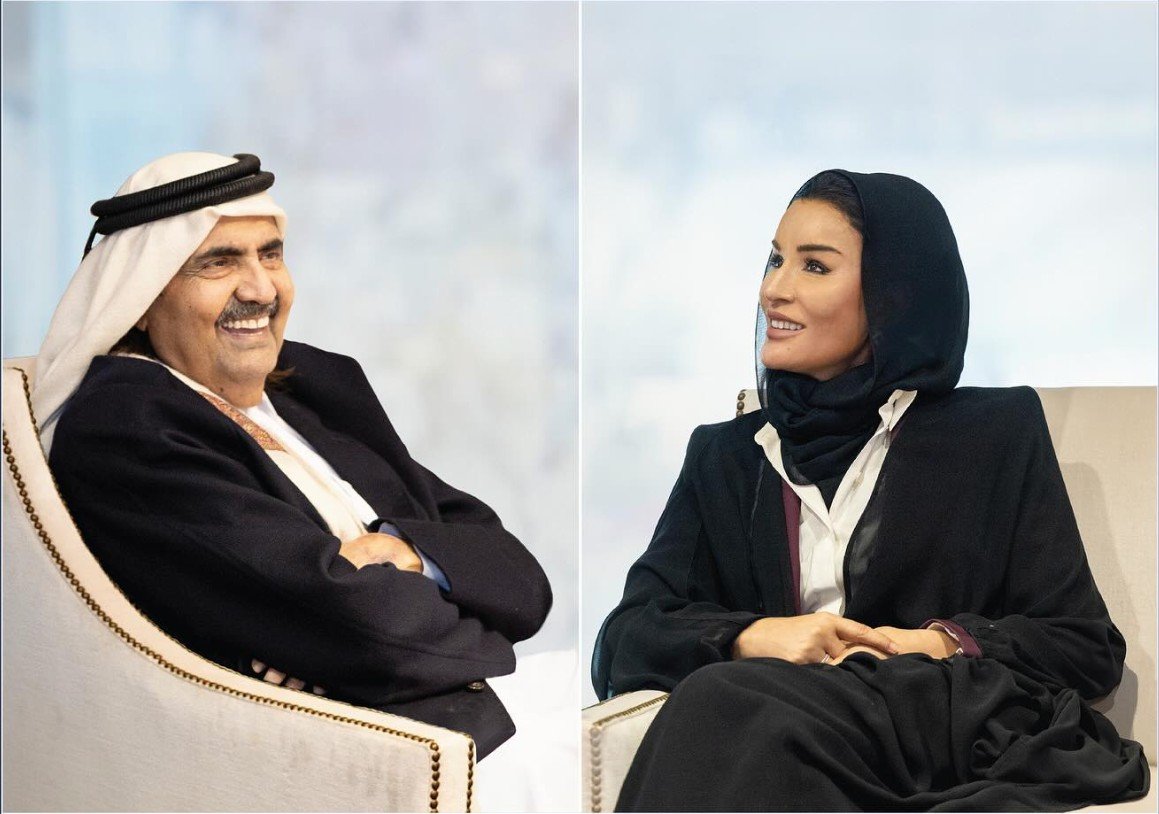
During the reign of HH the Father Amir Sheikh Hamad bin Khalifa Al Thani, Qatar introduced reforms and institutions that widened opportunities for women in education, public service, government and political participation.
The progress did not come through a single policy. It developed through a wider national programme that placed education, public participation and human development at the centre of Qatar’s transformation.
Much of this work was also advanced alongside HH Sheikha Moza bint Nasser, whose leadership in education and social development played a central role in creating new opportunities for women and girls.
Women participated in Qatar’s first municipal elections
One of the most important developments came in 1999, when Qatar held its first elections for the Central Municipal Council through direct representation.
Both men and women participated in the elections, giving Qatari women the opportunity to vote and stand as candidates.
The elections, held on March 8, 1999, represented an important step in expanding women’s participation in public decision-making and civic life.
This development was particularly significant because it established women as active participants in Qatar’s emerging electoral process rather than observers outside it.
Qatar appointed its first female minister
Another major milestone came in May 2003, when Sheikha Ahmed Al Mahmoud was appointed Minister of Education.
She became the first woman in Qatar to hold a ministerial position. An official Qatar government source also identifies her as the first woman in the Gulf to take up this ministerial education portfolio.
Her appointment demonstrated that women could serve at the highest levels of government and contribute directly to shaping national policy.
It also sent a wider signal that women’s leadership was becoming increasingly recognised within Qatar’s institutions.
Women entered senior academic leadership
The same period saw women assume senior positions in higher education.
Dr. Sheikha Abdulla Al Misnad became the first woman to serve as president of Qatar University, placing a woman at the head of one of the country’s most important national institutions.
Her appointment reinforced the idea that women were not only beneficiaries of educational development but could also lead universities, influence academic policy and help shape future generations.
Education became a foundation for women’s advancement
One of the most consequential decisions of HH the Father Amir Sheikh Hamad’s reign was the creation of Qatar Foundation in 1995.
Qatar Foundation emerged from a shared vision between HH the Father Amir and HH Sheikha Moza bint Nasser to support the country’s development through education, science, research and community advancement.
HH Sheikha Moza envisioned and founded the organisation with the support of HH the Father Amir, creating an institution that would later bring international universities, research centres and educational opportunities to Qatar.
These opportunities were open to women as well as men, allowing female students to pursue advanced studies in fields including medicine, engineering, science, journalism, law, public policy and international affairs.
Over time, Education City became an important pathway through which women could study at globally recognised institutions without having to leave Qatar.
Constitutional reforms strengthened public rights
During HH the Father Amir Sheikh Hamad’s reign, Qatar also developed its Permanent Constitution.
In 1999, he appointed a committee to draft the constitution. The document was approved through a public referendum in 2003 and ratified in 2004.
The Constitution established broader principles related to public participation, rights and freedoms for citizens.
While it did not remove every legal or social barrier affecting women, it provided an important national framework within which women’s education, employment and participation in public institutions continued to expand.
Women became more visible in public life
The changes introduced during HH the Father Amir Sheikh Hamad’s reign helped increase the visibility of Qatari women across government, education, healthcare, research and national institutions.
Women increasingly became ministers, university leaders, professionals, researchers, educators and public representatives.
This development was not the result of one individual alone. It reflected the combined work of national institutions, female leaders and reformers, especially HH Sheikha Moza bint Nasser, whose work in education and social development was central to the transformation.
However, the political and institutional support provided during Sheikh Hamad’s leadership created the environment in which many of these opportunities could grow.
Opening doors for future generations
The most accurate way to describe HH the Father Amir Sheikh Hamad’s contribution is that his leadership opened and expanded institutional pathways for women.
Women gained greater access to education, electoral participation, senior government positions and leadership roles in national institutions.
These developments did not represent complete equality, and further progress remained necessary. But they marked a significant change in the place of women within Qatar’s public and professional life.
By supporting education, political participation and women’s appointment to senior positions, HH the Father Amir helped create new possibilities for generations of women in Qatar.
---
About Qatar Living :
Since 2005, Qatar Living has been the trusted destination for everything Qatar. As the country's largest online community and marketplace, Qatar Living connects people with opportunities through jobs, property, vehicles, services, classifieds, events, local insights, and breaking news. Trusted by residents, newcomers, visitors, and businesses alike, Qatar Living brings Qatar together in one place.
Follow Qatar Living for daily updates:
Instagram - @qatarliving
X - @qatarliving
Facebook - Qatar Living
YouTube - qatarlivingofficial
Up Next

Ministry of Commerce and Industry confirms online services will continue during national mourning
The Ministry of Commerce and Industry confirms online services will remain available during Qatar's national mourning, ensuring uninterrupted transactions.
Jul 13,2026
QATAR EXTRADITES WANTED INDIVIDUAL TO US IN JOINT SECURITY OPERATION
Qatar extradites wanted individual to US in joint security operation, strengthening international cooperation against transnational crime.
Jul 11,2026
Qatar Reminds Motorists to Pay Traffic Fines Early to Avoid Legal Action and Receive 50% Discount
Qatar motorists urged to pay traffic fines early to avoid legal action and get a 50% discount on selected violations. Settle fines online now.
Jul 10,2026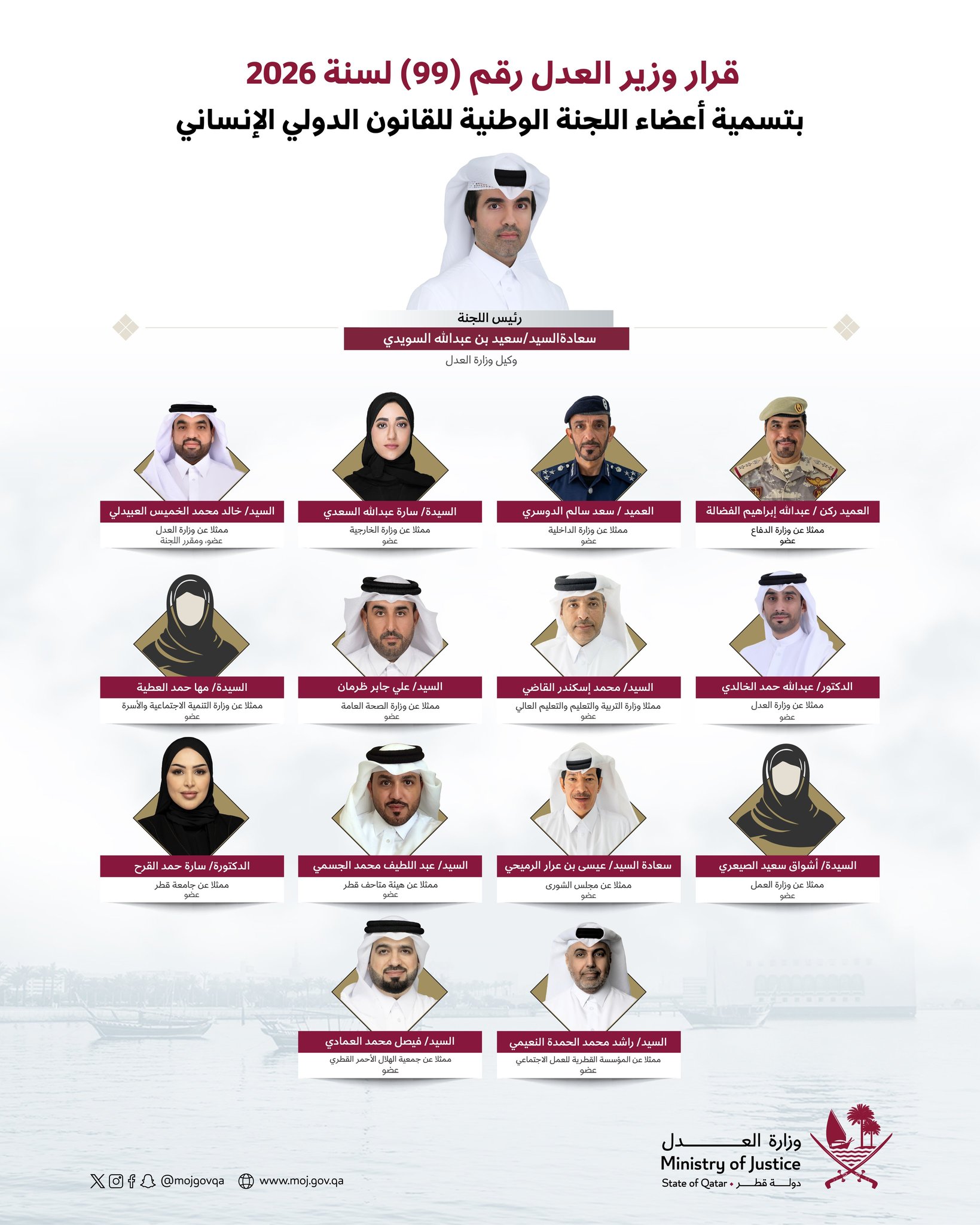
HE Minister of Justice Appoints Members of National Committee for International Humanitarian Law
Qatar appoints members to the National Committee for International Humanitarian Law to strengthen compliance with humanitarian principles and obligations.
Jul 6,2026