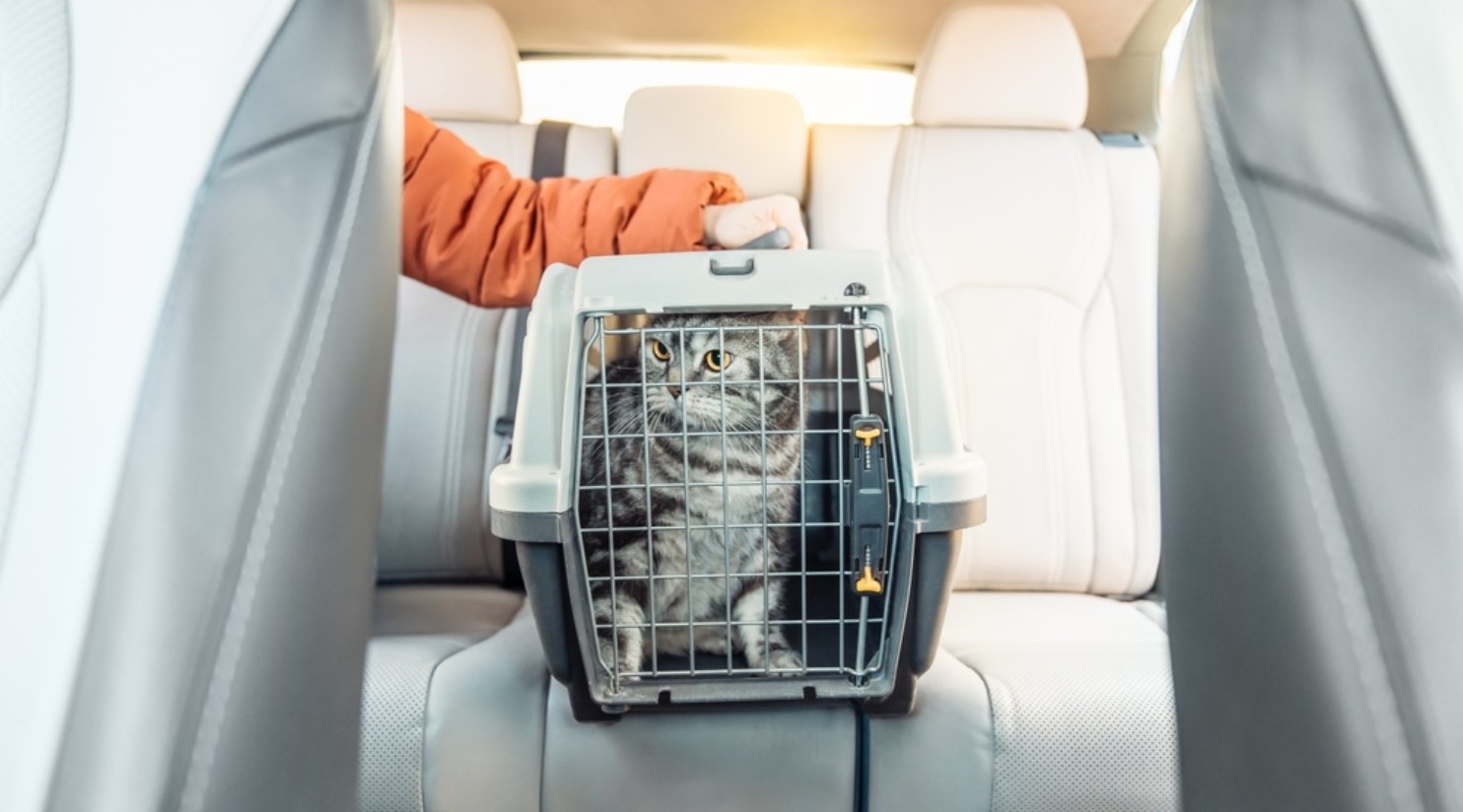
Bringing your pet to Qatar usually comes down to five things completed in the correct sequence: an electronic microchip, valid vaccinations, any required rabies-antibody test, a Qatar import permit and an official health certificate that meets both government and airline requirements.
Get these right and a properly documented cat or dog will normally proceed through veterinary and customs clearance without a predetermined quarantine period. However, animals are held at Hamad International Airport’s dedicated facility while the entry inspection and customs procedures are completed. Release on the same day is possible but should not be guaranteed.
One complication is that Qatar’s publicly available government pages are not fully consistent. An older general Hukoomi guide says pets must be over four months old and vaccinated at least 30 days before travel, while the visitor-specific permit service requires pets to be over seven months old, complete a rabies-antibody test and wait 90 days from the blood-sample date before travelling. Check the requirements generated for your specific application before booking the flight.
This guide walks you through the main steps, realistic costs, restricted dog breeds and what to expect when your pet arrives in Doha. Requirements can change, so confirm the final checklist through the Ministry of Municipality’s cat-and-dog import service and your airline before committing to travel.
Bringing your pet to Qatar: the quick answer
For a standard cat or dog relocation, you will generally need:
- An electronic microchip. A 15-digit ISO-compatible chip is the safest option for international travel because it can be read by commonly used scanners.
- A valid rabies vaccination linked to the same microchip number.
- Current core vaccinations for the animal.
- A rabies-antibody titre test where required by the Qatar import-permit route.
- An import permit issued through Qatar’s official veterinary-import service.
- An official veterinary health certificate issued close to departure and endorsed where required by the government veterinary authority in the country of origin.
- An airline-approved travel crate and confirmed live-animal booking.
Qatar’s general government guidance says vaccinations should have been administered at least 30 days before travel. The separate visitor-permit service currently requires a rabies-antibody test and a 90-day wait after the blood sample is taken. The permit is valid for one month, so it should not be obtained too early.
Allow at least three to four months when a titre test and 90-day waiting period apply. A four-to-six-week plan may only be realistic where the competent authority confirms that no extended waiting period applies and all vaccinations and documents are already current.
Which pets can enter Qatar and which breeds cannot?
Domestic cats and dogs can be imported using the standard pet-import process. Birds, exotic pets, wildlife and other animals may require different veterinary, environmental or CITES approvals and should not be treated as following the same rules.
Qatar’s published government pet guide currently lists the following dog breeds as prohibited from entry:
- American Staffordshire Terrier
- Boerboel
- Boston Terrier
- Boxer
- Bull Terrier
- Bulldog
- Chinese Shar-Pei
- Doberman
- Great Dane
- Japanese Akita
- Neapolitan Mastiff
- Afghan Hound
- Rottweiler
- Staffordshire Bull Terrier
The original list naming Japanese Tosa, Dogo Argentino and Fila Brasileiro does not match the dog-import list currently published by Hukoomi. Pit bull-type dogs may still be affected by Qatar’s wider dangerous-animal framework, so mixed breeds or dogs with uncertain records should be checked directly before travel.
The visitor-import service also states that large and dangerous breeds may require permission from the Ministry of Interior. Airline restrictions are separate: an airline may refuse a breed even where the government would otherwise consider an import application.
There is no clearly published, current limit on the number of ordinary pets that every resident may import. Anyone relocating several animals should request written confirmation before making flight arrangements.
Step 1: Microchip your cat or dog
Your pet must have an electronic microchip, and the number must match every supporting record used during the import process. Qatar’s visitor service expressly requires dogs and cats to be microchipped.
Use a 15-digit ISO 11784/11785-compatible microchip wherever possible. Qatar’s public government summary does not specify the ISO standard, but an internationally compatible chip reduces the risk of the airport inspector being unable to scan it.
The safest sequence is:
- Implant and scan the microchip.
- Record the full chip number.
- Administer or update the rabies vaccine.
- Complete the titre test where required.
- Use the same number on the permit, health certificate and airline paperwork.
If your pet’s current rabies vaccination predates the microchip, ask the Qatar veterinary authority or relocation vet whether the animal must be revaccinated. Do not assume that bringing your own scanner will automatically resolve a non-compatible chip.
Step 2: Vaccinations and rabies titre test
The rabies vaccination is central to the application. Qatar’s general guidance says the pet must be vaccinated at least 30 days before travel, while the visitor-specific service states that the vaccination must remain valid when the animal enters Qatar.
The original article incorrectly suggests that the traveller’s origin country decides whether a rabies titre test is needed. The test is determined by Qatar’s current import conditions and the particular application route.
Qatar’s visitor-permit service currently requires:
- A rabies-antibody blood test
- Submission of the test result with the permit application
- A 90-day wait from the date the blood sample was taken before travel
It also states that dogs and cats must be over seven months old for that service. Because the general government article still refers to pets over four months old, applicants should follow the stricter requirement unless the current permit system confirms otherwise in writing.
Core vaccines for dogs and cats
The current visitor-import guidance identifies the following vaccinations:
Dogs
- Rabies
- Canine distemper
- Parvovirus
- Canine hepatitis
- Leptospirosis
Cats
- Rabies
- Feline triple vaccination, normally covering panleukopenia, rhinotracheitis and calicivirus
Tick, flea, tapeworm or other parasite treatments may be required by the health certificate, country of departure or airline. They should not be described as a universally published Qatar entry requirement unless they appear on the current permit checklist.
Make sure each vaccination entry includes:
- Pet’s name and description
- Microchip number
- Vaccine name and manufacturer
- Batch number
- Date administered
- Expiry or validity date
- Veterinarian’s signature and clinic stamp
Step 3: Get the import permit
A cat or dog cannot lawfully enter Qatar without the required import permit.
The current Ministry of Municipality website lists a dedicated Permit to Import Cats and Dogs under its Agriculture and Food Security sector. The Ministry’s organisational structure places veterinary and animal-import functions under the Animal Wealth Department.
The application generally requires information and supporting records covering:
- Applicant identification
- Pet details and breed
- Electronic microchip
- Vaccination history
- Rabies documentation
- Titre-test result where required
- Intended travel and arrival information
The permit is generally valid for one month. Obtain it only after the vaccination and titre records are ready and close enough to the intended arrival date that it will remain valid.
Resident applicants normally access the individual government service using their Qatar identification and registered contact details. A separate visitor route has previously been provided for eligible Hayya holders. Visitors and residents should use the application category that matches their actual immigration status.
A veterinarian or pet-relocation company can prepare documents and submit an application on your behalf where authorised, but it cannot issue or guarantee the permit. Approval remains with the government veterinary authority.
The visitor-specific service currently lists no government service fee. A standard resident-import fee is not clearly displayed on the publicly accessible service page, so the article should not quote an unverified fixed permit cost.
Step 4: Health certificate and endorsement
Your pet will need an official veterinary health certificate confirming that it is healthy enough to travel and meets the applicable import conditions.
The certificate should normally record:
- Owner’s details
- Pet’s species, breed, sex and age
- Microchip number
- Rabies vaccination details
- Other required vaccinations
- Titre-test details where applicable
- Clinical examination and fitness to travel
- Any required parasite treatment
- Travel date and destination
Qatar Airways requires travellers to prepare the applicable health certificate, pet passport and vaccination records and to comply with the requirements of the departure, transit and arrival countries.
The original article says the certificate is always issued within 10 days of travel. Ten days is a common international validity window, but Qatar’s accessible government service pages do not publish one universal period for every origin country and route.
Ask the following parties for the exact date window before arranging the final examination:
- Qatar import-permit authority
- Government veterinary authority in the departure country
- Airline carrying the pet
- Any transit country
Where required, the private veterinarian’s certificate must be endorsed by the departure country’s official veterinary or agriculture authority.
Carry:
- Original import permit
- Original health certificate
- Vaccination book or pet passport
- Titre-test laboratory report
- Microchip certificate
- Airline booking confirmation
- Copies saved on your phone and in cloud storage
A mismatched microchip number, expired permit or missing government endorsement can delay or prevent clearance.
Step 5: Arrival at Hamad International Airport
Authorised pets can enter Qatar as excess or checked baggage or as manifest cargo, depending on the airline, route, animal, crate dimensions and total weight. Qatar’s government pet guide expressly permits authorised animals to arrive as cargo or excess baggage.
On Qatar Airways, domesticated dogs, cats and birds can travel as checked baggage on most eligible routes. They must travel as cargo when they are travelling alone, exceed the airline’s accepted size or weight limits, are non-domestic animals or involve certain airline connections. Ordinary pet cats and dogs are not generally carried in the passenger cabin; Qatar Airways limits cabin carriage to eligible service dogs on specified routes and falcons under separate conditions.
Qatar Airways requires passengers to notify it about a pet at least 48 hours before departure and recommends arriving at the airport check-in desk at least two hours before the flight. The crate must satisfy the airline’s current IATA-based size, ventilation, security, food and water requirements.
When the animal reaches Hamad International Airport, it is held at the designated animal facility while veterinary inspection and customs clearance are completed. Officers may verify the microchip, import permit, vaccination records and accompanying health documents.
Do not promise that clearance will always take only a few hours or that the animal will definitely be released on the same day. Timing can depend on:
- Flight arrival time
- Veterinary-inspector availability
- Cargo or baggage handling
- Customs documentation
- Agent arrangements
- Whether records need clarification
Arrange suitable air-conditioned transport and bring water, especially during the hotter months. Check your pet’s condition immediately after collection and contact a veterinarian if there are signs of overheating, breathing difficulty, injury or severe distress.
Is there quarantine for pets in Qatar?
Qatar’s publicly available general guidance does not describe a routine fixed quarantine period for correctly documented cats and dogs.
It does state that animals arriving at Hamad International Airport are kept at a special facility until customs clearance is completed. This is an inspection and clearance hold and should not automatically be described as quarantine.
However, the absence of a published routine quarantine period is not a guarantee of immediate release. An animal may be detained, refused entry or subjected to further veterinary action where there is a problem such as:
- Missing or expired import permit
- Invalid rabies vaccination
- Missing titre test where required
- Failure to complete the waiting period
- Microchip mismatch
- Ineligible breed
- Incorrect or unendorsed health certificate
- Signs of illness on arrival
Confirm the clearance procedure with the permit authority and airline before departure, particularly where the animal has a complex medical history or uncertain breed documentation.
How much does it cost to bring a pet to Qatar?
There is no reliable single total because the largest costs depend on the country of origin, animal size, airline, crate and whether a relocation company is used.
Microchip
A microchip and implantation fee varies by country and clinic.
Do not rely on a universal QAR 100–200 estimate if the chip is being implanted abroad. Ask for a written price that includes implantation, scanning, registration and the certificate showing the chip number.
Vaccinations and titre test
Costs can include:
- Veterinary consultation
- Rabies vaccination
- Core vaccines
- Blood-sample collection
- Accredited laboratory testing
- Courier charges to the laboratory
- Government endorsement
- Repeat testing if the result is insufficient
The titre test can be one of the more expensive medical steps because the sample may need to be sent to an approved overseas laboratory. Processing can also take several weeks.
Import permit
The visitor-specific government service lists no fee. The publicly accessible resident cat-and-dog permit page does not currently show a clear fee, so confirm the amount in the application system rather than budgeting an assumed charge.
Airline and crate
For Qatar Airways checked-baggage travel to or from Qatar, the currently published charges are:
- Up to 32 kilograms, including the crate: USD 200, approximately QAR 730
- Between 32 and 75 kilograms, including the crate: USD 300, approximately QAR 1,090
- More than 75 kilograms or a crate exceeding 300 centimetres in total dimensions: transported as cargo at a separately quoted rate
Rates can change and cargo pricing may be substantially higher.
The crate must be correctly sized and compliant with the carrier’s live-animal rules. Buying an unsuitable crate and replacing it at the last minute can significantly increase the cost.
Relocation agent
Professional services may include:
- Permit preparation
- Document checking
- Flight or cargo booking
- Crate supply
- Customs brokerage
- Airport collection
- Home delivery
Prices are generally quote-based and can run into several thousand riyals for complex or door-to-door relocations. Ask for an itemised quotation separating government, veterinary, airline, cargo, customs, crate and agency charges.
Once your pet is settled, budget for continuing veterinary care, vaccinations, parasite prevention, food, grooming and boarding. You can browse pet-care providers and services on Qatar Living before the pet arrives.
FAQs
Do I need to quarantine my dog or cat when arriving in Qatar?
Qatar does not publicly describe a standard fixed quarantine period for correctly documented cats and dogs.
The animal will be held at Hamad International Airport’s designated facility while veterinary and customs clearance is completed. Release timing depends on the paperwork and inspection, so same-day collection should not be guaranteed.
How long before travel should I start the process?
Start at least three to four months before travel where a rabies-antibody test applies.
The current visitor-permit service requires a 90-day wait from the blood-sample date, in addition to the vaccination, laboratory and permit stages. A four-to-six-week preparation period is only realistic if your route does not require that waiting period and the pet’s vaccinations are already valid.
Can I bring my pet in the cabin to Qatar?
Ordinary pet dogs and cats generally travel as checked baggage or cargo rather than in the passenger cabin on Qatar Airways.
Eligible service dogs may travel in the cabin on specific routes. Falcons are handled under separate rules. Other airlines may have different policies, but Qatar’s entry requirements still apply.
Which dog breeds are banned from import to Qatar?
Qatar’s published government list currently includes American Staffordshire Terrier, Boerboel, Boston Terrier, Boxer, Bull Terrier, Bulldog, Chinese Shar-Pei, Doberman, Great Dane, Japanese Akita, Neapolitan Mastiff, Afghan Hound, Rottweiler and Staffordshire Bull Terrier.
Large, dangerous, mixed or uncertain breeds should be checked directly before travel. The airline may also apply a separate prohibited-breed list.
Do I need an import permit if I am only visiting Qatar with my pet?
Yes. Visitors must obtain an authorised pet-import permit and meet the vaccination, microchip and health requirements applicable to their visitor route.
Qatar has previously provided a specific electronic permit route for eligible Hayya visitors, including a requirement that the visitor take the animal out of Qatar again when leaving.
Who issues the pet import permit in Qatar?
The permit is processed through the Ministry of Municipality’s veterinary-import services. Its current website lists a dedicated service for importing cats and dogs under the Agriculture and Food Security sector, with animal-import responsibilities handled through the Animal Wealth Department.
A veterinary clinic or relocation company may assist with the application, but only the competent government authority can approve and issue the permit.
---
About Qatar Living :
Since 2005, Qatar Living has been the trusted destination for everything Qatar. As the country's largest online community and marketplace, Qatar Living connects people with opportunities through jobs, property, vehicles, services, classifieds, events, local insights, and breaking news. Trusted by residents, newcomers, visitors, and businesses alike, Qatar Living brings Qatar together in one place.
Follow Qatar Living for daily updates:
Instagram - @qatarliving
X - @qatarliving
Facebook - Qatar Living
YouTube - qatarlivingofficial