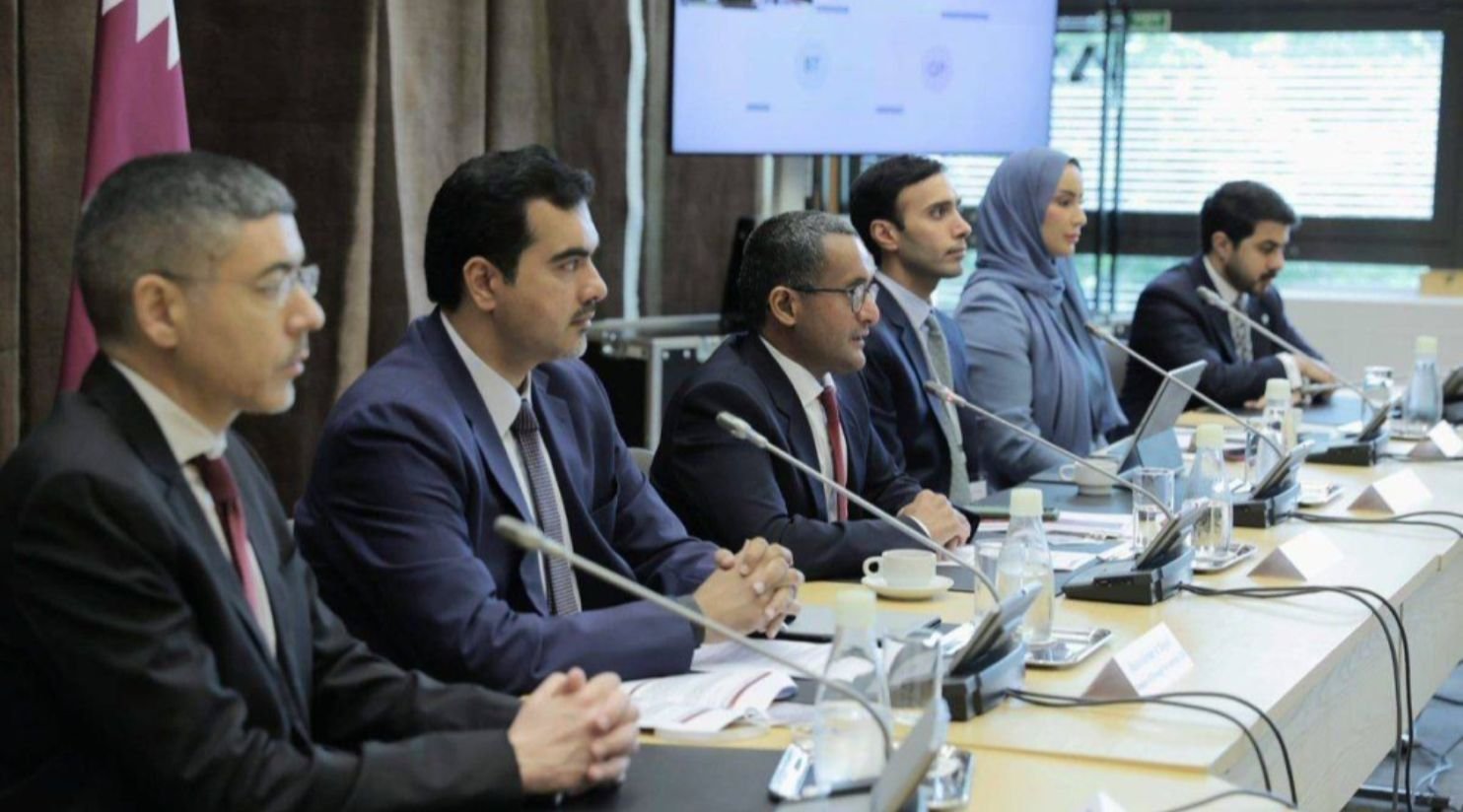
Qatar’s Prime Minister and Interior Minister HE Sheikh Abdullah bin Nasser bin Khalifa Al Thani launched the second phase of development of the Al Ruwais Port yesterday.
The project, once completed, is expected to further increase the port’s capacity and further boost economic activity in the northern part of Qatar, reported Gulf Times.
The Minister of Transport and Communications HE Jassim Seif Ahmed Al Sulaiti and Qatar Ports Management Company (Mwani Qatar) CEO Captain Abdulla Al Khanji attended the launch ceremony.
Prime Minister goes on an inspection visit to Ruwais port. #QNA pic.twitter.com/aTryEopDtW
Sheikh Abdullah was briefed about the port’s completed phases as well as planned works for the future.
He was also told about the development plans for facilities, harbours and marinas in Al Thakhira, Al Khor and Al Wakrah ports, according to Qatar Tribune.
The Al Ruwais Port is expected to have 1,65,000SqM of storage space once the project is completed.
“With this expansion, we hope to receive more than 60,000 containers every year, which will give us a lot of margins to do more things,” said Al Sulaiti.
“Right now, we’re getting around 20,000 containers. We’re happy with this volume because when we began, it was only between 500 and 1,000 containers. It means Al Ruwais Port is no more a domestic port; it’s fast becoming an international port,” he added.
While the port is expected to get 40,000 and 60,000 containers within the next two years, it can accommodate up to 100,000 containers once at full capacity.
Since launching its first phase of expansion in January 2015, the Al Ruwais Port substantially helped in meeting ‘the increasing needs of the domestic market of food and fresh produce, among others, in addition to the different projects in Al Shamal, being implemented by the State.’
A part of the port’s expansion will benefit many fishers, thanks to the addition of 300 berths at the traditional fishing port. The work is expected to be completed by 2020.
The third phase of expansion is scheduled to be completed in 18 months. It will include the deepening of its navigational channel, which will help in receiving vessels with larger cargo.