Ramadan 2027 in Qatar: What Expats Need to Know About Visas, Work Hours and Shopping

Ramadan 2027 is currently expected to begin around Monday, 8 February 2027 in Qatar, subject to the official moon sighting. If you're an expat living in Doha, it's worth planning ahead — not because Ramadan changes your visa rules, but because it changes working hours, government and business schedules, shopping patterns and the rhythm of daily life.
Current astronomical calendars place the tentative start on 8 February, but in Qatar the official date will ultimately be confirmed by the Crescent Sighting Committee at the Ministry of Endowments and Islamic Affairs. Qatar followed that process in 2026, when the committee confirmed 18 February as the first day of Ramadan after the crescent was sighted.
Here's the fast answer: expect reduced working hours, check that your residence documents won't create an administrative headache around Ramadan and Eid, and keep an eye on official shopping, banking and transport schedules as they're announced.
When is Ramadan 2027 in Qatar?
Ramadan 2027 is tentatively expected to begin on Monday, 8 February 2027.
The Islamic month lasts 29 or 30 days, so Eid Al Fitr would be expected around 9–10 March 2027, depending on the moon sighting at the end of Ramadan. These dates remain provisional until Qatar's official Crescent Sighting Committee announces them.
Ramadan moves approximately 10–11 days earlier through the Gregorian calendar each year. Qatar's 2026 Ramadan began on 18 February 2026, following the official local sighting.
That puts Ramadan 2027 firmly within Qatar's cooler season, making outdoor evenings, Ramadan markets and late-night activities considerably easier than during hotter parts of the year.
Work hours during Ramadan: what expats should expect
Qatar reduces normal working hours during Ramadan, but the exact rule depends on where you work.
The official 2027 public-sector circular has not yet been issued, so 2026 provides a useful precedent rather than a guaranteed 2027 schedule.
Public sector hours
For Ramadan 2026, civil servants at ministries, government agencies and public institutions worked five hours per day, from 9am to 2pm.
The circular allowed employees to arrive as late as 10am where work requirements permitted, provided they still completed the full five-hour working day. It also allowed up to 30% of staff to work remotely, with priority given to Qatari mothers and people with disabilities. Health and education authorities were allowed to set schedules suited to their operations.
Treat that as a 2026 precedent, not as the confirmed 2027 arrangement. The Cabinet's General Secretariat normally announces the applicable government working hours closer to Ramadan.
Private sector hours
For employees covered by Qatar's Labour Law, the normal maximum working hours fall during Ramadan from 48 hours per week / eight hours per day to 36 hours per week / six hours per day.
Article 73 does not distinguish between fasting and non-fasting employees, so the reduced ordinary working hours apply to covered employees generally.
There are, however, statutory exceptions. Certain senior employees exercising employer-level authority, as well as some categories of preparatory, complementary, guarding, cleaning and other designated work, are treated differently under Article 76.
Working beyond six hours is also not automatically prohibited. Under Article 74, additional work can be treated as overtime, generally subject to a maximum actual working day of 10 hours and overtime pay of at least the basic wage plus 25% for those additional hours.
So the safer rule for employees is: six hours is the ordinary Ramadan working day under the Labour Law, but overtime and statutory exemptions can apply.
QFC and remote work
The Qatar Financial Centre follows a different employment regime.
Under Article 29 of the QFC Employment Regulations, an employee who observes the Ramadan fast cannot be required to work more than six hours per day, and the employer cannot reduce that employee's salary because of the shorter hours.
That distinction matters: unlike Qatar's mainland Labour Law, the QFC provision expressly ties the six-hour protection to employees who are fasting.
Company-specific flexible hours, hybrid work or split shifts are separate employer policies, so check your organisation's Ramadan schedule with HR once it is announced.
Sort your visa and residence permit now
Ramadan itself does not introduce a different residence-permit or visa deadline.
The practical issue is that government and company working hours are shorter and Eid creates a holiday period, so paperwork can become less convenient if you leave it until the last moment.
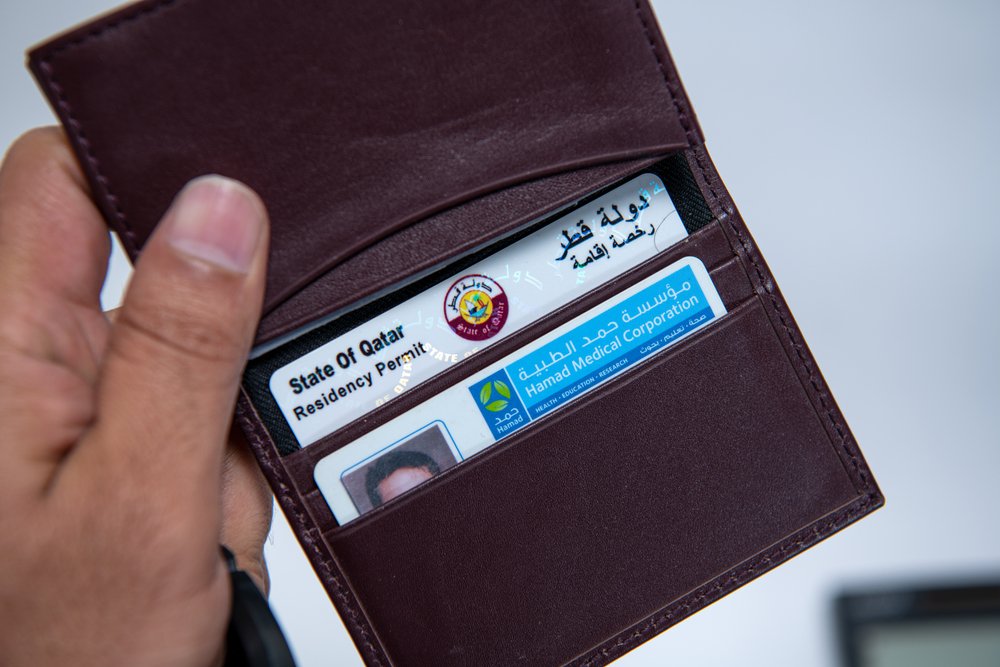
Residents: check your QID/RP expiry
If your QID or residence permit is due for renewal around February or March 2027, check it before Ramadan begins.
Current Qatar immigration law requires the sponsor to complete residence-permit renewal procedures within 90 days of the permit's expiry. MOI states that failing to renew within that period can result in a fine of QAR 10 per day, up to QAR 6,000.
That means expiry itself does not create an immediate Ramadan-specific penalty. Even so, renewing ahead of travel or Eid is sensible.
- Use Metrash where the relevant service is available — MOI now uses the name Metrash, rather than Metrash2, for its current digital-service platform.
- Sponsored employees should coordinate with HR or their company PRO — the employer/sponsor normally handles the residence renewal process.
- Check family members separately — dependants' residence permits can have different expiry dates.
- Don't plan international travel around an unresolved RP issue — sort renewal or immigration questions before Ramadan/Eid if possible.
Visitors coming during Ramadan
Don't automatically tell visiting family or friends to apply for an A1 visa.
Qatar's entry rules depend on the traveller's nationality and circumstances. Many nationalities qualify for visa-free entry, while others may need a Hayya e-visa such as A1, A2 or A3.
The Hayya Tourist Visa (A1) is intended for tourism and leisure. Current official guidance lists a QAR 100 fee for tourist e-visas, but visa category, permitted stay, accommodation requirements and other conditions should be checked for the traveller's exact nationality before applying.
Don't publish the blanket claim that every A1 visa is “valid for 30 days and extendable” unless that specific condition is reconfirmed closer to 2027.
For anyone planning to arrive around Ramadan or Eid, check the official Visit Qatar/Hayya visa tool shortly before booking.
How Ramadan changes shopping, banking and transport
Daily schedules change significantly during Ramadan, but 2027 timings have not been announced yet.
The useful rule is to expect different morning, afternoon and late-evening schedules — then check the individual venue before leaving home.
Mall and shop timings
Many Qatar malls extend trading late into the night during Ramadan, and some operate split daytime/evening schedules.
For example, Doha Festival City's published Ramadan schedule used:
- Retail: 10am–3pm and 7pm–1am, Saturday to Thursday
- Friday retail: 1pm–1am
- Food and beverage: from iftar until 1am
- Hypermarket: 9am–1am.
That's a good illustration of how Ramadan schedules can work, but it should not be presented as the standard timetable for every Qatar mall in 2027.
Mall of Qatar, Place Vendôme, City Center, Doha Festival City and individual retailers will publish their own hours closer to Ramadan.
Expect the heaviest evening crowds during the final part of Ramadan as Eid shopping picks up.
Banking hours
Bank hours are also adjusted each Ramadan.
For 2026, Qatar Central Bank announced official financial-institution working hours of five hours per day, from 9am to 2pm.
Individual customer-facing branches can operate different schedules.
Qatar Islamic Bank's 2026 Ramadan hours, for example, were:
- many standard branches: 9am–2pm, Sunday to Thursday;
- mall branches: 10am–2:30pm and 8:30pm–11:30pm, Saturday to Thursday;
- mall branches on Fridays: 8:30pm–11:30pm.
So don't publish one fixed banking timetable as though it applies everywhere.
Mobile and online banking remain the simplest option for routine transactions during compressed branch hours.
Getting around: Metro and Karwa
Doha Metro, buses and taxis continue to be key ways of getting around during Ramadan, but exact operating schedules can be adjusted for the month and for Eid.
Expect demand to change significantly around iftar, evening prayers, shopping hours and late-night events.
For 2027, check the latest Qatar Rail and Karwa schedules shortly before Ramadan rather than relying on the previous year's operating times.
If you're driving, leave additional time around major malls, Souq Waqif, Katara and popular iftar destinations during the busiest evening periods.
How to shop smart during Ramadan
Don't assume pantry prices automatically rise throughout Ramadan.
Qatar has repeatedly used Ramadan discounted-goods initiatives to keep essential household products affordable.
In 2026, the Ministry of Commerce and Industry introduced a list covering more than 1,000 discounted products at major retail outlets, including flour, sugar, pasta, chicken, cooking oil, milk, cleaning products and other essentials. Retailers were required to adhere to the approved prices until the end of Ramadan.
A better Ramadan shopping strategy is:
- Shop non-perishables before the busiest period — not necessarily because they'll become more expensive, but because supermarkets get busier as Ramadan approaches.
- Buy Eid clothing before the final days — the last part of Ramadan is one of the busiest retail periods.
- Check MOCI's Ramadan discounted-goods list if a similar initiative is announced for 2027.
- Compare supermarket promotions before stocking up rather than assuming the pre-Ramadan price is automatically cheapest.
- Use grocery delivery strategically — particularly when you want to avoid pre-iftar traffic and queues.
- Book popular iftars early — hotel and restaurant Ramadan experiences can become heavily booked on popular evenings.
Etiquette every expat should know
Ramadan changes public life considerably, and non-Muslim residents and visitors should respect the customs and legal restrictions that apply during the month.
- Do not publicly eat or drink during Ramadan daylight hours. Article 267 of Qatar's Penal Code provides for imprisonment of up to three months and/or a fine of up to QAR 3,000 for publicly eating or drinking during Ramadan daytime. The Arabic provision also refers more broadly to consuming other substances that break the fast.
- Avoid smoking publicly during fasting hours.
- Dress appropriately for public places, particularly government offices, malls and cultural venues.
- Keep noise considerate, especially around prayer times and residential areas.
- “Ramadan Kareem” or “Ramadan Mubarak” are perfectly appropriate greetings for colleagues and friends.
- If you're invited to iftar, it's a good opportunity to experience an important social part of Ramadan in Qatar.
Restaurants and cafés may operate different daytime arrangements during Ramadan, so check whether the venue is open rather than assuming normal hours.
FAQs
When does Ramadan 2027 start in Qatar?
Ramadan 2027 is currently expected to begin around Monday, 8 February 2027, not mid-February.
The date remains tentative until Qatar's Crescent Sighting Committee officially confirms the beginning of Ramadan. Eid Al Fitr would consequently be expected around 9–10 March 2027, depending on whether the month lasts 29 or 30 days.
Do non-Muslim expats get reduced working hours during Ramadan?
Under Qatar's mainland Labour Law, yes for employees covered by Article 73.
The law reduces ordinary Ramadan hours to six per day and 36 per week and does not restrict that rule to Muslim or fasting employees. Statutory exemptions and overtime provisions can apply.
For QFC employees, the position is different: the six-hour Ramadan protection expressly applies to employees who observe the fast.
Government employees follow the public-sector Ramadan circular issued for that year.
Can I eat in public during Ramadan in Qatar if I'm not fasting?
No.
Article 267 of Qatar's Penal Code makes public eating or drinking during the daytime in Ramadan punishable by up to three months in prison and/or a fine of up to QAR 3,000.
Eat and drink privately or at establishments operating in accordance with the applicable Ramadan arrangements.
How do I renew my residence permit before Ramadan 2027?
Check the expiry date through MOI services and coordinate renewal through your sponsor, employer/PRO or the applicable Metrash service.
Legally, the sponsor must complete renewal within 90 days after expiry, rather than before the exact expiry date. MOI states that exceeding that period can attract a QAR 10-per-day fine, capped at QAR 6,000.
For practical reasons, however, dealing with a renewal before Ramadan or Eid is preferable if you expect to travel or need other government services.
How much is a visit visa for family coming during Ramadan?
There isn't one visa that applies to every visitor.
Many nationalities qualify for visa-free entry, while others may require an e-visa through Hayya. The current tourist e-visa fee is QAR 100 where that visa is required.
Use the official visa checker for the visitor's nationality before applying, because visa type, accommodation requirements and permitted stay can differ.
What time do malls open during Ramadan?
There is no universal Qatar-wide Ramadan mall timetable.
As a recent example, Doha Festival City used 10am–3pm and 7pm–1am for retail from Saturday to Thursday, with different Friday, F&B and hypermarket hours.
Expect extended late-night shopping in 2027, but check the individual mall's published Ramadan hours once they're announced.
Planning a move or a job change before the season? Browse the latest jobs in Qatar or properties in Qatar on Qatar Living to get everything sorted well ahead of Ramadan 2027.
---
About Qatar Living :
Since 2005, Qatar Living has been the trusted destination for everything Qatar. As the country's largest online community and marketplace, Qatar Living connects people with opportunities through jobs, property, vehicles, services, classifieds, events, local insights, and breaking news. Trusted by residents, newcomers, visitors, and businesses alike, Qatar Living brings Qatar together in one place.
Follow Qatar Living for daily updates:
Instagram - @qatarliving
X - @qatarliving
Facebook - Qatar Living
YouTube - qatarlivingofficial
Up Next

Renting Your First Apartment in Qatar: Newcomer's Guide
Discover how to rent your first apartment in Qatar with this guide covering costs, documents, payment options, and essential leasing tips for newcomers.
Aug 2,2026
Public Buses in Qatar: Routes, Fares & Karwa Bus App
Your guide to public buses in Qatar: routes, fares, free Metrolink and the Karwa Bus app for planning trips across Doha and beyond.
Aug 2,2026
What to Pack (and Not Pack) When Moving to Qatar
Moving to Qatar? Here's what to pack and what to buy locally — clothing, meds, documents and customs rules for Doha newcomers.
Jul 29,2026
AC Installation Summer Deals in Qatar: Discounts & Plans
AC unit installation summer promotions in Qatar: contractor discounts, payment plans and typical QAR costs to keep cool all summer. Compare and save.
Jul 25,2026