Rent Increases in Qatar 2026: Your Rights & How to Negotiate

If your landlord tells you the rent is going up, the first question to ask is:
Does the increase apply during your current lease, or only if you renew?
That distinction matters.
During an existing fixed-term residential lease, a landlord cannot simply replace the agreed rent with a higher figure. A change may be valid where it was already built into the lease — for example, through a clearly agreed staged increase — or where landlord and tenant later mutually agree to amend the rent.
At the end of the lease, however, the position changes. The existing lease normally expires on its stated end date, and the parties can negotiate the terms of any new or renewed tenancy.
Here's what Qatar's current rental framework says in 2026.
Can your landlord increase your rent during your lease?
Not unilaterally in the ordinary course.
Article 10 of Qatar's Property Leasing Law states that a landlord may not increase the rent under an existing lease except within the applicable legal framework. Qatar's Court of Cassation has also stated that the basic principle is that a rent increase is based on agreement between the contracting parties.
So if your one-year lease says:
QAR 6,000 per month from January to December
your landlord cannot simply announce in July that the rent is now QAR 6,800.
When can the amount change?
A higher rent can apply where:
- Your original contract already contains a clear agreed rent schedule or review clause
- You and the landlord subsequently agree to amend the rent
- A new rent is agreed as part of a new or renewed lease
The important distinction is agreement versus unilateral demand.
Don't describe tenant-requested renovations as the only situation where a mid-term increase can be agreed. The parties can mutually amend rent for other reasons as well.
What happens when the lease expires?
Article 15 of Law No. 4 of 2008 says a lease normally:
ends when the agreed lease term ends.
That means a one-year contract does not automatically give the tenant another year simply because the landlord did not send a renewal letter.
At that stage, landlord and tenant can negotiate:
- A new rental amount
- A new term
- Other revised conditions
If the parties cannot agree, the tenant should not assume there is a legal right to remain indefinitely at the old rent.
When does a lease automatically renew on the same terms?
There is an important exception.
If:
- The lease term expires
- The tenant continues occupying the property
- The landlord knows the tenant is still occupying it
- The landlord does not object
then Article 15 says the contract is deemed renewed:
Does a landlord have to give two months' notice of a rent increase?
There is no general two-month statutory notice rule in the current residential leasing law.
This is where a lot of outdated Qatar rental advice comes from.
The former Law No. 2 of 1975 required up to two months' notice for certain longer leases, unless otherwise agreed. But that legislation was repealed when Law No. 4 of 2008 came into force.
The current Article 15 instead says that the lease ends on its contractual expiry date.
So what notice applies?
Check your tenancy contract.
Many modern Qatar leases contain their own clauses requiring one party to give:
- 30 days
- 60 days
- 90 days
or another period if they want to renew, terminate or renegotiate.
If your signed contract contains such a clause, both sides should follow it.
But don't present 60 or 90 days as a universal legal requirement for every residential lease in Qatar.
Is there a 10% rent-increase cap in Qatar?
Not as a general residential rule in 2026.
Qatar did previously have temporary legislation restricting rent increases to 10% per year, but that law expressly applied for a limited two-year period.
That is the source of much of the “10% rule” still repeated online.
The current Cabinet decision governing rent-increase percentages — Cabinet Resolution No. 9 of 2010 — applies specifically to:
premises rented for non-residential purposes.
It sets percentage limits for certain commercial/non-residential leases.
Those percentages should not be copied into a guide about ordinary residential apartments and villas.
For residential renewals, I found no current blanket statutory rule saying a landlord can increase the rent only by 5%, 10% or another fixed percentage.
So can a landlord ask for any amount at renewal?
A landlord can propose a different rental amount for a new or renewed agreement.
But that does not mean the new figure automatically becomes binding simply because the landlord announces it.
The tenant can:
- Accept it
- Negotiate it
- Reject it
- Decide not to renew
And where there is a genuine dispute about the existing tenancy, the validity of an increase, renewal, contractual obligations or related landlord–tenant rights, the Rental Disputes Settlement Committee is now the key forum.
For editorial purposes, I would describe renewal rent as:
negotiated rather than subject to a universal residential percentage cap.
How to negotiate a proposed rent increase
If your landlord proposes a higher rent, don't respond based only on the percentage.
Check the market first.
Compare:
- Units in the same building
- Same number of bedrooms
- Furnished vs unfurnished
- Bills included vs excluded
- Parking
- View and floor
- Facilities
- Property condition
- Current incentives such as rent-free months
A QAR 500 increase may be reasonable in one building and completely out of line in another.
Build a stronger counteroffer
Use actual comparable listings and explain:
- How long you have occupied the unit
- Whether you have consistently paid on time
- Any unresolved maintenance problems
- Comparable asking rents nearby
- Whether you are prepared to renew for a longer term
You could also negotiate benefits other than the headline rent, such as:
- One rent-free month
- Utilities included
- Maintenance coverage
- Parking
- Reduced agency/renewal charges
- A two-year fixed rate
Always keep important negotiations in writing.
Security deposits: can the landlord increase yours?
For residential property, Article 7 of Law No. 4 of 2008 says a landlord may not charge a security deposit exceeding:
two months' rent.
That is a statutory maximum.
However, do not tell readers that a landlord automatically has a right to “top up” the deposit whenever rent increases.
Whether a deposit is adjusted at renewal should depend on the contract and what the parties agree.
The important legal limit is that a residential security deposit cannot exceed two months' rent.
Keep:
- The signed contract
- Deposit receipt
- Handover report
- Photos of the property's condition
- Any written communications concerning deductions
These can matter when recovering the deposit later.
What changed with rental disputes in 2026?
This section should be updated because Qatar amended its tenancy framework in 2026.
Law No. 8 of 2026 took effect on 3 September 2026.
Among other changes, it strengthened the role of the Rental Disputes Settlement Committee.
The amended Article 22 gives the Committee exclusive jurisdiction to determine disputes arising from landlord–tenant relationships, including disputes involving categories that were previously excluded from the general scope of the leasing law.
A relevant rental dispute must now go through the Committee before a court action falling within its jurisdiction can proceed.
Can you challenge a rent increase?
You can take a genuine rental dispute to the Rental Disputes Settlement Committee.
That can be particularly relevant where you dispute:
- A purported increase during an existing fixed term
- Whether a contractual rent-review clause applies
- Whether the lease renewed
- The rent legally payable under the existing agreement
- Termination or eviction
- Other obligations arising from the tenancy
However, avoid telling tenants:
“The Committee will reduce an excessive renewal increase.”
There is no blanket residential rent cap in force that automatically makes a large percentage increase unlawful.
If the old lease has expired and the landlord is simply proposing a new price for a new tenancy, the issue may ultimately come down to whether the parties agree to renew.
How much does it cost to file a rental dispute?
Council of Ministers Resolution No. 37 of 2008 remains listed by Al Meezan as in force and currently sets the application fee at:
QAR 100.
The procedural rules require the applicant to submit a written application with information about the parties, the subject and basis of the claim, supporting documents and an explanatory memorandum. Documents in another language must be accompanied by an approved Arabic translation.
Because procedural fees can be amended, check the amount when filing.
What documents should you keep?
For a rental dispute, useful documents can include:
- Registered tenancy agreement
- QID/passport details
- Rent receipts or bank transfers
- Security-deposit receipt
- Written rent-increase notices
- Renewal correspondence
- WhatsApp or email exchanges
- Property-condition photos
- Maintenance requests
- Comparable property listings where relevant
The more of the negotiation you keep in writing, the easier it is to establish what each party actually agreed.
Can you appeal a Rental Disputes Settlement Committee decision?
Yes.
Following the 2026 amendment, interested parties can appeal a Committee decision to the Court of Appeal within 15 days.
The 15-day period runs:
- From the date of the decision where it was made in the parties' presence, or
- From the day following notification where the decision was issued in absence.
This is a strict deadline, so anyone considering an appeal should act quickly.
Contract clauses to check before signing
Before signing a residential lease, look closely at:
Rent-review clauses
Does the contract already say the rent changes after a certain date?
Renewal clauses
Does it automatically renew, or require one party to notify the other?
Notice period
If the contract says 60 or 90 days, put that deadline in your calendar.
Security deposit
For residential leases, it must not exceed two months' rent.
Maintenance
Clarify what the landlord covers and what the tenant must pay.
Early termination
Check whether there is a penalty or notice requirement if you leave before the end date.
Rent-free periods
Make sure any promotional free months are written into the contract rather than agreed verbally.
FAQs
Can my landlord increase my rent halfway through my lease?
A landlord cannot simply impose a new rental figure during an existing fixed term.
A different amount can apply where it was already agreed in the contract or landlord and tenant mutually agree to amend the rent.
Is there a 10% residential rent cap in Qatar in 2026?
No general 10% residential cap is currently in force.
The old 10% rule came from temporary legislation, while the current Cabinet percentage rules relate to non-residential leases.
Does my landlord have to give me two months' notice?
Not under a universal current residential statutory rule.
The commonly quoted two-month notice requirement comes from the repealed 1975 leasing law.
Check your current tenancy contract for its own renewal or termination notice requirement.
What happens when my lease ends?
The general rule is that the lease ends when its stated term expires.
If you continue occupying the property after expiry and the landlord knows and raises no objection, the lease can be deemed renewed for a similar term on the same conditions.
Is a security deposit capped?
Yes.
For residential premises, the landlord may not charge more than two months' rent as a security deposit.
Can I dispute an unlawful rent increase?
Yes.
The Rental Disputes Settlement Committee has exclusive jurisdiction over landlord–tenant disputes under the amended 2026 framework.
How much is the Rental Disputes Settlement Committee filing fee?
The current in-force procedural resolution lists a QAR 100 application fee.
How long do I have to appeal a decision?
Under the 2026 amendments, the appeal period is 15 days, calculated according to whether the Committee's decision was delivered in the parties' presence or in absence.
About Qatar Living:
Since 2005, Qatar Living has been the trusted destination for everything Qatar. As the country's largest online community and marketplace, Qatar Living connects people with opportunities through jobs, property, vehicles, services, classifieds, events, local insights, and breaking news. Trusted by residents, newcomers, visitors, and businesses alike, Qatar Living brings Qatar together in one place.
Instagram - @qatarliving
X - @qatarliving
Facebook - Qatar Living
YouTube - qatarlivingofficial
Up Next
Your Next Address Could Be Yours — Explore Ezdan Homes from QAR 825,000 Only!
Own a ready, furnished home in Qatar from QAR 825,000 with Ezdan. Freehold title, immediate handover, and potential residency benefits await.
Oct 8,2026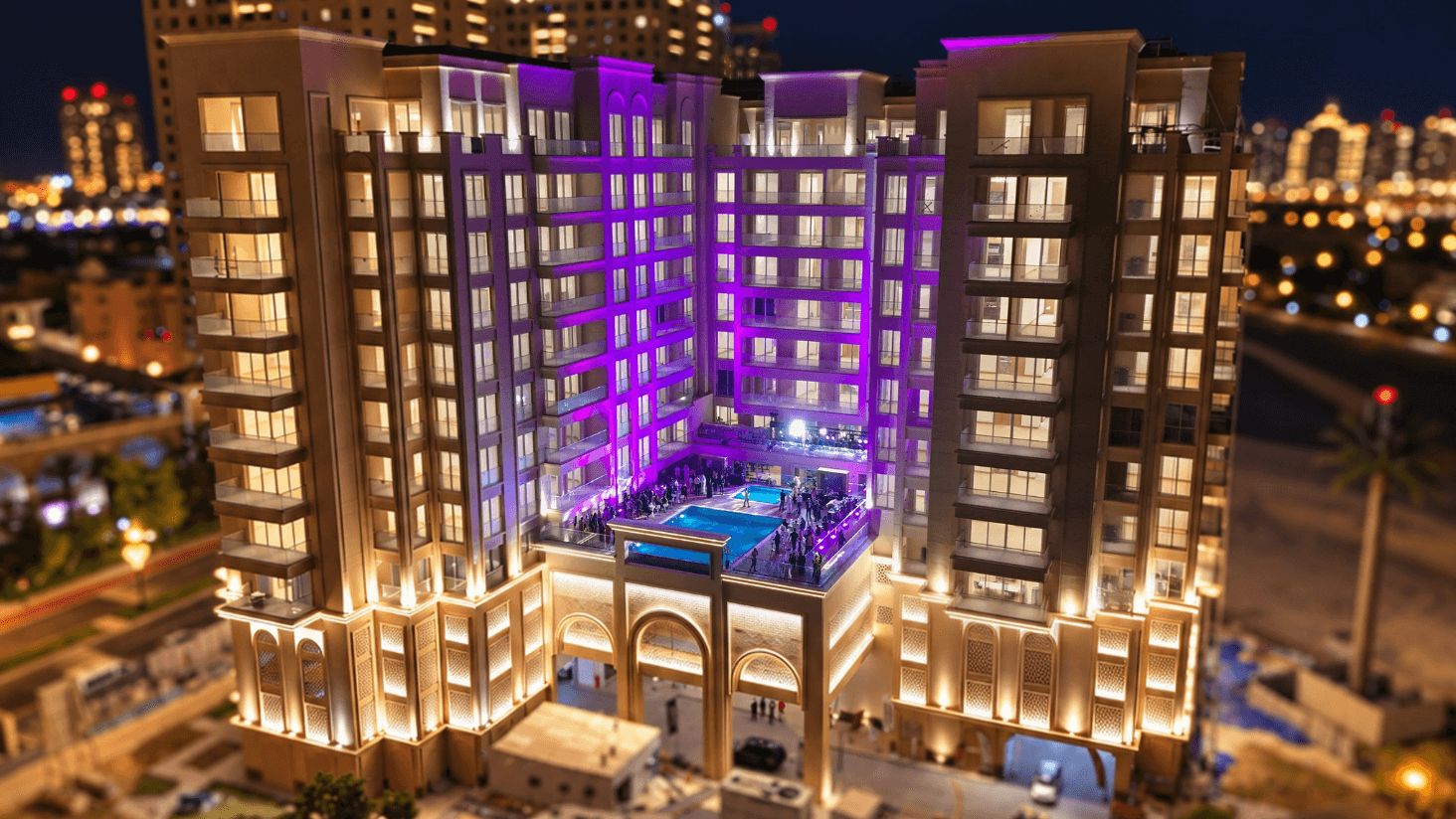
TAAMEER & Al Mirqab Living announce the beginning of the Handover at “Al Mayyas by Al Mirqab Living ” on The Pearl Island
TAAMEER and Al Mirqab Living begin handovers at Al Mayyas on The Pearl Island, offering premium residences with sea views and luxury amenities.
Oct 8,2026
TAAMEER Group launches “TAAMEER CONNECT” to strengthen dialogue and develop insights closer to the real estate market
TAAMEER Group launches TAAMEER CONNECT, a platform uniting real estate experts to share insights and shape client-focused property projects.
Oct 4,2026
TAAMEER Group Announces Handover Preparations for SKALA Tower in Lusail Waterfront
TAAMEER Group prepares to hand over SKALA Tower in Lusail Waterfront, marking a key milestone in Qatar’s real estate development.
Oct 2,2026