Stargazing in the Qatar Desert: Best Spots & Tips
Written by a Doha-based stargazer. Updated June 2026.
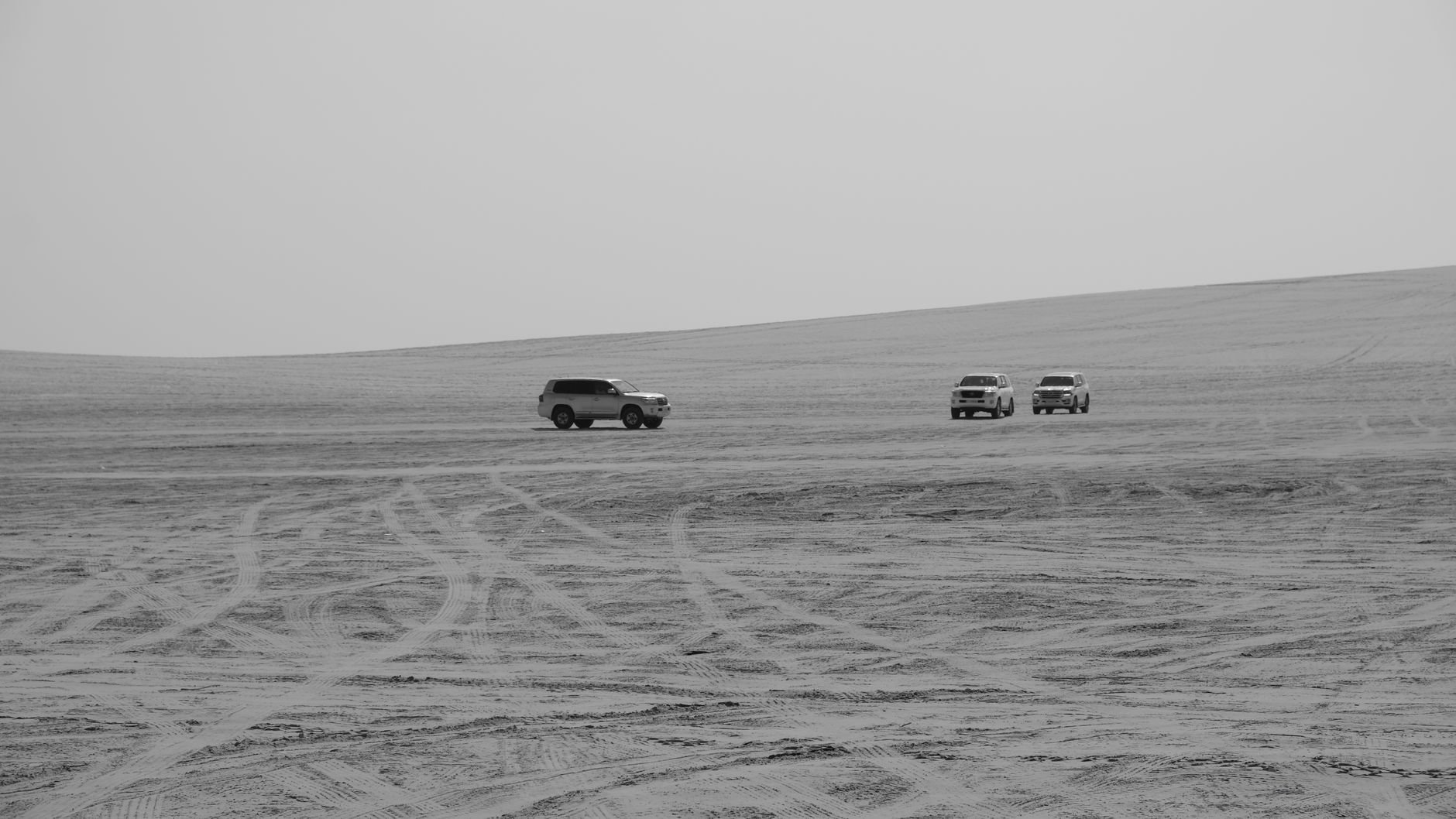
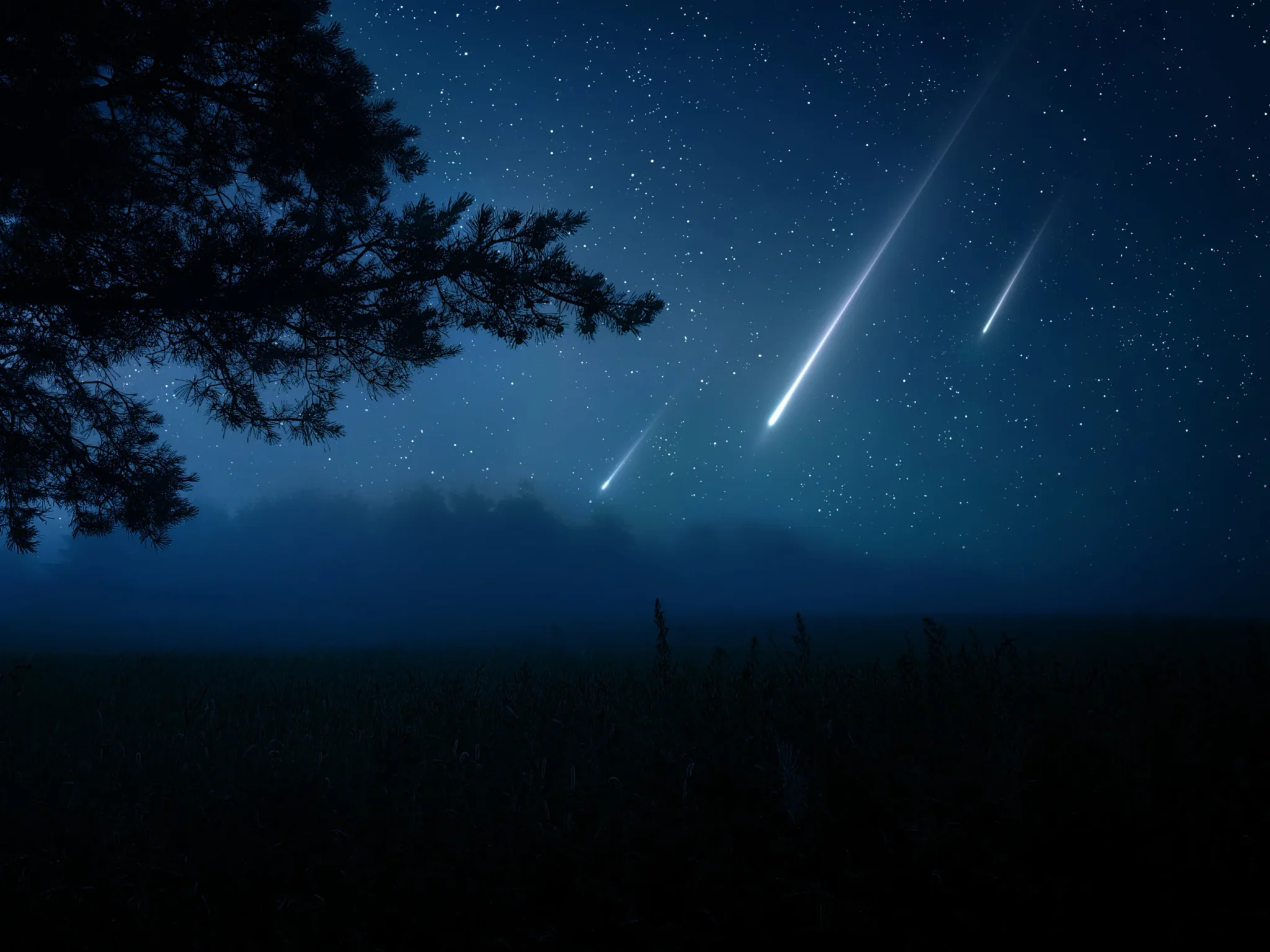
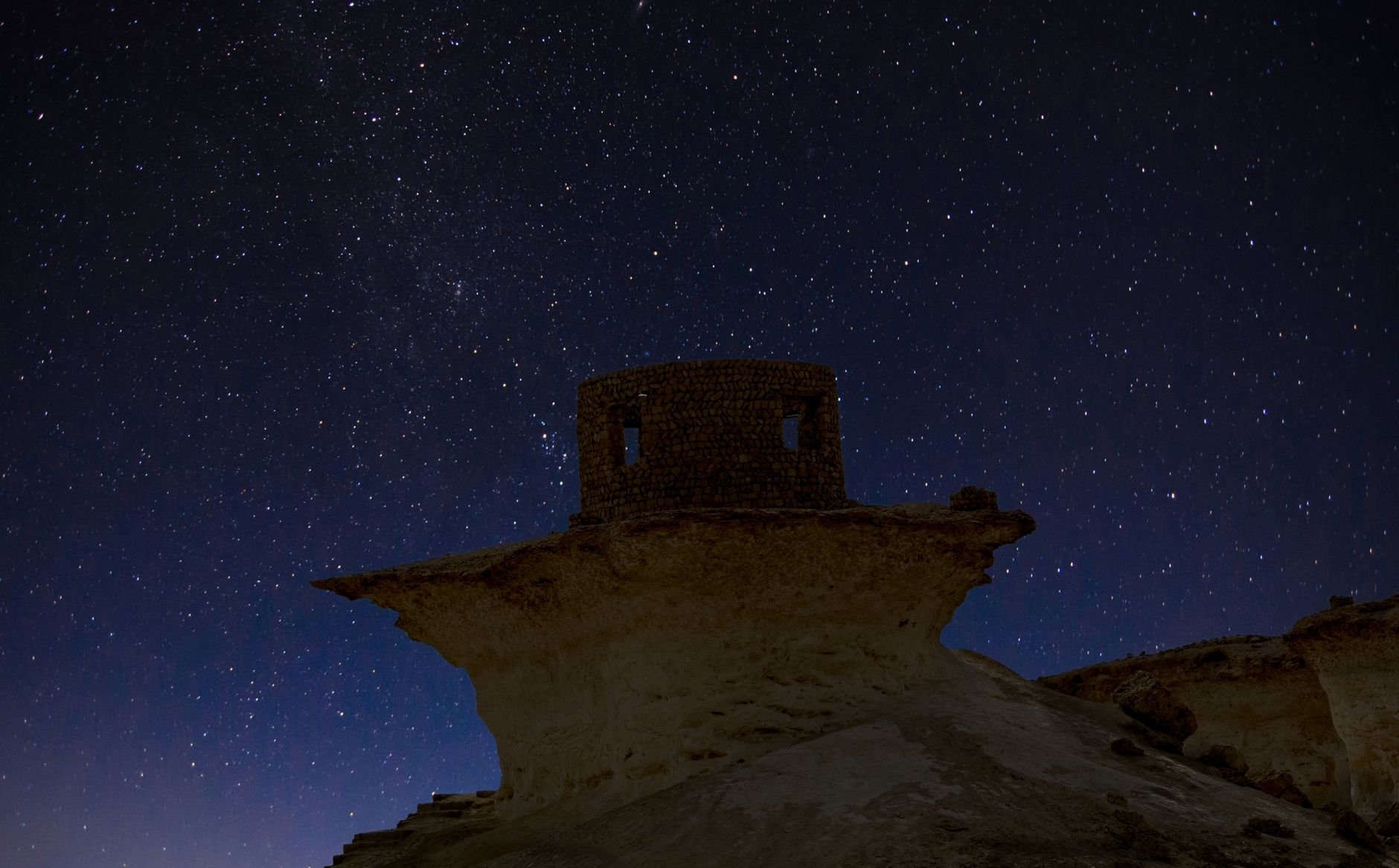
One of the simplest weekend escapes from the city costs almost nothing: Within 45 minutes to an hour, you can reach the edge of the desert around Sealine. More remote locaions such as Khor Al Adaid and Zekreet require considerably more time and, in some cases, a 4x4, park in a safe, level area away from active tracks, then switch off your exterior and interior lights, and look up. Away from the West Bay skyline and the glow of the Corniche, the desert sky fills with hundreds of stars, the occasional shooting star, and — on a clear winter night — a faint band of the Milky Way. Stargazing in the Qatar desert is an easy, affordable and memorable thing to do, and this guide covers the best spots, the right season and exactly what to bring.
Why the Qatar desert is good for stargazing
Qatar is small and flat, which works in your favour. Within an hour of Doha you can reach open desert with significantly less light pollution than the city, although sky quality varies by location, weather and nearby development. Qatar’s open desert provides wide horizons and considerably less artificial light than Doha, but visibility still depends on dust, humidity, cloud cover and wind. Choose a clear night with good visibility rather than assuming desert conditions will automatically be haze-free.
The main thing to escape is light pollution. Central Doha, Lusail and The Pearl throw off far too much light for serious stargazing. Head south towards Sealine and Khor Al Adaid, or west towards Zekreet, and the sky darkens quickly. The further you get from the coastal resorts and any camp with floodlights, the more stars you'll see.
Best stargazing spots in the Qatar desert
Here are the areas that consistently deliver dark skies within easy reach of the capital.
Sealine and the southern dunes
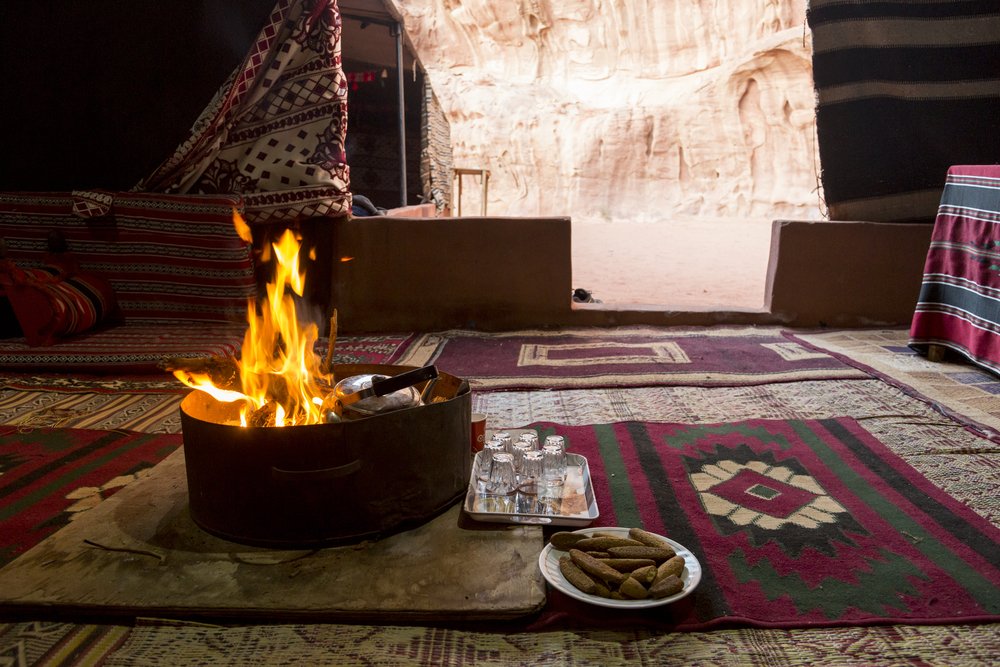
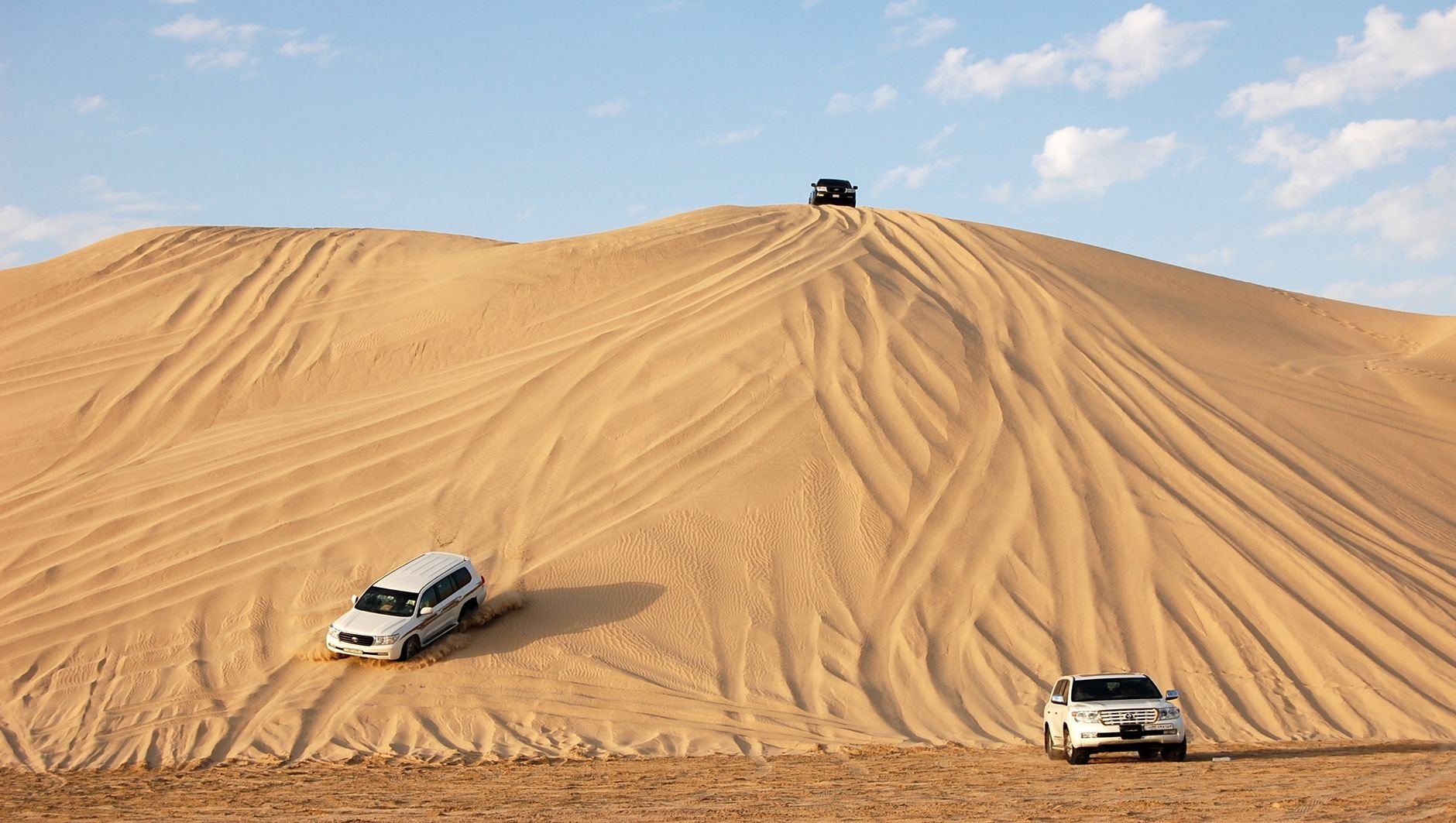
The Sealine area, roughly 45 minutes to an hour south of Doha, is the classic first-timer choice. It's easy to reach on tarmac, there are plenty of desert camps, and once you get away from the busy weekend beach strip and quad-bike zones, the dunes give you a clear southern horizon. For the darkest sky, drive further into the dunes rather than parking near the resorts.
Khor Al Adaid (the Inland Sea)
If you only do one desert night, make it Khor Al Adaid. Khor Al Adaid, a natural reserve included on Qatar’s UNESCO World Heritage Tentative List, is one of the darkest and most dramatic spots in the country. The tall dunes shield you from stray light and the water reflects the sky. You need a 4x4 and dune-driving experience to reach it — or, far safer, a guided tour, as the soft sand and tides are not for beginners.
Zekreet and the Film City area
On the west coast, about an hour and a half from Doha, the Zekreet peninsula and the Film City desert set offer wide, quiet desert with almost no development nearby. Because it faces away from the city entirely, it delivers some of the darkest western skies in Qatar. Nearby you'll also find the striking Richard Serra "East-West/West-East" steel sculptures, which make a surreal foreground for astrophotography.
Al Kharrara and the northern desert
Al Kharrara, south-west of Doha, is a favourite with weekend campers and has good open desert once you're past the entry areas. The far north of Qatar, beyond Al Khor and towards Al Ruwais, also offers dark rural skies if you'd rather head away from the crowds entirely.
Best time of year to go stargazing in Qatar
Timing matters as much as location. Two things drive the quality of a night: temperature and the moon.
- Best season: roughly November to March. The summer heat makes overnight desert trips punishing, so the cool winter months are ideal — For the most comfortable conditions, plan between November and March. Even in winter, check the forecast for dust, cloud, humidity and visibility, as these can obscure faint stars.
- Best moon phase: aim for the nights around a new moon. A full moon washes out fainter stars, so check a moon-phase calendar and plan for the darkest nights of the month.
- Best time of night: give your eyes at least 20–30 minutes in the dark to fully adjust. The sky is usually clearest a couple of hours after sunset, once any daytime dust has settled.
Keep an eye out for annual meteor showers too. The Geminids peak in December, right in the comfortable winter season. The Perseids peak around August 12–13 and have favourable moon conditions in 2026. They are best watched late at night and before dawn, but Qatar’s August heat and humidity make prolonged outdoor viewing demanding.
What you'll actually see in the night sky
On a good dark night away from Doha you can expect to see the major constellations — Orion, the Plough, Cassiopeia — plus bright planets like Venus, Jupiter, Saturn and sometimes Mars with the naked eye. Under the darkest skies in winter, the Milky Way is faintly visible as a band across the sky. A cheap pair of binoculars will reveal the craters of the moon and the moons of Jupiter, and a simple stargazing app on your phone (with the screen dimmed to red) helps you identify what you're looking at.
What to pack for a desert stargazing night
Even a short evening trip needs a bit of preparation. Pack:
- Warm layers — desert nights get surprisingly cold in winter, often 10–15°C cooler than the day.
- A red-light torch or headlamp — red light preserves your night vision far better than white light.
- Plenty of water and snacks — more than you think you'll need.
- A blanket, mat or reclining chair — lying back is by far the best way to watch.
- Binoculars — the single biggest upgrade for the money.
- A power bank — for your phone, torch or camera.
- A fully fuelled car and a spare tyre — and offline maps, as signal can drop.
If you're camping overnight, add a tent, sleeping bags and a rubbish bag — leave the desert exactly as you found it.
Guided tours vs going it alone
You have two realistic options, and which you choose depends mostly on your experience with off-road driving.
- Guided desert safari with stargazing — the easiest route, especially for Khor Al Adaid. Operators pick you up in a 4x4, handle the dune driving, and many combine sunset dune-bashing with dinner at a camp and time under the stars. As of 2026, expect prices typically around QAR 150–350 depending on whether it's a half-day, evening or overnight package.
- Self-drive — cheapest and most flexible if you already have a 4x4 and know how to lower your tyre pressure and drive on sand. Fuel is inexpensive in Qatar, so a self-drive night out can cost you little more than snacks. Never attempt deep dunes or Khor Al Adaid alone or in a saloon car.
If it's your first time in the deep desert, book a tour. The soft sand near the Inland Sea traps vehicles easily, and recovery is difficult and expensive.
Safety and etiquette in the desert
The desert is safe and welcoming, but a few sensible habits keep the night stress-free:
- Never head into the dunes alone — go in a convoy of at least two vehicles if self-driving.
- Tell someone your plan and expected return time.
- Carry a physical map or offline navigation; landmarks look identical in the dark.
- Respect the environment — take all litter home and avoid disturbing wildlife.
- Dress and behave respectfully; families and locals share these spaces.
- Check tide times before going anywhere near Khor Al Adaid.
FAQs
Where is the best place to stargaze near Doha?
For an easy trip, the dunes beyond Sealine, around 45 minutes to an hour south of Doha, are the simplest dark-sky option. For the most dramatic and darkest skies, Khor Al Adaid (the Inland Sea) is hard to beat — but you'll need a 4x4 or a guided tour to reach it.
Do I need a 4x4 for desert stargazing in Qatar?
Not always. You can reach the edge of the Sealine area and some northern desert spots on regular roads. But to get deep into the dunes or out to Khor Al Adaid you need a 4x4 and dune-driving experience — otherwise book a guided safari.
When is the best time of year for stargazing in Qatar?
November to March. The winter months bring cool, comfortable nights, low humidity and clear skies. Aim for nights around a new moon for the darkest sky, and check for meteor showers like December's Geminids.
Can I see the Milky Way in Qatar?
Yes, faintly, under the darkest skies in winter and far from city light — for example around Khor Al Adaid or Zekreet. It won't be as vivid as in a remote mountain observatory, but on a clear, moonless night you can make out the band across the sky.
How much does a desert stargazing tour cost?
Prices vary by operator and package, but as of 2026 expect typically around QAR 150–350 dune driving and time under the stars. Self-driving costs little beyond fuel and snacks.
Is stargazing in the Qatar desert safe?
Yes, if you plan sensibly. Go with others, tell someone your route, carry water and offline maps, and never drive deep dunes or approach the Inland Sea alone or in a saloon car. Booking a tour removes almost all the risk.
Ready to plan your night out? Browse desert safaris and tour operators in our Qatar Living Services listings, or find a 4x4 to buy or rent in Qatar Living Vehicles. For more weekend ideas, explore our other things-to-do guides on Qatar Living.
---
About Qatar Living :
Since 2005, Qatar Living has been the trusted destination for everything Qatar. As the country's largest online community and marketplace, Qatar Living connects people with opportunities through jobs, property, vehicles, services, classifieds, events, local insights, and breaking news. Trusted by residents, newcomers, visitors, and businesses alike, Qatar Living brings Qatar together in one place.
Follow Qatar Living for daily updates:
Instagram - @qatarliving
X - @qatarliving
Facebook - Qatar Living
YouTube - qatarlivingofficial