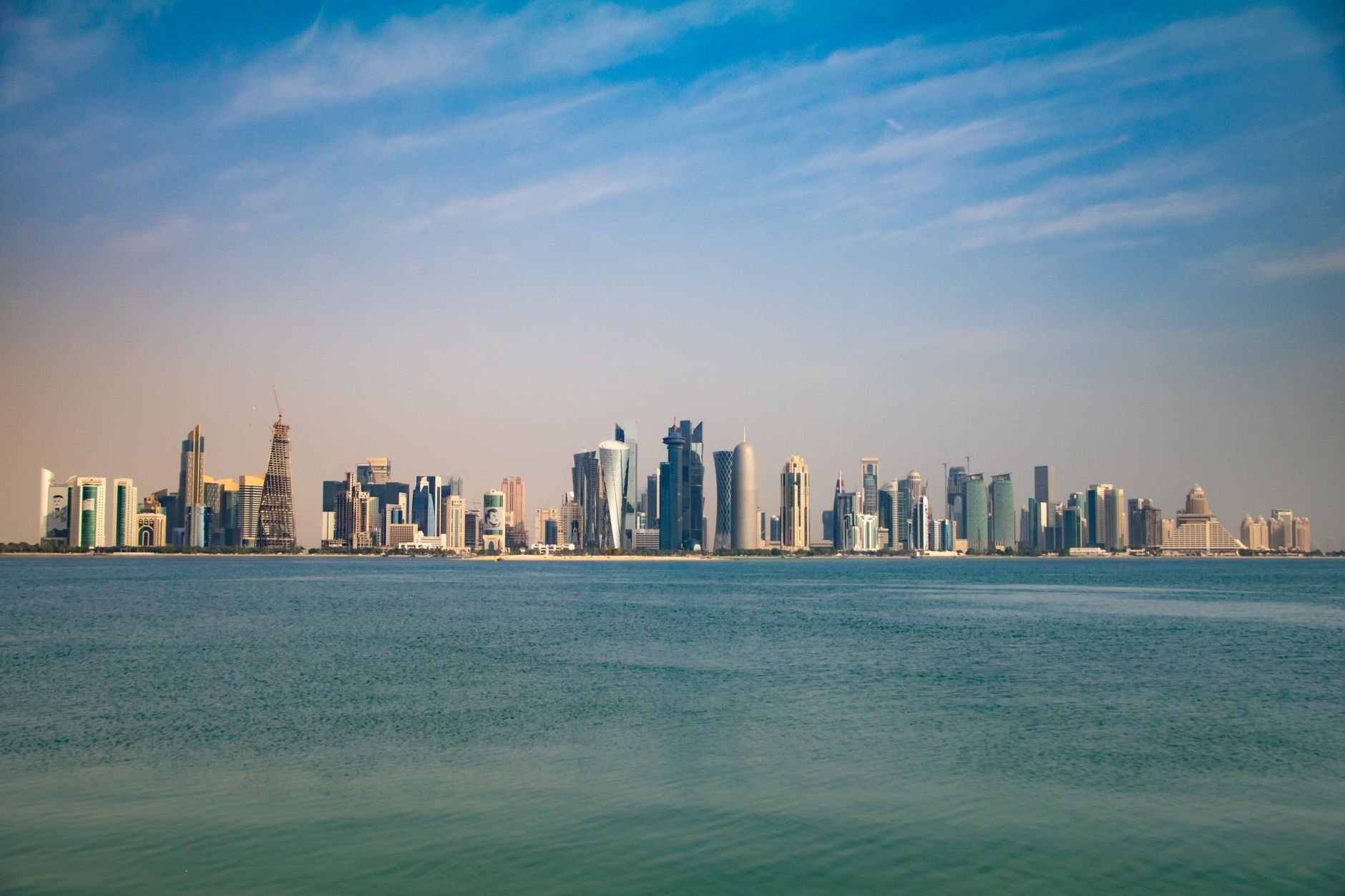
Buying Property in Qatar as a Foreigner 2026
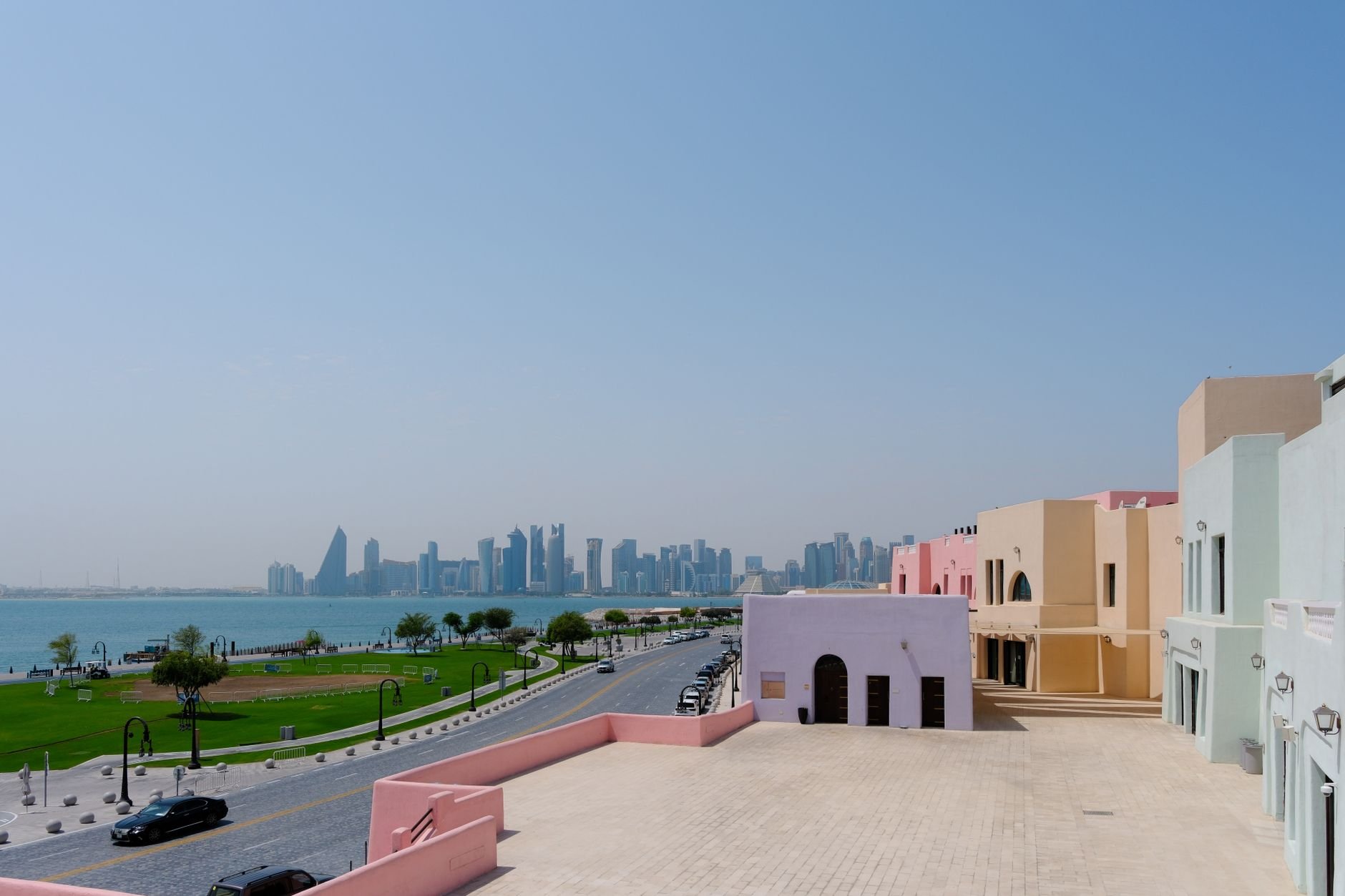
Yes—as a foreigner, you can legally buy and own property in Qatar in 2026. However, the property must either be in an area designated for non-Qatari ownership or fall within another permitted category, such as an eligible unit in a residential complex or an office or shop in an approved commercial development.
Confirm the legal status of the exact property—not just the wider neighbourhood—before paying a reservation deposit. Qatar updated its list of foreign-ownership areas in June 2026 under Cabinet Decision No. 21 of 2026.
The Ministry of Justice estimates that the official title-transfer service can be completed in around 20 minutes once the application, property records, payment and supporting documents are complete. However, there is no guaranteed two-to-four-week timeframe for the entire purchase. Due diligence, developer approvals, mortgage processing and document corrections can make the full transaction considerably longer.
A Qatar-based real estate lawyer is not legally mandatory for an ordinary purchase, but independent legal advice is sensible for off-plan properties, mortgaged purchases, company ownership, complex contracts or transactions involving powers of attorney.
Here is what the law allows, what it costs, which documents you may need and how the process generally works.
Can foreigners buy property in Qatar in 2026?
Foreign nationals can own and use real estate under Law No. 16 of 2018, as amended by Law No. 1 of 2025, together with Cabinet Decision No. 28 of 2020 and its 2026 amendment.
There are two main forms available to non-Qataris:
Freehold ownership
Freehold gives the buyer full ownership rights over the registered property, unit or land, including the ability to sell, lease or mortgage it subject to the law, development rules and any registered restrictions.
Usufruct ownership
Usufruct provides a long-term legal right to use and benefit from a property without owning the underlying freehold. Under the current framework, the usufruct period can extend for up to 99 years and may be renewed.
Location remains central, but the rule is more nuanced than saying foreigners can only buy inside a small number of districts.
Non-Qataris may buy property in designated freehold and usufruct areas. They may also be permitted to own eligible detached units in residential complexes and offices or shops in commercial complexes and malls outside those areas, provided the legal and development conditions are met.
Where foreigners can buy: freehold and usufruct zones
Cabinet Decision No. 21 of 2026 replaced the previous freehold-area table and updated the list to 10 areas or projects.
The current freehold areas are:
- West Bay, also identified as Legtaifiya
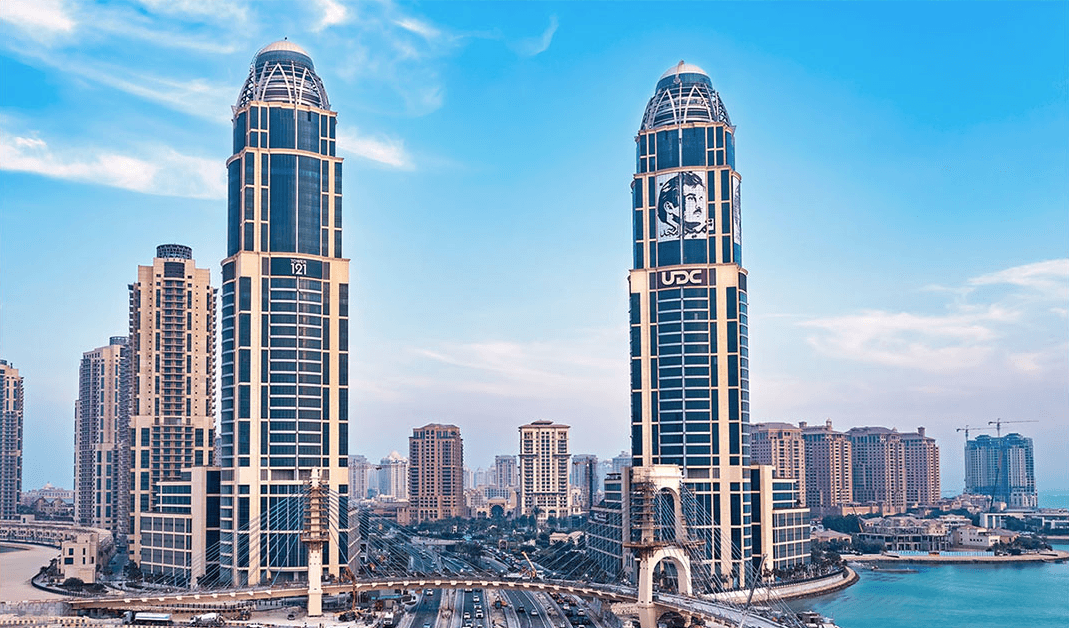
- The Pearl
- Al Khor Resort
- Al Dafna Administrative Area—Zone 60
- Al Dafna Administrative Area—Zone 61
- Onaiza Administrative Area—Zone 63
- Lusail
- Al Khuraij
- Jabal Thuaileb
- Simaisma Beach Resort and Theme Park project
The official table includes the cadastral zone numbers and an accompanying map defining the precise boundaries. A district name alone is therefore not enough to prove that a particular plot or building qualifies.
Qatar’s separate usufruct framework covers 16 areas under Cabinet Decision No. 28 of 2020. These include areas such as Al Sadd, Msheireb, Fereej Bin Mahmoud, Al Mirqab Al Jadeed, Al Mansoura, Al Salata, Old Al Ghanim, Umm Ghuwailina, the Doha International Airport area and New Doha. Usufruct rights can run for up to 99 years and may be renewed.
Before committing to a property, ask for written confirmation of:
- The cadastral zone and property number
- Whether the right being sold is freehold or usufruct
- Whether the individual unit has a separate title deed
- Any restrictions in the development’s declaration or owners’ association rules
- Whether the property qualifies for real estate residency
You can verify the property through the Ministry of Justice Real Estate Registration Department, the official SAK services or the specialised foreign-ownership offices at The Pearl and Lusail. The Ministry of Justice currently lists foreign-ownership offices in Al Mahara Building on The Pearl and the Qatari Diar building in Lusail.
Property ownership and residency: the QAR thresholds
A qualifying real estate purchase can provide access to property-linked residency, but ownership and residency are separate processes.
There are two main property-value categories.
Standard real estate residency: QAR 730,000
A non-Qatari who buys qualifying property worth at least QAR 730,000—approximately USD 200,000—may apply for a residence permit without a local employer or family sponsor.
The property must be in an eligible freehold or usufruct area. The Ministry of Justice also states that the owner must spend at least 90 days in Qatar each year, whether continuously or across several visits.
The residency remains tied to the qualifying property and the owner’s continued compliance with the applicable requirements. It should not be described as automatically permanent.
First-category real estate residency: QAR 3,650,000
A property purchase worth at least QAR 3,650,000—approximately USD 1 million—may qualify the owner for real estate residency with privileges associated with permanent-residency-card holders, including specified healthcare, education and investment benefits.
This is more accurate than calling it permanent residency itself. The owner must also meet the condition of residing in Qatar for at least 90 days per year.
The exact benefits and eligibility conditions should be confirmed during the application, particularly for dependants and access to government services.
The property-linked residency route
The original article lists a medical test, health insurance and proof of funds as standard requirements. These items do not appear on the Ministry of Justice’s current document list for obtaining initial approval for real estate residency.
The current MOJ service requires:
- A Qatar ID or passport
- A copy of the original title deed
- A certificate of good conduct for applicants who are not resident in Qatar
The property must be in an eligible freehold or usufruct area and meet the applicable QAR 730,000 or QAR 3,650,000 value threshold. The MOJ approval service is currently exempt from fees.
Further Ministry of Interior immigration steps may still apply after the MOJ approval. Follow the requirements issued for your individual application rather than assuming that every applicant must provide the same medical, insurance or financial documents.
Documents you will need
The document list depends on whether you are purchasing a completed property, buying off-plan, using a mortgage or applying for residency.
For the property transfer
The Ministry of Justice currently lists the following core documents for a transfer of ownership by sale:
- Identification document, such as a passport or Qatar ID
- Original title deed
- Authorisation document, where a representative is acting
- Proof of payment
The MOJ also verifies the property data, legal status, registration record and current owner before completing the transfer.
Additional transaction documents may include:
- Reservation agreement
- Sale and Purchase Agreement
- Developer or owners’ association clearance
- Statement of outstanding service charges
- Property plan or unit details
- Mortgage approval and bank documents
- Power of attorney, where applicable
- Corporate documents if the buyer or seller is a company
Proof of funds or source-of-funds records may be requested by the bank, developer, broker, lawyer or another regulated party for payment and anti-money-laundering checks. It is not listed as a universal MOJ title-transfer document.
A police-clearance certificate is not a routine document for the purchase itself. It is specifically listed for a non-resident applying for real estate-residency approval.
There is also no general requirement in the MOJ transfer checklist for an MOI no-objection certificate or a Qatar Central Bank certificate. Mortgage buyers must instead satisfy the lending bank’s requirements and complete the applicable mortgage-registration process.
Step-by-step: the buying process and timeline
Here is how a typical completed-property purchase may proceed.
Select an eligible property
Confirm that the property is within an approved freehold or usufruct boundary or qualifies as an eligible unit in a residential or commercial complex.
Verify the individual property number, cadastral zone and ownership type through the Ministry of Justice or official property records.
Timing: Depends on the property search and how quickly eligibility can be confirmed.
Do your due diligence
Check:
- The seller’s identity and authority to sell
- The original title deed
- Existing mortgages, attachments or other restrictions
- Outstanding service or community charges
- Owners’ association rules
- The developer’s legal status for off-plan purchases
- The approved unit size and plan
- Any tenancy affecting possession
- Whether the property value and location qualify for residency
The MOJ verifies core property and ownership records during registration, but this does not replace contractual and financial due diligence by the buyer.
Timing: Several days or longer, depending on the property and documents.
Reserve the property and sign the agreement
The buyer and seller may sign a reservation agreement, memorandum or Sale and Purchase Agreement setting out:
- Purchase price
- Deposit
- Payment date
- Handover arrangements
- Conditions for completing the transfer
- Treatment of service charges
- Consequences if either party withdraws
Do not pay a non-refundable deposit before checking that the property is legally available to a non-Qatari buyer and that the seller can transfer it.
Timing: Depends on negotiations and document review.
Arrange financing if needed
Foreign buyers may obtain mortgages from selected Qatar banks, subject to income, age, residency, property and loan-to-value criteria.
Bank approval times and deposit requirements vary. A mortgage also introduces valuation, security and registration procedures that are not part of a straightforward cash transfer.
Timing: Determined by the bank; do not rely on a universal one-to-three-week period.
Register the title transfer
The sale is completed through the Ministry of Justice Real Estate Registration Department using the applicable electronic or service-centre channel.
The MOJ’s current transfer service lists an estimated processing time of 20 minutes once all requirements have been satisfied. This is the service-processing estimate—not a promise that the complete purchase journey will take only 20 minutes.
The legal transfer is completed when the transaction is registered and the title deed is issued in the buyer’s name.
Apply for real estate residency if eligible
After the title deed is issued, an eligible owner may apply for MOJ approval for real estate residency.
The MOJ currently estimates 15 minutes for its approval service once the required documents are submitted, but the subsequent immigration and QID process can take additional time.
Applicants should follow the instructions issued by the MOJ and MOI for entry permission, residence issuance, biometrics or other immigration procedures relevant to their case.
How long does the full purchase take?
There is no dependable universal timeframe.
A completed cash purchase with clean title, available parties and complete documents can move quickly. A mortgage, off-plan unit, overseas power of attorney, corporate buyer, disputed service charge or missing developer approval can extend the process.
The earlier two-to-four-week estimate should therefore be treated as a possible scenario rather than a standard official timeline.
Costs to budget for beyond the purchase price
Property-registration fee
The current Ministry of Justice fee for transferring ownership by sale is:
- 0.25% of the property or real estate unit’s value
- QAR 100 for printing the title deed and/or property plan
Certain transactions may qualify for exemptions under Minister of Justice Decision No. 5 of 2026.
For example, on a QAR 1,000,000 property, the 0.25% transfer fee would be QAR 2,500, before the title-deed or plan charge.
Agency commission
Qatar does not impose one universal buyer-side commission for every residential sale.
The amount, responsible party and payment date should be clearly stated in the brokerage agreement or Sale and Purchase Agreement. Use a properly licensed real estate broker and request an official invoice.
Legal and due-diligence costs
Legal fees depend on the work required. A simple contract review may cost less than full due diligence, mortgage assistance or representation under a power of attorney.
Ask the lawyer to define the scope and fee in writing.
Developer and community charges
These may include:
- Outstanding service charges
- Owners’ association fees
- Developer clearance or administration charges
- Deposits for common services
- Off-plan assignment fees
Confirm whether the seller must clear outstanding charges before transfer.
Mortgage and valuation costs
Mortgage buyers may need to pay:
- Property-valuation fees
- Bank administration fees
- Mortgage-registration fees
- Insurance costs
- Early-settlement or cancellation charges
Request a complete bank illustration before signing the purchase agreement.
Utility and handover costs
After completion, budget for:
- Kahramaa connection or account transfer
- Internet and telecommunications
- Cooling or district-cooling deposits where applicable
- Moving and furnishing
- Annual service charges
- Property insurance where required
Always ask for a written completion statement showing every amount payable by the buyer and seller.
FAQs
Can a non-resident foreigner buy property in Qatar?
Yes. A foreign buyer does not need to hold an existing Qatar residence permit to purchase eligible property.
A passport can be used as the identification document for the transfer. If the non-resident later applies for real estate residency, the current MOJ requirements include a certificate of good conduct.
Does buying property in Qatar give me residency?
It can.
A qualifying property worth at least QAR 730,000 may allow the owner to apply for property-linked residency. A property worth at least QAR 3,650,000 may qualify the owner for residency with specified permanent-residency-card privileges.
Both categories are subject to the applicable conditions, including spending at least 90 days in Qatar each year.
Can I get a mortgage as a foreign buyer?
Potentially, yes. Selected banks provide property finance to foreign or expatriate buyers.
Approval depends on the buyer, property, residency status, income and the bank’s lending policy. There is no universal entitlement to a mortgage or one standard loan-to-value ratio.
A Qatar Central Bank certificate should not be presented as a routine buyer document unless the bank or authority specifically requests it.
Where exactly can foreigners buy?
The 2026 freehold list contains 10 areas or projects, including The Pearl, Lusail, West Bay–Legtaifiya, Al Khor Resort, Al Dafna Zones 60 and 61, Onaiza, Al Khuraij, Jabal Thuaileb and the Simaisma Beach Resort and Theme Park project.
Separate usufruct areas also exist, and eligible units in residential complexes and offices or shops in commercial developments may be available outside the designated district lists.
Always verify the exact property and cadastral boundary before paying.
How long does the process take?
There is no guaranteed end-to-end timeline.
The Ministry of Justice estimates around 20 minutes for the title-transfer service once the complete application is ready. The overall purchase may take days or weeks depending on due diligence, agreements, mortgages and third-party approvals.
Do I need a lawyer?
No law requires every individual foreign buyer to hire a lawyer.
However, independent legal review is strongly advisable where the purchase is off-plan, mortgaged, high-value or contractually complex. A lawyer can review the Sale and Purchase Agreement, title, restrictions, service charges and completion conditions before money becomes non-refundable.
Ready to start? Browse available homes in designated zones on Qatar Living property listings, or post a property-wanted ad to connect with sellers directly.
---
About Qatar Living :
Since 2005, Qatar Living has been the trusted destination for everything Qatar. As the country's largest online community and marketplace, Qatar Living connects people with opportunities through jobs, property, vehicles, services, classifieds, events, local insights, and breaking news. Trusted by residents, newcomers, visitors, and businesses alike, Qatar Living brings Qatar together in one place.
Follow Qatar Living for daily updates:
Instagram - @qatarliving
X - @qatarliving
Facebook - Qatar Living
YouTube - qatarlivingofficial
Up Next

Pet-Friendly Apartments in Qatar: Rules & Deposits
Pet-friendly apartments in Qatar: landlord rules, deposit limits, banned breeds and pet import permits explained in one clear Qatar Living guide.
Jul 23,2026
Expat-Friendly Neighbourhoods in Doha 2026
Compare expat-friendly neighbourhoods in Doha for 2026: schools, amenities, Metro links and real rental prices in QAR. Shortlist your area fast.
Jul 22,2026
Flats for Rent in Doha: 2026 Prices & Areas Guide
Looking for flats for rent in Doha? Compare areas, average QAR rents, furnished vs unfurnished, and how to secure your apartment fast on Qatar Living.
Jul 22,2026
Neighbourhood Cooling Systems: Best Doha District AC
Which Doha neighbourhoods have the best district cooling? Compare The Pearl, Lusail, Msheireb & West Bay, typical costs, and what to check before you rent.
Jul 22,2026