Car Insurance Claims in Qatar: Step-by-Step Process

Been in a fender-bender on the Corniche or involved in a more serious collision on Al Rayyan Road? Car insurance claims in Qatar follow a defined process, but the exact route depends on the severity of the accident, the Traffic Department’s decision, who was found responsible and the type of insurance cover involved.
For most claims, you will need an official Traffic Department accident report or digital notification. A vehicle-repair approval or repair permit is also required before authorised repairs begin. These may be provided digitally through the Metrash app, by SMS or through the Ministry of Interior’s traffic-report services rather than as two separate paper documents.
This guide to car insurance claims in Qatar explains the process from the accident scene to claim registration, inspection and repair.
Car insurance claims in Qatar at a glance
Motor insurance is compulsory in Qatar. Third-party liability is the minimum mandatory cover, while comprehensive insurance adds protection for damage to the insured vehicle, subject to the policy’s terms and exclusions.
The Ministry of Interior requires a vehicle to have an insurance card valid for one year when its registration is renewed. Motor policies are generally issued annually for 12 months, although an approved extension may sometimes be arranged for a shorter additional period.
After an accident, the usual process is:
- Make the scene safe and check for injuries.
- Report the accident through Metrash or call 999, depending on the circumstances.
- Receive the Traffic Department report or SMS decision.
- Obtain or confirm the vehicle-repair approval.
- Notify the relevant insurer.
- Submit the required documents.
- Present the vehicle for inspection.
- Wait for the insurer’s repair or settlement authorisation.
- Complete the repairs at the authorised garage or agency.
Your claim route depends on your cover:
- If you have comprehensive insurance, you may usually claim through your own insurer for covered damage to your vehicle.
- If you have third-party-only insurance and another driver was responsible, you normally pursue the claim through the at-fault vehicle’s insurer.
- If you were responsible and hold only third-party cover, your policy generally covers the eligible third party’s loss, not repairs to your own car.
- Single-vehicle damage is covered only where the policy provides the relevant own-damage protection.
Always read the policy schedule and wording rather than assuming every accident is covered.
First things first: what to do at the accident scene
Before dealing with insurance paperwork, prioritise safety.
Minor accidents with no injuries
The Ministry of Interior allows minor accidents involving two vehicles to be reported through the Metrash app instead of requiring both drivers to wait for a traffic patrol or visit traffic investigation services.
For a minor two-vehicle accident:
Check that everyone is safe
Confirm that no driver, passenger, pedestrian or cyclist is injured.
If anyone reports pain, breathing difficulty, dizziness or another possible injury, call 999 rather than treating the collision as a routine minor accident.
Photograph both vehicles
MOI’s published process instructs users to take no more than four photographs of each vehicle, with at least one image clearly showing the number plate.
Useful images include:
- Damage to both vehicles
- Number plates
- Wider road position
- Lane markings
- Traffic lights or signs
- Debris or another relevant hazard
Take photographs before moving the vehicles where it is safe to do so.
Move the vehicles out of traffic
For a minor accident, the MOI instructs drivers to move their vehicles away from the road after taking photographs. This reduces congestion and the risk of another collision.
Turn on the hazard lights and park somewhere safe.
Report the accident through Metrash
Enable location services and open the traffic-accident reporting service in the Metrash app.
The published MOI process requires details including:
- Vehicle numbers
- QID numbers
- Mobile numbers
- Accident location
- Photographs of both vehicles
After submission, the Traffic Department reviews the information. Both parties then receive SMS instructions directing them to the insurer or confirming approval for the vehicle repair.
If the drivers disagree about what happened, one party refuses to cooperate, the app does not accept the case or the accident involves more than two vehicles, call 999 and follow the Traffic Department’s instructions.
Major accidents, injuries or serious disputes
Call 999 immediately when the accident involves:
- An injury or suspected injury
- Major vehicle damage
- Airbag deployment
- A vehicle that cannot be driven safely
- Fire, smoke or leaking fuel
- Damage to a barrier, sign or other public property
- A driver who leaves the scene
- Aggressive or uncooperative parties
- A dispute that cannot be submitted through Metrash
For a serious accident, do not move the vehicles unless this is necessary to prevent immediate danger or the police instruct you to do so. Keep a safe distance from traffic, fuel leaks and damaged electrical equipment.
The police will assess the scene, record the parties and determine the next reporting steps.
Single-vehicle, parked-car and unknown-party damage
Do not assume that Metrash’s standard two-vehicle minor-accident service covers every type of damage.
A separate MOI service exists for reporting damage caused by an unknown party. The application requires information about the damaged vehicle, time, location, description and supporting photographs.
Report incidents such as:
- A hit-and-run
- Damage discovered while the vehicle was parked
- A single-vehicle collision
- Damage to public property
- Damage caused by an unidentified vehicle
Follow the Traffic Department’s instructions and contact your insurer to confirm whether the loss is covered under your policy.
The MOI records you cannot skip
The original article presents the accident report and repair permit as two documents that must always be collected separately and in sequence. The practical system is more flexible.
Accident report or Traffic Department notification
The accident report records the vehicles, drivers, incident and Traffic Department’s findings.
For a minor accident submitted through Metrash, the result may initially be provided through an SMS or digital report. Several Qatar insurers expressly accept either the accident report or an SMS issued by the Traffic Department when a claim is opened.
Traffic reports can also be checked through the MOI’s online inquiry service using information such as the incident number, vehicle plate or driver details.
Vehicle repair permit or approval
The MOI provides an online Vehicle Repair Report service for accidents registered against a vehicle. The user selects the vehicle and relevant accident to obtain the repair record.
Some insurers require the repair permit when the claim is submitted. Qatar Insurance Company, for example, currently lists the repair permit alongside the police report, QID, vehicle registration and driving licence.
Other insurers begin the claim using the Traffic Department report or SMS and then direct the customer through the repair-approval stage.
Do not allow a garage to begin dismantling or repairing the vehicle until:
- The accident has been officially reported.
- The required repair approval has been issued.
- The insurer has inspected or waived inspection of the vehicle.
- The insurer has authorised the selected garage or settlement route.
Beginning repairs without approval does not automatically invalidate every possible claim, but it can make it difficult for the insurer to inspect the original damage and may lead to a reduction, delay or rejection under the policy terms.
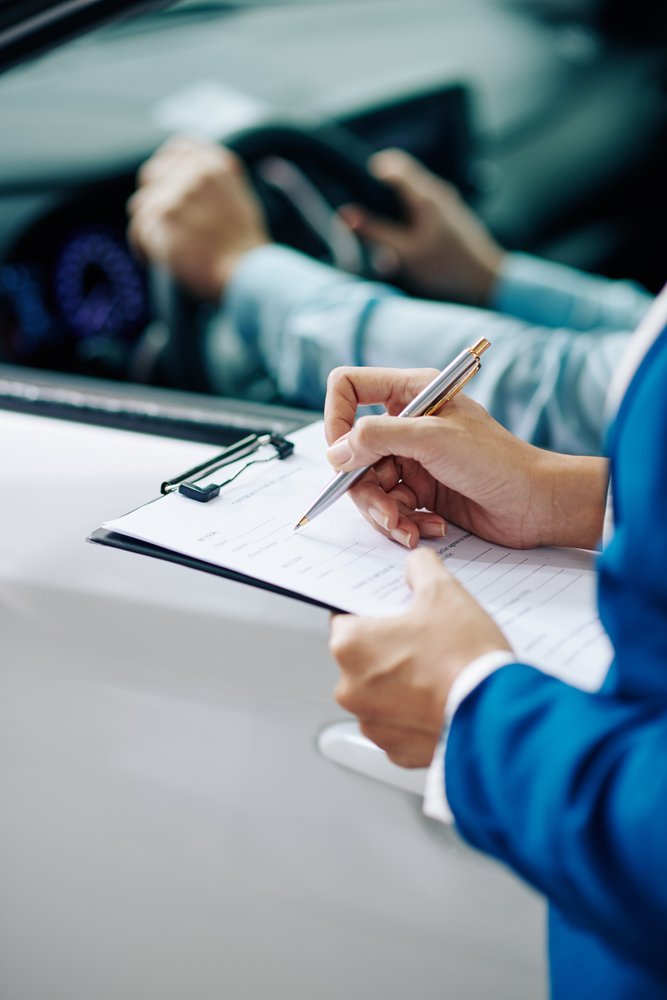
Documents you need to file a motor claim
Requirements vary by insurer and whether the claim concerns your own vehicle, a third-party vehicle, bodily injury or property damage.
For a typical vehicle-damage claim, prepare:
- Traffic Department accident report or official SMS
- Vehicle repair permit, where required
- Qatar ID of the vehicle owner
- Qatar ID or passport of the driver, if different
- Vehicle registration card
- Valid driving licence of the person driving
- Insurance policy number or certificate
- Photographs of the damage and accident scene
- Contact details
- Claim form or online submission
- Vehicle for physical or photographic inspection
QIC currently lists the police report, QID, registration card, driving licence and repair permit. AlKoot lists the police report, vehicle registration, driving licence and QID, while Sharq Insurance distinguishes between own-damage, third-party vehicle, property, injury and death claims.
For bodily injury, death or damaged public or private property, additional records may be required, including:
- Medical reports
- Hospital records
- Death certificate
- Legal-heir documents
- Power of attorney
- Property-repair estimates
- Other police or court documents
Ask the insurer for a written checklist that matches your type of claim.
Step-by-step: how to file your car insurance claim
You should notify the appropriate insurer as soon as reasonably possible after receiving the Traffic Department record.
Do not wait until the vehicle has been repaired.
Step 1 — Confirm which insurer should handle the claim
Check the Traffic Department finding and your insurance cover.
You may need to contact:
- Your own insurer under comprehensive cover
- The at-fault driver’s insurer as an injured third party
- Both insurers if liability, recovery or policy interpretation needs clarification
Do not rely only on what the other driver says at the scene. Use the official report and ask the insurer which claim category applies.
Option 1 — Online or through an insurer’s digital service
Several Qatar insurers provide online or app-based motor-claim filing.
QIC offers online claims around the clock and recommends submitting a claim immediately or as soon as possible. QIIC also accepts online claims and says claim enquiries can be made through phone and WhatsApp channels.
The general digital process is:
Enter your details
Provide your:
- Policy or mobile number
- QID details
- Vehicle details
- Accident reference
- Contact information
Upload the documents
Attach clear copies of the police report, repair permit where requested, QID, driving licence, vehicle registration and photographs.
Make sure every document is complete and readable.
Receive a claim reference
The insurer registers the case and provides a claim number.
QIC states that it contacts the claimant within one business day to confirm the request. QIIC says a claim reference and workshop details are normally sent within a day after the claim is opened. These are acknowledgement targets, not promises that the complete claim will be approved within one day.
Arrange inspection
The insurer may ask you to:
- Bring the car to its claims centre
- Take it to an approved garage
- Visit the vehicle agency
- Submit additional photographs
- Wait for a surveyor
- Obtain a repair estimate
Sharq Insurance states that the vehicle may need to be present at the garage, agency or insurer for assessment.
Option 2 — By phone, WhatsApp, email or in person
The available channels depend on the insurer.
Examples include:
- AlKoot: branch, email or WhatsApp
- Sharq Insurance: online, email or claims centre
- QIIC: online, phone or WhatsApp
- QGIRCO: online or branch submission
When submitting in person or by message:
- Request confirmation that the claim has been registered.
- Record the claim number.
- Ask which garage or agency is authorised.
- Confirm whether an excess applies.
- Ask whether further inspection is required.
- Keep copies of every document and message.
Do not send identity documents to an unverified personal number or unofficial social-media account.
The claim timeline: what to expect and when
There is no single official two-week claims timeline applying to every insurer or accident in Qatar.
The process depends on:
- How quickly the Traffic Department completes the report
- Whether fault is disputed
- Whether the claim is comprehensive or third-party
- Whether the vehicle needs a survey
- Garage-estimate approval
- Policy exclusions or excess
- Availability of replacement parts
- Whether the vehicle is repairable
- Whether bodily injury or legal proceedings are involved
Accident-report stage
For Metrash reports, the Traffic Department reviews the photographs and sends the parties instructions by SMS. The MOI does not publish one guaranteed processing time for every minor accident.
For cases reported directly to the police, the report may sometimes be available within 24 to 48 hours, but this is an indicative practice rather than a guaranteed official deadline.
Claim acknowledgement
Some insurers publish a short acknowledgement target:
- QIC: contact within one business day after filing
- QIIC: claim reference and workshop information within one day after the claim is opened
This does not mean the final repair approval will necessarily be issued in the same period.
Assessment and approval
The insurer may need time to:
- Verify cover
- Confirm liability
- Inspect the vehicle
- Review the repair estimate
- Decide between repair, cash settlement or total loss
- Request additional information
No reliable market-wide rule states that all straightforward claims must receive final approval within two weeks.
Repair period
Repairs may take:
- A few days for minor bodywork where parts are available
- Several weeks for major damage
- Longer where agency parts are back-ordered
- Longer still where chassis, airbags or specialist components are involved
Ask the garage for an estimated completion date after the insurer approves the work.
Direct garage settlement and excess
Where the policy allows direct repair at an approved garage, the insurer may settle the authorised repair cost directly with the garage.
The policyholder may still need to pay:
- The policy excess or deductible
- Betterment or depreciation charges where applicable
- Unapproved repairs
- Non-covered damage
- Upgrades or additional work
- VAT or other charges where contractually applicable
A third-party claimant does not necessarily follow the same excess arrangement as a comprehensive-policy holder claiming for their own vehicle.
Get the payment responsibility in writing before the repair starts.
Do not leave it too long
Report the accident and notify the insurer promptly.
QIC recommends filing immediately or as soon as possible. Other policies may impose their own notice obligations, and delay can make it harder to verify the accident and damage.
Do not rely on one unofficial statement about how long an accident report or repair estimate remains valid.
Check:
- The reporting deadline in your policy
- Whether the Traffic Department record is complete
- The repair-permit status
- The insurer’s claim-submission deadline
- How long the garage estimate remains valid
- Whether the vehicle must be inspected before storage or towing
If your car is unsafe to drive, contact the insurer’s roadside-assistance or towing service before arranging your own recovery, unless immediate removal is necessary for safety.
Tips to get your claim moving faster
Report the correct type of accident
Use Metrash for a qualifying minor two-vehicle accident.
Call 999 for injuries, serious collisions, disputes or situations that cannot be completed through the app.
Photograph the scene before moving the vehicles
For minor accidents, take the required photographs first and then clear the road.
Make sure the number plates and damage are visible.
Submit a complete document set
Missing identification, an unreadable registration card or a missing repair permit can delay registration or assessment.
Check the insurer’s own document list rather than relying on one generic checklist.
Use only an authorised garage
Do not assume that any garage can complete an insured repair.
Ask the insurer to confirm:
- Approved garage or agency
- Repair method
- Parts approval
- Excess
- Warranty
- Estimated completion date
Do not approve extra work without checking
The garage may discover unrelated wear, old damage or additional repairs outside the insurer’s authorisation.
Get written confirmation before agreeing to extra charges.
Check your policy excess
The deductible can differ according to:
- Driver age
- Driver experience
- Agency or non-agency repair
- Type of accident
- Off-road use
- Optional policy conditions
Track the claim
Several insurers provide online claim tracking or updates using the claim number.
QIC, for example, allows customers to track a motor claim online using the claim number and vehicle-owner information.
Escalate unresolved complaints properly
First use the insurer’s formal complaints process and keep the complaint reference.
Insurance companies in Qatar are supervised by Qatar Central Bank, whose Customer Protection Department handles financial-services complaints and works to safeguard customer rights.
Not sure whether your current policy offers the right protection, or considering comprehensive cover before buying another vehicle? Browse Qatar Living Vehicles for cars, ownership guides and practical motoring information.
This guide is general information for residents in Qatar. Accident procedures, insurance requirements, policy terms and repair arrangements can differ by case. Follow the Traffic Department’s instructions and the wording of your own policy.
FAQs
Is car insurance mandatory in Qatar?
Yes.
Third-party liability is the minimum mandatory motor-insurance cover. The MOI requires a vehicle-registration renewal applicant to hold an insurance card valid for one year.
Do I need both an accident report and a repair permit?
You need an official Traffic Department record of the accident, and the required repair approval must be in place before authorised repairs begin.
Depending on the case and insurer, these may appear as a report, SMS, digital approval or downloadable Vehicle Repair Report rather than two paper documents collected separately.
Can I start my claim before receiving the repair permit?
Some insurers may allow you to notify them or begin opening the file using the Traffic Department report or SMS.
However, the insurer may require the repair permit before completing the claim or authorising the garage. Do not begin repairs until both the Traffic Department and insurer requirements have been satisfied.
How do I report a minor accident?
For a minor accident involving two vehicles and no injuries, use the accident-reporting service in the Metrash app.
Take no more than four photographs of each vehicle, ensure a number plate is clearly visible, move the vehicles away from traffic, enable location services and submit both vehicles’ details.
What if there are injuries or major damage?
Call 999 immediately.
For a major accident, do not move the vehicles unless required for immediate safety or instructed by the police.
Is it still called Metrash2?
The current application is generally branded Metrash, although some older official MOI and Hukoomi service pages still use the previous Metrash2 name.
Use the current official MOI app installed on your phone.
How long does a car insurance claim take in Qatar?
There is no standard market-wide completion period.
Some insurers acknowledge or register a claim within one business day, but assessment, approval and repair can take longer depending on liability, documentation, vehicle damage, garage capacity and parts availability.
Can I file my claim online?
Several major insurers provide online claim submission, but the available channel depends on your company.
QIC and QIIC accept online motor claims, while other insurers may also use email, WhatsApp, telephone or branch submission.
What documents will I need?
A typical claim may require:
- Police or Traffic Department report
- Repair permit
- QID
- Vehicle registration
- Driving licence
- Policy information
- Damage photographs
The exact list depends on the insurer and claim type.
Who pays the repair excess?
Under a comprehensive own-damage claim, the policyholder may need to pay the deductible stated in the policy.
A third-party claimant’s treatment may differ. Confirm the amount and reason for any deduction with the insurer before authorising the repair.
What happens if the insurer delays or rejects my claim?
Request the decision and reasons in writing.
Use the insurer’s formal complaints process first. If the matter remains unresolved, you may escalate it through Qatar Central Bank’s customer-protection channels.
---
About Qatar Living :
Since 2005, Qatar Living has been the trusted destination for everything Qatar. As the country's largest online community and marketplace, Qatar Living connects people with opportunities through jobs, property, vehicles, services, classifieds, events, local insights, and breaking news. Trusted by residents, newcomers, visitors, and businesses alike, Qatar Living brings Qatar together in one place.
Follow Qatar Living for daily updates:
Instagram - @qatarliving
X - @qatarliving
Facebook - Qatar Living
YouTube - qatarlivingofficial
Up Next

Karwa Taxi & Ride-Hailing in Qatar: Options, Apps & Costs
Your 2026 guide to Karwa taxi and ride-hailing in Qatar: booking apps, phone numbers, fares in QAR, airport rates and money-saving tips.
Jul 26,2026
Fuel Prices in Qatar Rise in July 2026: Premium 91 Up
Fuel prices in Qatar for July 2026: Premium Gasoline 91 rises to QAR 2.05 per litre, while Super 95 and Diesel remain unchanged. See full details.
Jul 22,2026
Vehicle Insurance in Qatar 2026: Types & Costs
Vehicle insurance in Qatar 2026: compare TPL vs comprehensive cover, real QAR costs, mandatory rules, add-ons and how to buy or renew your policy.
Jul 7,2026