Exporting a Car from Qatar: Process, Customs & Costs
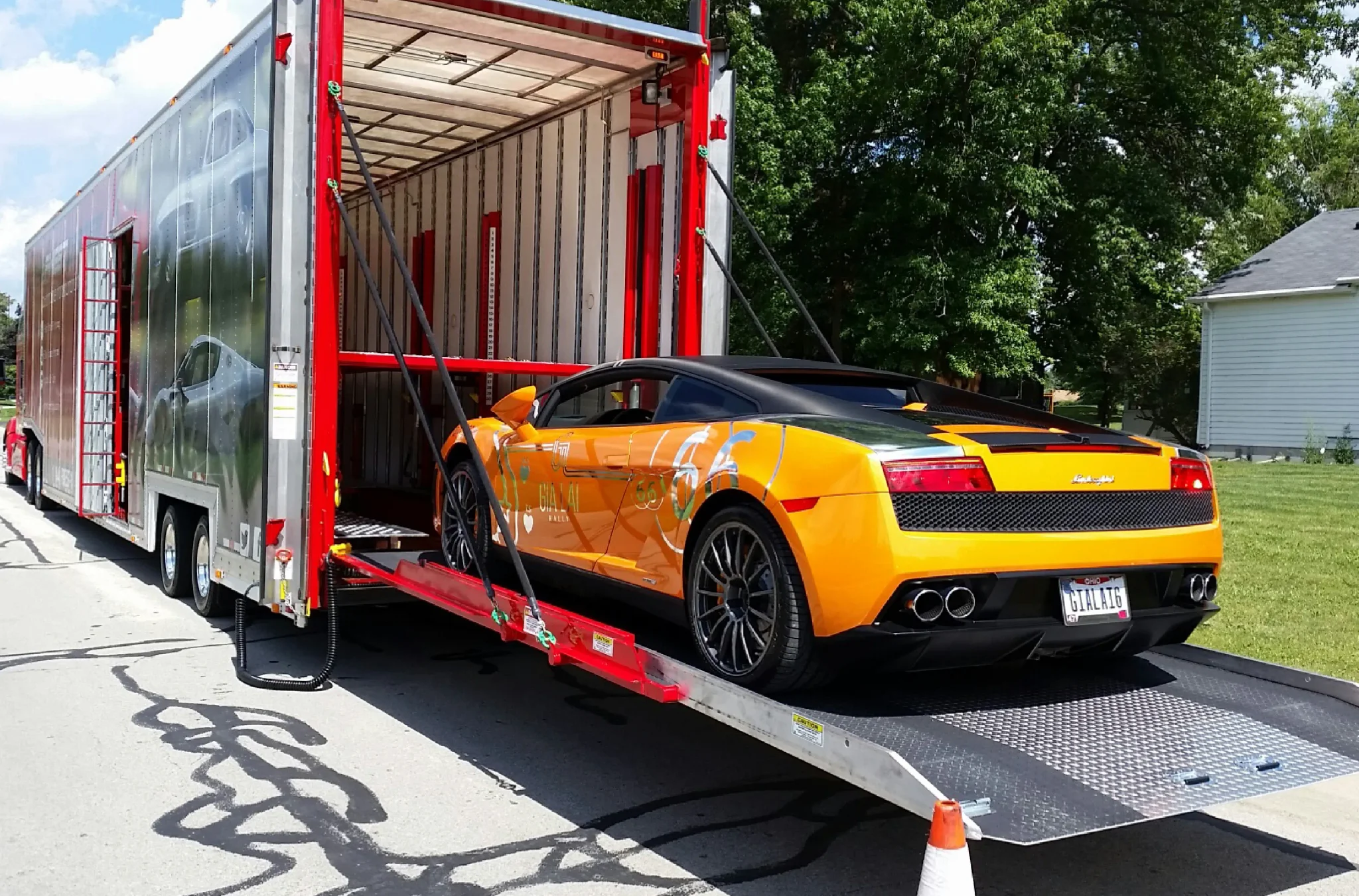
Exporting a car from Qatar comes down to three moving parts: fitting export plates from the Ministry of Interior (QAR 100 per plate), completing a customs export declaration through the General Authority of Customs, and booking the actual shipping through a freight forwarder. Do them in that order and the process is straightforward. Skip a step — like leaving an unpaid traffic fine or an open car loan — and your car won't leave the port.
Whether you're relocating from Doha for good, selling a vehicle to a buyer abroad, or shipping a prized 4x4 back home, here's exactly how exporting a car from Qatar works in 2026 — the process, customs and costs — and where people get stuck.
Exporting a car from Qatar: the short version
- Sort the paperwork — clear any bank loan on the car, settle all traffic fines, and make sure the registration (istimara) is valid.
- Get export plates from MOI — QAR 100
- File the customs export declaration with the General Authority of Customs at the exit point, and pay the applicable declaration fees.
- Book shipping with a freight forwarder — ro-ro or container — from a Qatari port to your destination.
Before you start: is your car ready to export?
Qatari authorities won't process an export on a vehicle that has anything outstanding against it. Deal with these before you touch an export plate application.
Clear the loan and settle fines first
- Bank loan / lien — if the car was financed, the bank holds a lien on the registration. You'll need a clearance letter confirming the loan is fully paid before the car can be deregistered or exported.
- Traffic fines — every unpaid fine tied to the vehicle must be cleared. You can check and pay through Metrash2 or the MOI portal in minutes.
- Valid registration — keep your istimara current; an expired registration complicates the export declaration.
- Insurance — cancel or transfer local insurance once the car is off the road, and arrange marine/transit cover with your shipper.
Step 1 — Apply for export plates through MOI
Once the car is clean of loans and fines, apply for export plates through the Ministry of Interior's vehicle-licensing services. You can start the request through Metrash or at a traffic service centre.
- Export plate fee — QAR 100
- Lost or damaged plate — a replacement is QAR 100 so keep them safe until the car is loaded.
Export plates replace your standard Qatari plates and signal to the port and customs that the vehicle is leaving the country. The official fee schedules don't publish a fixed validity window for export plates, so treat them as short-term — apply close to your shipping date rather than months ahead, and confirm current timing when you apply. For licensing queries, MOI's traffic-services lines are 2344722 and 2344720.
Step 2 — Complete the customs export declaration
With export plates fitted, the vehicle needs a formal export/customs declaration filed through the General Authority of Customs' automated clearance system at the exit point (typically the port your shipper uses). This is what legally clears the car to leave Qatar. Customs may require an inspection of the vehicle before release, so allow time for that.
Customs fees you should budget for
The current customs-fee framework is set out in Minister of Finance Decision No. 13 of 2023 (per the General Authority of Customs). The charges that commonly apply to a vehicle export are modest:
- Individual customs-declaration service fee — QAR 50.
- Official document request (a customs document relating to the vehicle) — QAR 50.
- Temporary-export request or extension (only if you're exporting the car temporarily) — QAR 100.
- Container/truck handling — QAR 200 when that handling service is actually provided.
- Customs storage — QAR 150 per truck per day (or part of a day) after the first 24 hours, and only if the vehicle actually sits in a customs yard or warehouse. Move the car through promptly and you avoid this charge entirely — it isn't a standard export fee.
Note that these are Qatar-side customs charges. They're separate from what you'll pay your freight forwarder and from any duties or taxes charged when the car arrives in the destination country.
Step 3 — Ship the vehicle (ro-ro vs container)
This is the biggest and most variable cost. Qatar does not set a government tariff for international vehicle shipping — prices are quoted by freight forwarders and shipping lines and swing widely by destination, carrier, and sailing date. Get at least two or three written quotes.
You'll usually choose between two methods:
- Ro-ro (roll-on/roll-off) — the car is driven onto a dedicated vehicle vessel. Generally the cheaper option, good for running cars, but you can't ship personal belongings inside.
- Container shipping — the car is sealed inside a container. Costs more but offers better protection and lets you pack some household goods, which suits relocations.
What affects your shipping cost
- Destination port and distance from Qatar.
- Ro-ro versus container (and shared vs sole-use container).
- Vehicle size and weight — an SUV or pickup costs more than a sedan.
- Marine/transit insurance, port handling, and inland transport at both ends.
- Destination-country customs duties, taxes, and clearance fees — these are set by the arrival country, not Qatar, so check them before you ship.
Documents you'll need
- Vehicle registration (istimara) in your name.
- Bank loan clearance letter, if the car was financed.
- Proof that all traffic fines are settled.
- Your Qatar ID (QID) and passport copy.
- Export plate documentation from MOI.
- The completed customs export declaration.
- Any additional documents customs requests during clearance.
Rough cost checklist
Budget in three buckets. The Qatar-side official fees are small and predictable; the shipping is where the real money goes.
- Export plates — QAR 100
- Customs declaration + document fees — commonly QAR 50 each, plus any handling.
- Shipping — variable; get quotes. This is usually the largest line by far.
- Destination charges — set by the arrival country; confirm duties and taxes early.
Common mistakes to avoid
- Applying for export plates before clearing fines or the loan — the request will stall.
- Ignoring destination duties — some countries charge steep import taxes that can rival the car's value. Check first.
- Booking shipping before customs is sorted — coordinate the declaration with your shipper so the car isn't sitting in a yard racking up storage.
- Losing your export plates — a replacement is another QAR 100 and a delay.
FAQs
How much does it cost to export a car from Qatar?
The Qatar-side official fees are low: export plates are QAR 100 and customs declaration and document fees are commonly QAR 50 each. The big variable is international shipping, which is not fixed by any government tariff and depends on your destination, vehicle, and carrier — get written quotes.
Do I need to clear my car loan before exporting?
Yes. If the vehicle was financed, the bank holds a lien on the registration. You'll need a clearance letter confirming the loan is fully paid before the car can be deregistered and exported.
What are export plates and where do I get them?
Export plates are temporary plates that replace your standard Qatari plates so the vehicle can leave the country. You apply for them through the Ministry of Interior's vehicle-licensing services, including Metrash, for QAR 100
How long does exporting a car from Qatar take?
The paperwork — plates and the customs declaration — can move quickly once fines and any loan are cleared. The total timeline is usually driven by shipping schedules and the destination country's customs, so confirm sailing dates with your freight forwarder and current timing with MOI and customs.
Ro-ro or container — which should I choose?
Ro-ro is generally cheaper and fine for a running car, but you can't pack belongings inside. A container costs more but protects the vehicle better and lets you ship some household goods, which suits people relocating from Doha.
Who do I contact for export plate or licensing questions?
MOI's traffic-services lines for vehicle licensing are 2344722 and 2344720. For the customs declaration and any inspection, deal with the General Authority of Customs at your exit point.
Selling before you go, or buying your next set of wheels? Browse the latest cars for sale in Qatar on Qatar Living.
--
About Qatar Living:
Since 2005, Qatar Living has been the trusted destination for everything Qatar. As the country's largest online community and marketplace, Qatar Living connects people with opportunities through jobs, property, vehicles, services, classifieds, events, local insights, and breaking news. Trusted by residents, newcomers, visitors, and businesses alike, Qatar Living brings Qatar together in one place.
Instagram - @qatarliving
X - @qatarliving
Facebook - Qatar Living
YouTube - qatarlivingofficial
Up Next
If You Drive in Qatar, You’ve Definitely Met These Parking Personalities
Discover the most common parking personalities in Qatar, from double parkers to spot stalkers, and tips for better parking etiquette.
Sep 24,2026
Car Depreciation in Qatar: 2-5 Year Resale Value
Car depreciation in Qatar explained: what your car is worth in 2-5 years, brand-by-brand loss rates, and tips to protect resale value.
Sep 20,2026
Doha Used Car Buying Guide: Prices, Tips & Paperwork
Discover how to buy a used car in Doha with our guide to prices, tips for inspections, and handling paperwork like Istimara transfer in Qatar.
Jun 16,2026