Foreign Investment Sectors in Qatar 2026: Full Guide
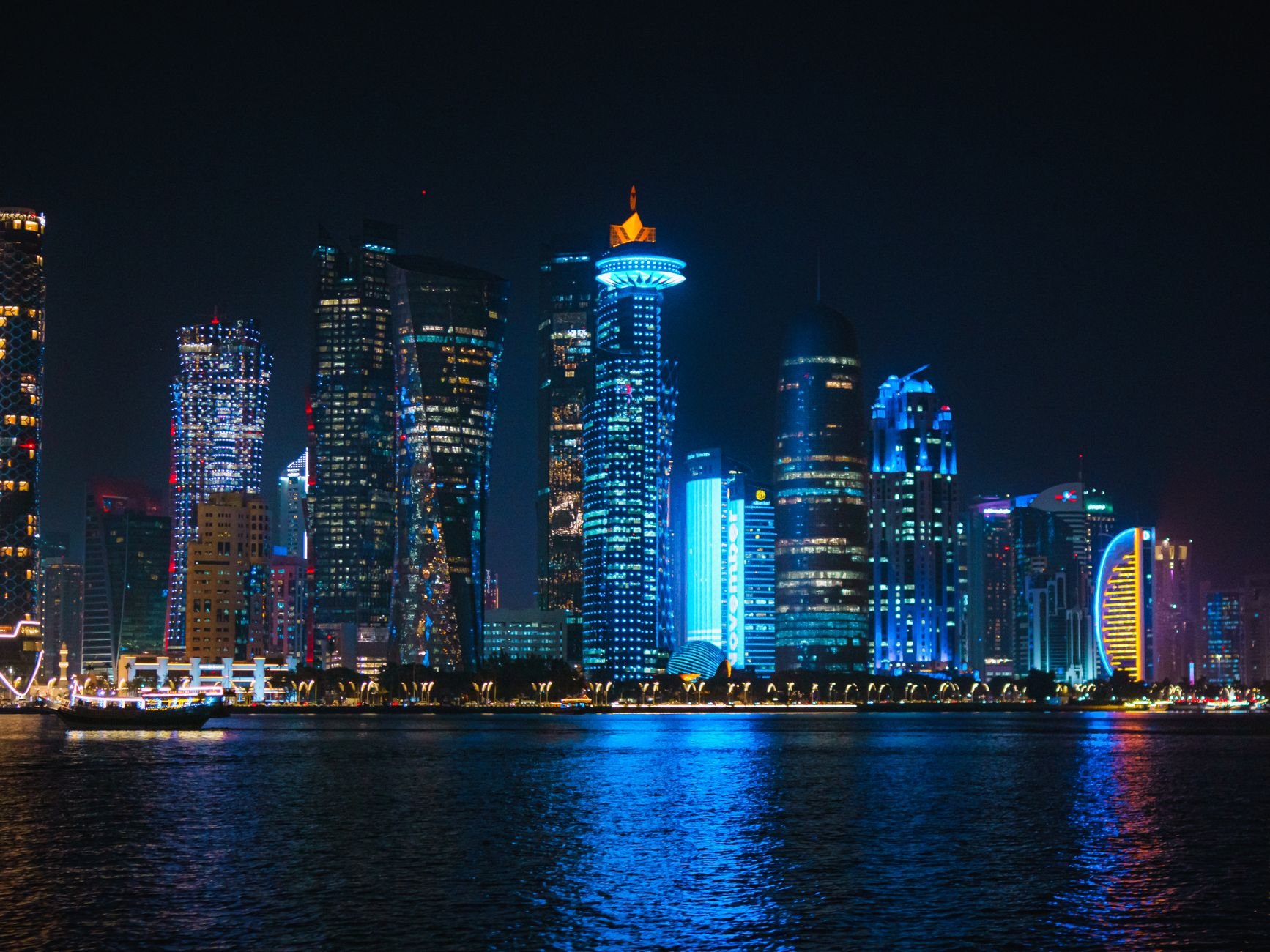
Here's the headline most newcomers want first: in Qatar, foreign investors can now own up to 100% of a business across the vast majority of economic sectors — no local partner required. The Ministry of Commerce and Industry (MOCI) has opened around 1,200 commercial and professional activities to full foreign ownership, from software firms in West Bay's business district to food factories in Doha's Industrial Area. This guide walks you through the eligible business sectors for foreign investment in Qatar 2026, the handful of exclusions, and where the real growth is.
The short answer: what foreign investors can own in Qatar in 2026
Under current rules, most sectors are open to 100% foreign ownership. That's a major shift from the old default that capped foreign investors at 49% and required a Qatari partner holding the majority. Today, whether you're launching a tech startup, a consultancy, a restaurant or a logistics company, full ownership is the norm rather than the exception.
There are still specific carve-outs — banking, insurance, oil and gas extraction, and a short list of activities reserved for Qatari nationals. But outside those, the door is wide open, and the licensing process is faster than many expats expect.
The legal basis: Law No. 1 of 2019
Foreign investment is governed mainly by Law No. 1 of 2019 on Regulating Non-Qatari Capital in Economic Activity. The law permits foreign investors to own up to 100% of the capital in all economic sectors, subject to defined exclusions and the executive regulations that sit beneath it.
In practice, this means MOCI maintains a published list of approved activities. If your intended activity is on the list, you can generally proceed with full ownership; a small number of sensitive or reserved activities remain closed or restricted. Always confirm your exact activity code with MOCI before committing to a trade name or lease.
Eligible business sectors for foreign investment in Qatar 2026
The eligible list is broad and covers most of what a modern economy needs. Here are the main sectors currently open to foreign investors.
Industry, manufacturing and construction
- Manufacturing and industrial activities — light manufacturing, food processing, packaging and assembly, well suited to Qatar's industrial zones.
- Construction — contracting, fit-out and specialist building services feeding ongoing projects in Lusail, Msheireb and beyond.
- Agriculture — including greenhouse farming and food-security ventures the government actively encourages.
- Mining — extraction of certain non-hydrocarbon minerals and related processing.
- Waste management and environmental services — recycling, treatment and green services.
Trade, logistics and hospitality
- Retail and wholesale trade — subject to standard licensing conditions.
- Transportation and storage — logistics, warehousing and distribution, leveraging Hamad Port and Hamad International Airport.
- Hospitality and accommodation — hotels, serviced apartments, travel agencies and tourism-related businesses.
- Food and beverage businesses — restaurants, cafés and catering, a perennial favourite for foreign founders.
- Auto repair and general repair services.
Technology, professional and creative services
- Information technology and communications — software development, digital platforms, cybersecurity and cloud services.
- Professional and business services — management consultancy, market research, HR consultancy (except manpower supply) and creative services.
- Education and training — EdTech, vocational and training institutes.
- Healthcare — non-clinical support activities; clinical services typically require additional approvals.
- Media, content creation and entertainment — digital entertainment and esports included.
- Energy and sustainability services — environmental consultancy and green technology.
High-growth sectors to watch in 2026
If you're deciding where to place your bet, these are the areas attracting the strongest momentum and government backing this year:
- Technology, AI and digital services — artificial intelligence, machine learning, cybersecurity and smart-city solutions align neatly with Qatar National Vision 2030.
- Fintech and digital financial services — open to foreign investors, though subject to sector-specific approvals and prudential rules.
- Healthcare and life sciences — health tech, biotech innovation and non-clinical healthcare support.
- Tourism and hospitality — riding continued visitor growth via Hamad International Airport and Hayya.
- Sustainability and green tech — environmental services and clean-energy consultancy.
What foreign investors cannot fully own
A short but important list of activities stays outside the 100%-ownership regime:
- Banking and insurance activities.
- Exploitation of natural resources — oil and gas extraction and similar.
- Certain commercial agencies.
- Activities tied to national security or public interest, including security and defence services and arms.
- Activities reserved for Qatari nationals under ministerial decisions — typically micro-trades and certain local professions, with the list updated periodically.
- Specifically closed activities such as printing newspapers and periodicals and trading in pharmaceuticals.
If your plan touches any of these, you may still operate through structures such as a joint venture, a licensed local partner, or a specialist free-zone or financial-centre framework — worth a conversation with a local advisor.
How to start: the practical steps
Once you've confirmed your sector is eligible, the setup path is fairly linear. Based on MOCI guidelines and standard practice, here's the route most foreign founders follow:
- Confirm the activity with MOCI — match your business idea to an approved activity code.
- Reserve a trade name and draft your Articles of Association — for most, this means a Limited Liability Company (LLC).
- Secure commercial premises — a registered tenancy contract is usually required before the licence is issued.
- Obtain the commercial registration (CR) and trade licence from MOCI, plus municipal and, where relevant, sector approvals.
- Register with the Qatar Chamber and open a corporate bank account.
- Sort visas and QIDs for owners and staff through the Ministry of Interior.
Government fees vary considerably by activity and company size, so treat any figure as a rough guide and check with MOCI for your specific activity code. As a rough starting point, budget for trade licence and CR fees roughly in the region of QAR 1,000 to QAR 3,000 annually, plus Chamber membership and premises costs. Deciding between an LLC and a branch office is a key early choice — check MOCI's official guidance before you file.
FAQs
Can a foreigner own 100% of a company in Qatar in 2026?
Yes. Law No. 1 of 2019 allows up to 100% foreign ownership across most economic sectors, subject to specific exclusions such as banking, insurance and oil and gas extraction.
How many activities are open to foreign investors?
MOCI has approved around 1,200 commercial and professional activities for foreign investment, many permitting full ownership. The count is updated periodically, so confirm the current figure and your specific activity directly with MOCI.
Which sectors are closed to foreign ownership?
Banking, insurance, natural-resource extraction, certain commercial agencies, security and defence, printing newspapers and periodicals, trading in pharmaceuticals, and activities reserved for Qatari nationals.
Do I need a Qatari partner?
Generally no, if your activity is on the eligible list. A local partner is only required for the restricted or reserved activities that fall outside the 100%-ownership regime.
What are the best sectors to invest in this year?
Technology and AI, fintech, healthcare and life sciences, tourism and hospitality, and sustainability and green tech are the standout high-growth areas for 2026.
How much does a trade licence cost?
It varies by activity, but annual trade licence and commercial registration fees are typically around QAR 1,000 to QAR 3,000, before premises, Chamber and visa costs. Check with MOCI for the exact fee tied to your activity code.
--
About Qatar Living:
Since 2005, Qatar Living has been the trusted destination for everything Qatar. As the country's largest online community and marketplace, Qatar Living connects people with opportunities through jobs, property, vehicles, services, classifieds, events, local insights, and breaking news. Trusted by residents, newcomers, visitors, and businesses alike, Qatar Living brings Qatar together in one place.
Instagram - @qatarliving
X - @qatarliving
Facebook - Qatar Living
YouTube - qatarlivingofficial
Up Next

Qatar Company Formation Timeline & Cost 2026
Qatar company formation timeline & total cost breakdown 2026: real QAR fees, day-by-day steps and the MOCI, CR, municipality and tax stages for a mainland LLC.
Jul 22,2026
Registering a Branch of a Foreign Company in Qatar
Registering a branch of a foreign company in Qatar: full guide to MOCI approval, CR, documents, tax, licences, timelines and costs in QAR.
Jul 22,2026
Starting a Business in Qatar: MOCI Steps for Expats
Starting a business in Qatar? Our step-by-step MOCI registration guide for expats covers trade name, CR, costs in QAR, tax cards and visas.
Jul 21,2026
Office Space Rental in Doha: Costs & Lease Tips
Commercial office space rental in Doha: real QAR costs, lease terms, deposits, service charges and negotiation tips for West Bay, Lusail and beyond.
Jul 21,2026