FIFA World Cup Mascots Through the Years
The FIFA World Cup is remembered for legendary goals, unforgettable matches, iconic kits, and historic champions. But since 1966, another part of the tournament has become a major part of its identity: the official mascot.
World Cup mascots are more than just fun characters. They reflect the host nation’s culture, symbols, personality, and sometimes even the spirit of the tournament itself. From lions and oranges to wolves, armadillos, and futuristic characters, every mascot tells a small story about the country and the era it represented.
Official mascots were first introduced at the 1966 FIFA World Cup in England. Since then, every edition has had its own character, with the 2026 tournament taking things even further by introducing three mascots for the first time, representing Canada, Mexico, and the United States.
1966 – World Cup Willie, England
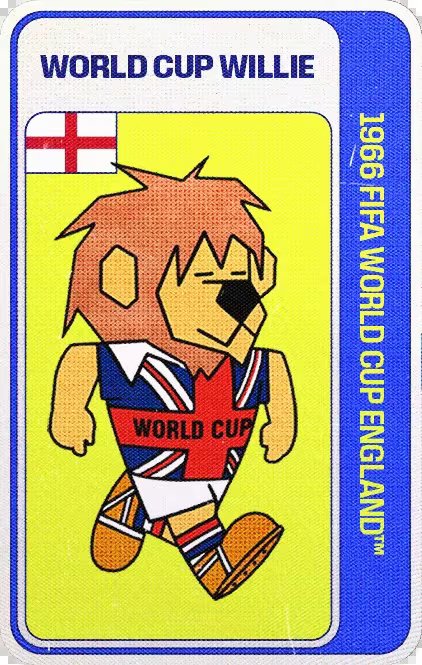
The first official FIFA World Cup mascot was World Cup Willie, a lion wearing a Union Jack shirt. The lion was a natural choice for England, as it has long been associated with English identity, football, and national symbolism.
World Cup Willie set the standard for future mascots. He was friendly, recognisable, and easy to use across posters, merchandise, and promotions. More importantly, he proved that a mascot could help make the tournament feel more accessible, especially for families and younger fans.
1970 – Juanito, Mexico
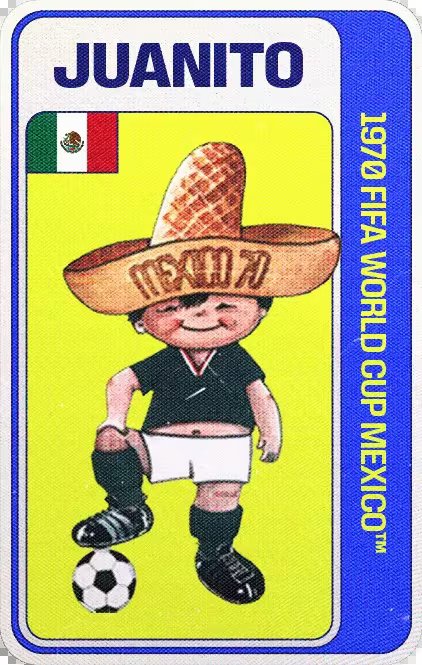
Mexico 1970 introduced Juanito, a cheerful boy wearing the Mexican national team kit and a traditional sombrero. His name is a diminutive form of Juan, a common Spanish name.
Juanito reflected the host country in a simple and direct way. He represented Mexican identity, youth, and the joy of football. The design was straightforward, but it helped continue the idea that each World Cup mascot should feel connected to the host nation.
1974 – Tip and Tap, West Germany
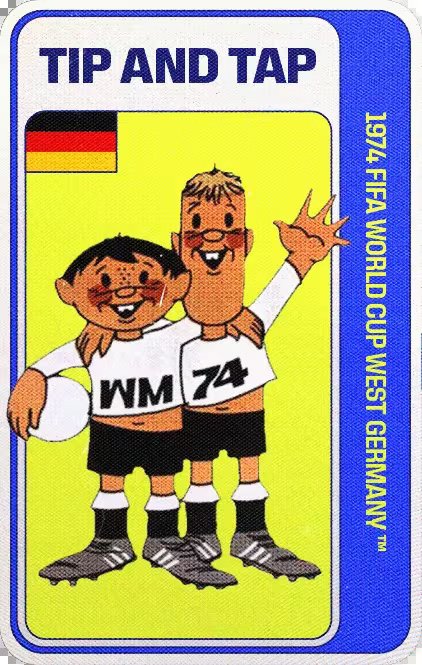
For the 1974 tournament in West Germany, FIFA introduced Tip and Tap, two young boys wearing Germany kits. One shirt featured “WM”, short for Weltmeisterschaft, meaning World Cup in German, while the other carried the number 74.
The pair represented teamwork, friendship, and unity. As a duo, Tip and Tap stood out from the single-character mascots that came before them and added a more playful feeling to the tournament.
1978 – Gauchito, Argentina
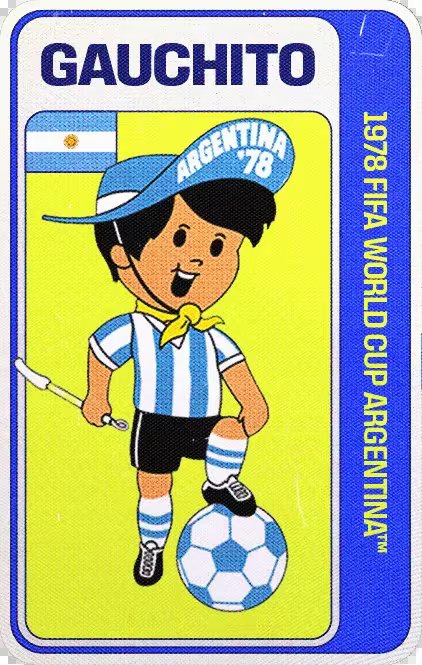
Argentina’s 1978 mascot was Gauchito, a young boy wearing Argentina’s kit along with items linked to gaucho culture, including a hat, neckerchief, and whip.
The mascot connected the tournament to a strong national image. Gauchos are an important part of Argentine culture and history, often associated with independence, tradition, and life on the plains. Gauchito gave the World Cup a local Argentine character while keeping the design youthful and football-focused.
1982 – Naranjito, Spain
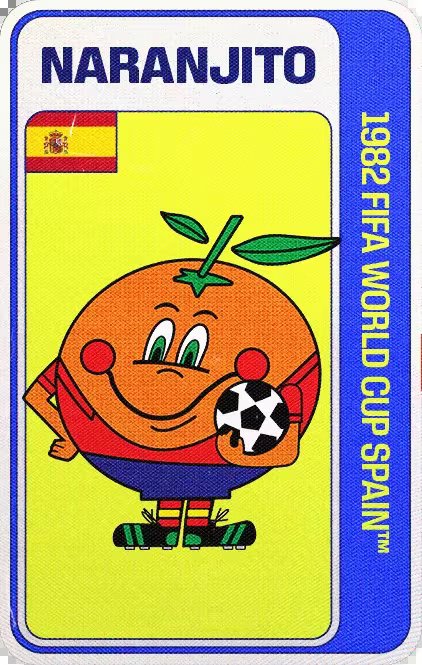
Spain 1982 brought one of the most memorable World Cup mascots: Naranjito. Instead of a person or animal, Spain chose an orange wearing the national team kit.
The name comes from “naranja”, the Spanish word for orange. The mascot represented one of Spain’s well-known agricultural products and became one of the most recognisable designs in World Cup history. Naranjito was colourful, simple, and full of personality.
1986 – Pique, Mexico
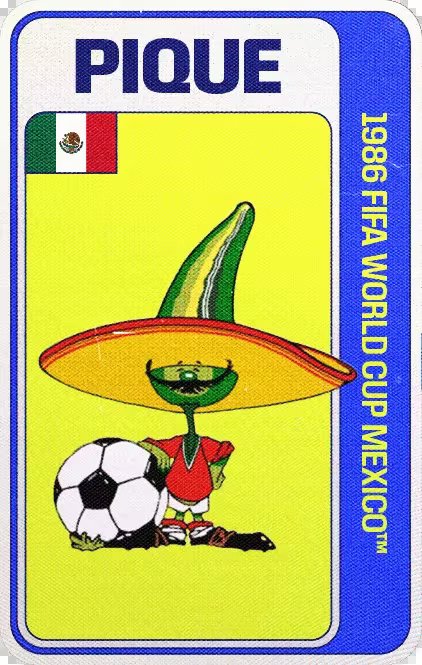
When the World Cup returned to Mexico in 1986, the mascot was Pique, a jalapeño pepper with a sombrero and moustache.
Pique combined several recognisable Mexican cultural elements into one character. The jalapeño reflected Mexican cuisine, while the sombrero and moustache gave the mascot a traditional visual identity. It was bold, lively, and strongly connected to the host country.
1990 – Ciao, Italy
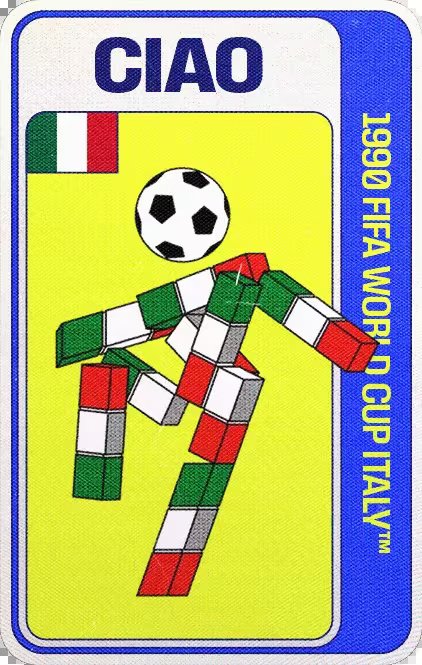
Italy 1990 took a very different approach with Ciao. Instead of an animal or child character, Ciao was a modern stick-figure design in the colours of the Italian flag, with a football for a head.
The name “Ciao” is one of Italy’s most famous greetings. The mascot reflected a more modern and design-led approach, matching the visual style of the era. It remains one of the most unusual World Cup mascots because of its abstract look.
1994 – Striker, United States
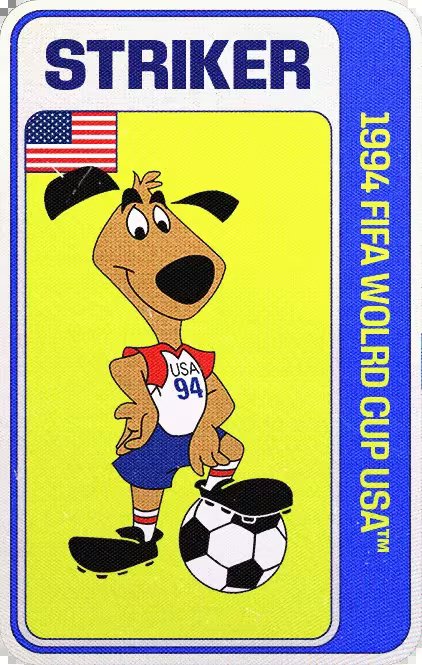
For USA 1994, the mascot was Striker, a football-loving dog wearing a red, white, and blue kit.
The choice of a dog made the mascot friendly and easy to connect with, especially for children and families. Striker was designed to feel energetic, approachable, and connected to the growing football culture in the United States at the time.
1998 – Footix, France
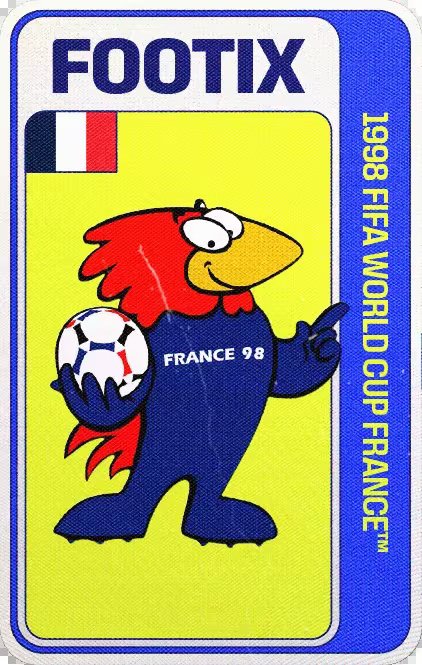
France 1998 introduced Footix, a blue rooster with a red comb and a football in hand. The rooster is one of France’s most famous national symbols, making it a fitting choice for the tournament.
The name Footix combines “football” with the popular “-ix” ending associated with famous French comic characters such as Asterix. Footix became one of the most loved World Cup mascots and is strongly remembered alongside France’s first World Cup triumph in 1998.
2002 – Ato, Kaz and Nik, Korea/Japan
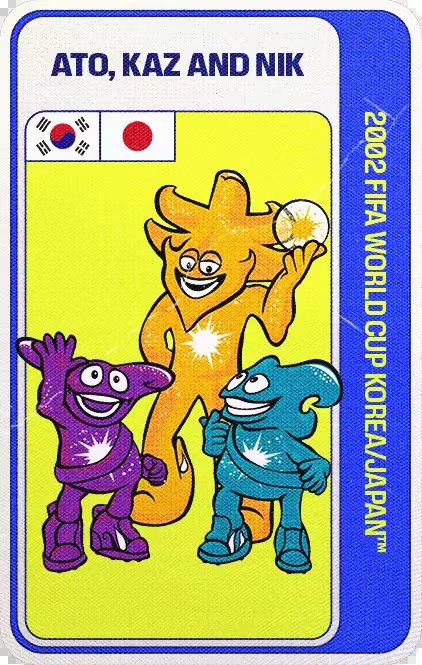
The 2002 FIFA World Cup in Korea and Japan was the first to be hosted by two countries, and its mascots took a futuristic approach. The tournament featured three characters: Ato, Kaz and Nik, collectively known as The Spheriks.
Their design was very different from earlier mascots. Instead of representing a traditional animal or cultural figure, they came from a fictional world and were linked to a fantasy football-like sport. This reflected the forward-looking image of the first World Cup held in Asia.
2006 – Goleo VI and Pille, Germany
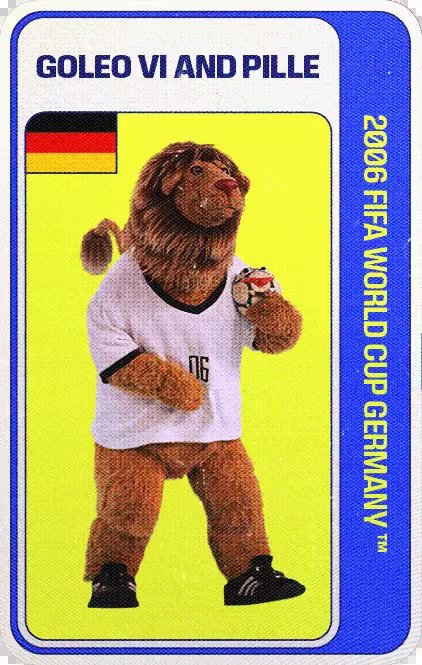
Germany 2006 featured Goleo VI, a lion, along with Pille, his talking football companion.
Goleo was designed as a friendly, oversized character who could interact with fans, appear at events, and bring energy to the tournament. Pille added a humorous touch and made the mascot concept feel more like a duo. Although the lion was not a specifically German animal, the character became part of the tournament’s visual identity.
2010 – Zakumi, South Africa
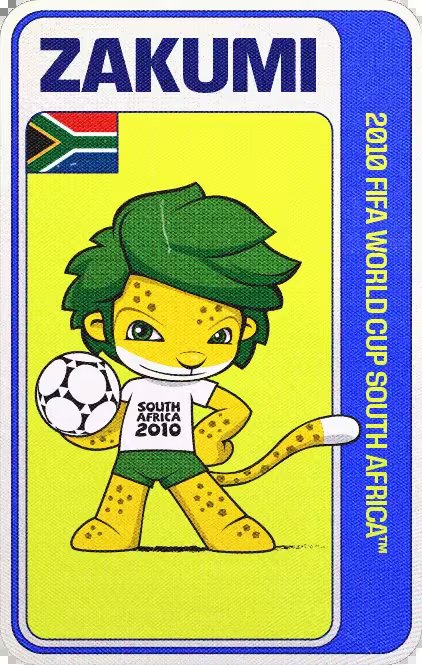
South Africa 2010 introduced Zakumi, a leopard with green hair. The leopard is commonly found across parts of Africa, while the green hair matched the colours often associated with South African sport.
Zakumi’s name carried meaning too. “ZA” refers to South Africa, while “kumi” means ten in several African languages, linking the character to the year 2010. Zakumi was colourful, energetic, and closely connected to the first FIFA World Cup hosted on the African continent.
2014 – Fuleco, Brazil
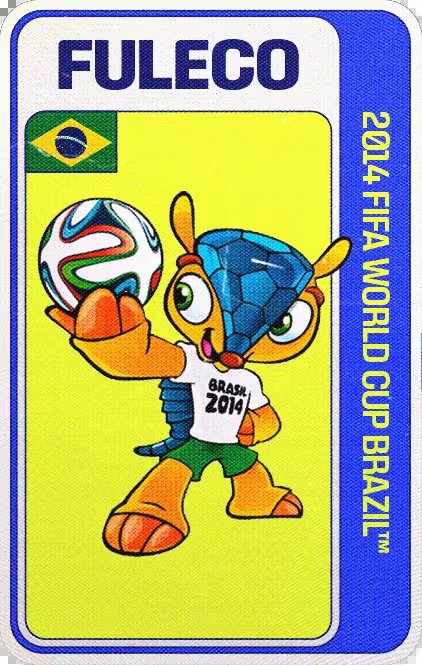
Brazil 2014 chose Fuleco, a Brazilian three-banded armadillo. The mascot combined football with an environmental message, as the species is native to Brazil and considered vulnerable.
The name Fuleco came from a combination of “futebol” and “ecologia”, meaning football and ecology. This gave the mascot a deeper purpose beyond promotion, linking the excitement of the World Cup with awareness of Brazil’s biodiversity.
2018 – Zabivaka, Russia
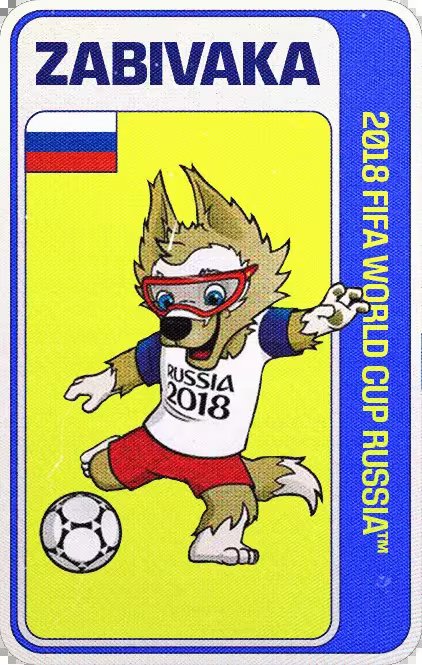
Russia 2018 introduced Zabivaka, a wolf wearing sports goggles and a football kit. His name means “the one who scores” in Russian.
Zabivaka was designed to be confident, energetic, and full of personality. The wolf is a strong and familiar animal in Russian culture and folklore, making it a fitting choice for the host nation. The mascot became a popular part of the tournament’s branding.
2022 – La’eeb, Qatar
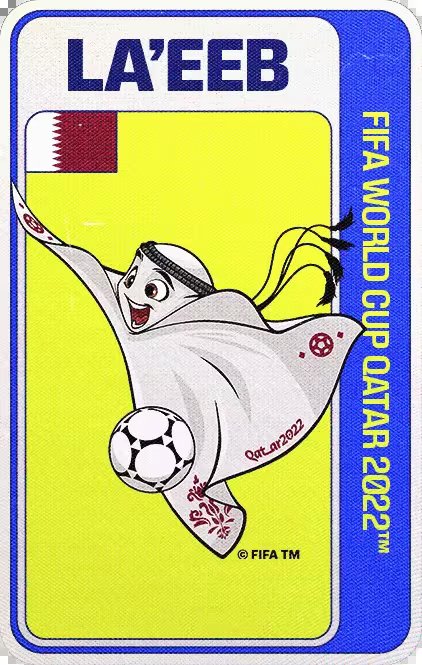
For Qatar 2022, the mascot was La’eeb, a playful character inspired by traditional Arab headwear. The name La’eeb means a highly skilled player in Arabic.
La’eeb had a unique floating design and was presented as a fun, energetic character from the “mascot-verse”. Unlike many earlier mascots, La’eeb was not based on an animal or child. Instead, it reflected the cultural identity of the region while giving the tournament a modern and imaginative character.
2026 – Maple, Zayu and Clutch, Canada, Mexico and United States
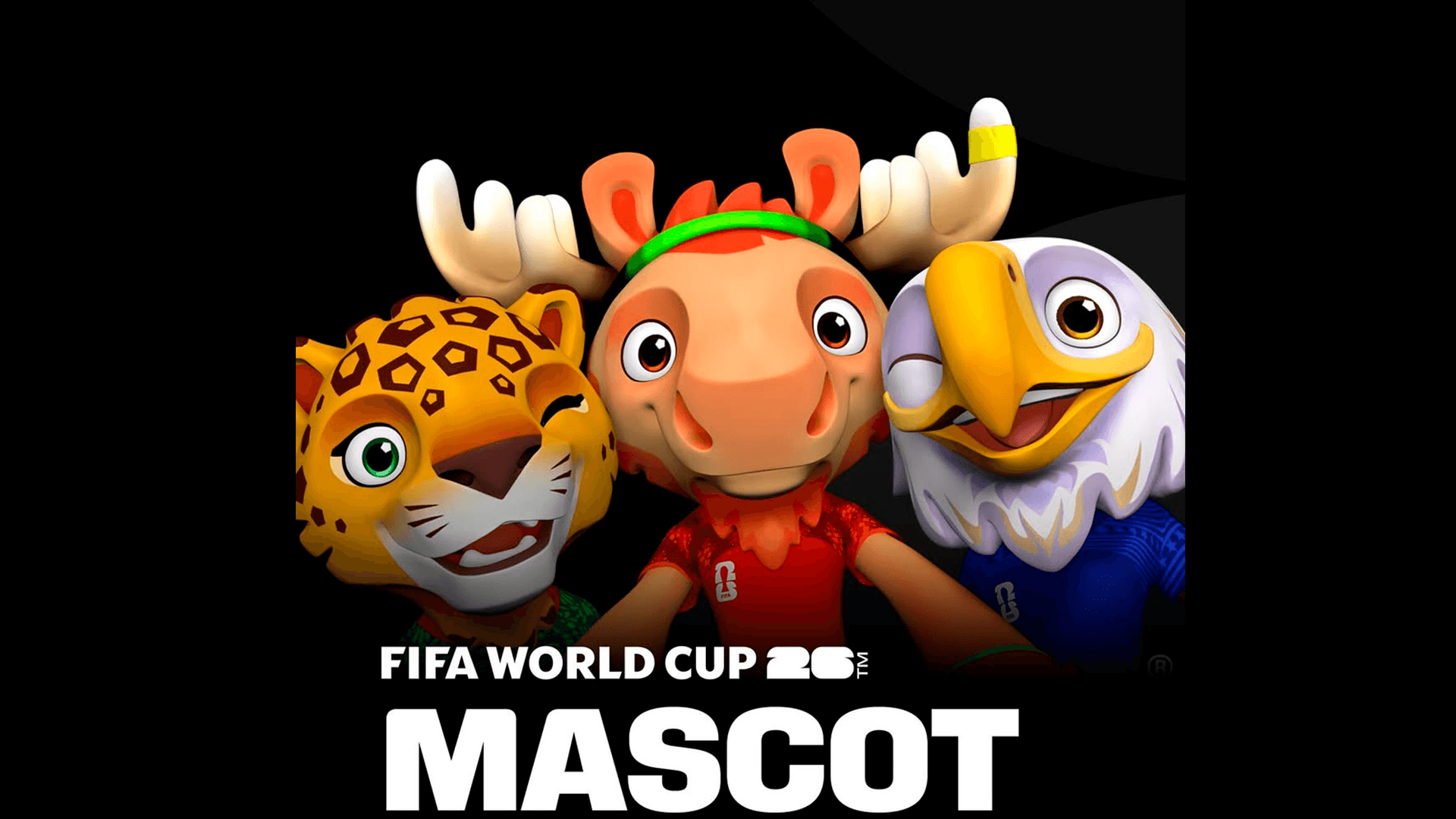
The 2026 FIFA World Cup will be historic in many ways. It will be hosted by three countries — Canada, Mexico, and the United States — and will also feature three official mascots.
Maple the Moose represents Canada. The moose is strongly associated with Canadian wildlife, while the name Maple connects to the maple leaf, one of the country’s most famous national symbols.
Zayu the Jaguar represents Mexico. The jaguar has deep cultural and natural significance in Mexico and across the region, symbolising strength, agility, and heritage.
Clutch the Bald Eagle represents the United States. The bald eagle is the national bird of the United States and is associated with power, freedom, and determination.
Together, Maple, Zayu and Clutch reflect the scale and diversity of the 2026 tournament, which will bring the FIFA World Cup to North America on its biggest stage yet.
Why World Cup Mascots Matter
World Cup mascots may look simple, but they play an important role in shaping the identity of each tournament. They appear on merchandise, posters, fan zones, broadcasts, digital content, and promotional campaigns. For many fans, especially younger ones, the mascot becomes one of the easiest ways to remember a tournament.
They also show how football culture has changed. Early mascots were simple national symbols, such as lions, boys in football kits, or local cultural figures. Later mascots became more experimental, futuristic, and brand-focused. Recent editions have also used mascots to highlight culture, sustainability, and host-country identity.
From World Cup Willie in 1966 to Maple, Zayu and Clutch in 2026, mascots have become part of the World Cup story. They may not score goals or lift trophies, but they help give each tournament its own face, personality, and memory.
Since 2005, Qatar Living has been the trusted destination for everything Qatar. As the country's largest online community and marketplace, Qatar Living connects people with opportunities through jobs, property, vehicles, services, classifieds, events, local insights, and breaking news. Trusted by residents, newcomers, visitors, and businesses alike, Qatar Living brings Qatar together in one place.
Instagram - @qatarliving
X - @qatarliving
Facebook - Qatar Living
YouTube - qatarlivingofficial
Up Next
FIFA World Cup 2026: Top Contenders and Underdogs to Keep an Eye on
Discover the top contenders and underdogs for the FIFA World Cup 2026. Explore team strengths, star players, and potential surprises in the tournament.
Jun 12,2026
Qatar takes commanding lead at the top of GCC Games tables with 133 medals
Qatar leads the GCC Games 2026 with 133 medals, including 48 gold. Strong performances in archery and karate highlight their dominance in the competition.
May 22,2026
Qatar clinch 109 medals to tighten grip on GCC Games lead
Qatar dominates the GCC Games, securing 109 medals including 39 gold, solidifying their top position in the Doha 2026 medals table.
May 18,2026
Qatar consolidates top spot on day 5 of GCC Games with 96 medals
Qatar leads the GCC Games with 96 medals, showcasing remarkable performances in shooting, athletics, and bowling on day five of the competition.
May 17,2026