Private and international schools in Qatar do not follow one standard payment schedule. Many divide annual tuition into termly or semester-based invoices, while monthly payment arrangements are less common. The number of instalments, payment dates and accepted methods depend on the school.
Parents may also be able to manage larger invoices through bank payment services, credit-card instalment programmes or an online platform used by the school.
This guide explains how school-fee instalments work, what charges to check and which payment options may help families spread the cost.
How private-school fees are paid in Qatar
Private schools collect their fees directly rather than through one central government payment portal. Once a child is offered a place, the school normally issues an invoice or fee schedule explaining:
- The annual tuition fee
- The number of instalments
- The amount and deadline for each payment
- Registration and seat-reservation charges
- Transport, books, resources and other additional fees
- Accepted payment methods
- Late-payment and withdrawal conditions
Depending on the school, parents may be able to pay through:
- Bank transfer
- A debit or credit card
- A cheque
- The school’s parent portal
- A banking application
- An authorised payment application
- The school’s finance office
Do not assume that a payment method accepted by one school will be accepted by another. Confirm the details shown on the current invoice and use the correct student number or payment reference.
How school-fee instalments work
Published school schedules in Qatar commonly use either termly or semester-based payments, but there is no universal arrangement.
Three-term payments
Some schools divide tuition into three payments linked to the academic terms.
For example, Compass International School Doha’s 2026–2027 schedule divides tuition into three term payments covering September to December, January to March and April to June.
Doha College and Sherborne School Qatar also publish tuition on a per-term basis for the 2026–2027 academic year.
The three payments are not always equal. One school may divide tuition evenly, while another may collect a larger first payment or include annual charges in the first invoice.
Two-semester payments
Other schools issue two larger invoices, normally covering the first and second semesters.
A two-payment schedule does not necessarily mean that half the annual fee is due on the first day of school. Each school sets its own invoice date and payment deadline.
Full-year payment and early discounts
Some schools allow parents to pay the full annual tuition in advance. A school may also offer a temporary early-payment discount, although this is not standard across the market.
The Hamilton International School, for example, advertised early-payment discounts for the 2026–2027 academic year, subject to dates and conditions.
Before paying the full year, check:
- Whether the discount applies only to tuition
- Whether it can be combined with a sibling or corporate discount
- What happens if the child later withdraws
- Whether the discount will be reversed
- Which fees remain payable separately
When are instalments due?
Payment dates depend on the school’s calendar and finance policy.
A school following a September-start calendar may invoice around the beginning of the academic year and again before later terms. Schools following an April-start calendar may use a completely different schedule.
Parents should request the full annual schedule before confirming enrolment. Do not rely only on general dates such as September, January and April.
The written schedule should show:
- The exact amount of each instalment
- The invoice date
- The final payment date
- Any grace period
- Late-payment charges
- How the seat-reservation fee is credited
- The refund or withdrawal policy
What do private-school fees cost in 2026–2027?
Fees vary considerably by school, year group, campus and curriculum. Broad market categories can be misleading, so current school schedules are more useful than a general average.
Examples from published 2026–2027 schedules include:
Compass International School Doha: Annual tuition ranges from QAR 45,000 for Early Years 1 to QAR 68,342 for some secondary year groups. An additional annual resource fee applies and differs by campus.
Doha College: Tuition ranges from QAR 13,064 947 An annual capital charge of QAR 5,000 or QAR 8,000 also applies, depending on the year group.
Sherborne School Qatar: Published annual tuition ranges from QAR 35,000 for pre-school to QAR 66,053 for Years 11 to 13, with separate application, registration, seat-reservation and deposit charges.
These examples are not market averages. Parents should always check the approved fee schedule for the exact school, campus and year group.
Costs beyond tuition
Tuition may be only one part of the annual education budget.
Other possible costs include:
- Application or assessment fees
- Registration fees
- Seat-reservation or re-enrolment fees
- Capital or resource charges
- Textbooks and digital resources
- Uniforms
- School transport
- External examinations
- Educational trips
- Devices such as tablets or laptops
- Optional activities
- Lost or damaged school property
Some charges may be deducted from a later tuition invoice, while others are non-refundable and additional to tuition.
Ask the school for a complete written list before accepting the place. Under the Ministry’s school-fee policy, private schools must disclose approved charges and cannot require parents to pay fees that have not been approved.
Paying through a school portal or application
Some schools provide an online parent portal or work with a payment application.
Compass International School Doha, for example, uses the Zenda platform to allow parents to view and pay tuition and other school charges.
The available features depend on the school and may include:
- Viewing invoices
- Paying by card
- Downloading receipts
- Tracking outstanding balances
- Paying for transport or activities
- Receiving payment reminders
Check that the application or payment page is linked from the school’s official website or parent communication before entering card information.
Paying school fees through the QIB Mobile App
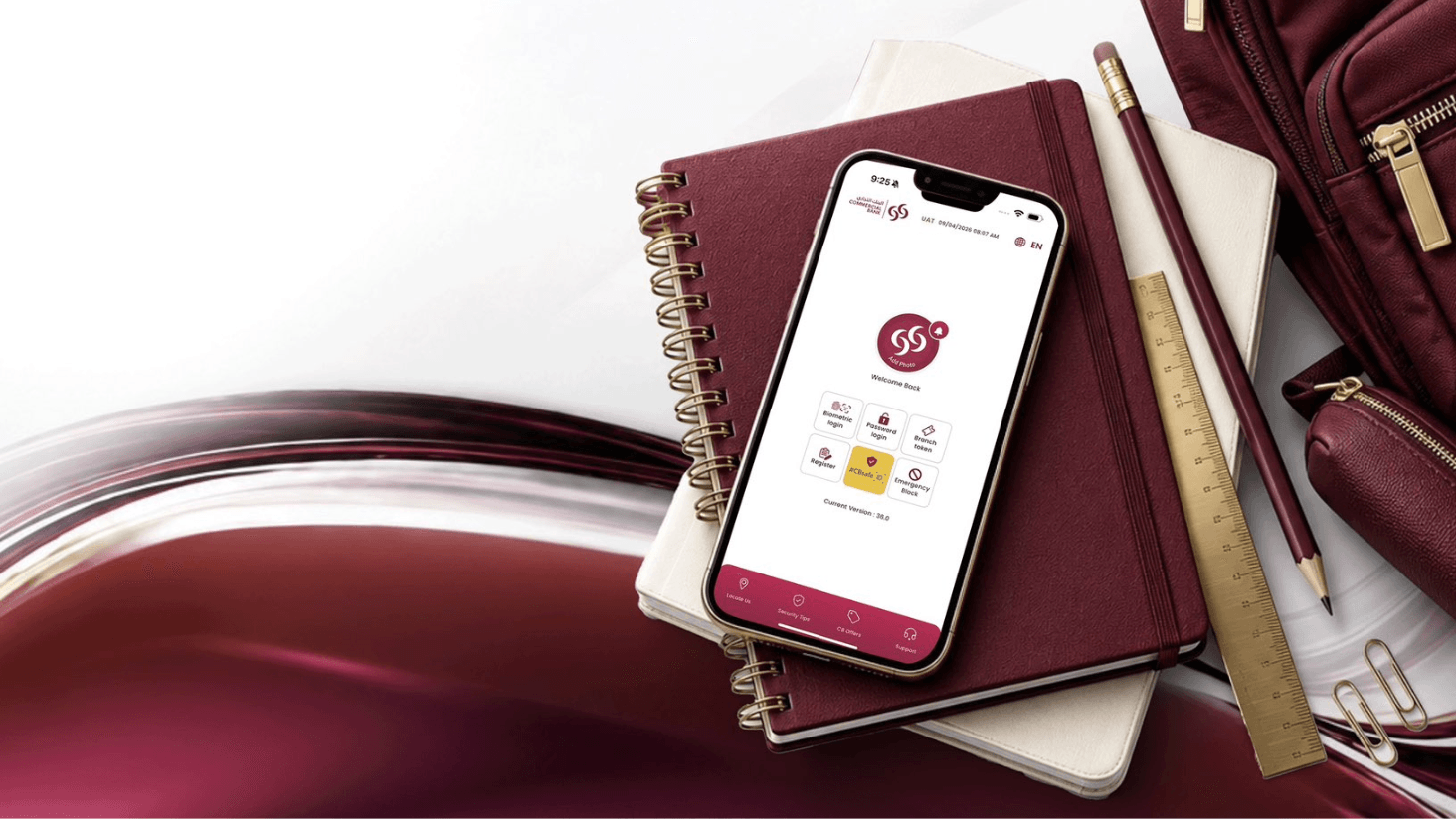
Qatar Islamic Bank offers a School Fees Payment service for participating pre-registered schools.
The process is:
- Open the QIB Mobile App.
- Select Make a Payment.
- Choose School Fees.
- Select the school.
- Enter the required student information.
- Enter the amount and select the fee type.
- Choose payment from a current account, savings account or eligible credit card.
- Confirm the payment using the one-time password.
Payments are transferred instantly, and the receipt can be saved or shared with the school.
Payments from a QIB current or savings account currently carry no service fee. Credit-card payments may offer up to 45 days of credit, but QIB states that its regular cash-withdrawal charges apply. Review the charges before selecting the credit-card option.
The service is available only for schools included in QIB’s participating-school list.
Using a credit-card instalment plan
A card instalment programme may allow a parent to pay the school first and then repay the bank monthly. This arrangement is between the customer and the bank, not the school.
Examples currently advertised in Qatar include:
QNB Smart Instalment Plan
Eligible QNB credit-card customers can convert qualifying transactions between QAR 1,000 and QAR 100,000 into three, six, nine or 12 monthly payments.
The bank advertises a 0% interest rate, but a one-time handling fee applies.
Doha Bank school-fee instalments
Doha Bank advertises a six-month, 0% instalment option with no processing fee for eligible school-fee transactions made using its Cashback Mastercard World credit card.
Other Doha Bank card transactions may also qualify for instalment conversion under separate plans.
Before using any card programme, confirm:
- The minimum transaction value
- The available repayment periods
- The handling or processing fee
- Whether the school transaction qualifies
- Whether the full amount uses your available card limit
- The monthly payment date
- Late-payment charges
- Whether rewards or cashback apply
A “0%” offer does not always mean that the transaction is completely free, as a handling fee or other condition may still apply.
What the 2026 School Fees Policy means for parents
In June 2026, the Ministry of Education and Higher Education launched its first School Fees Policy for private schools and kindergartens.
The policy covers:
- Tuition fees
- Operational and service charges
- Optional fees
- Deposits
- Payment arrangements
- Applications for fee increases
- Complaints and appeals
Schools cannot collect charges that have not received the required Ministry approval. Optional services must also remain optional and cannot be imposed on all parents as compulsory charges.
The Ministry stated that approved fee increases would have an implementation period of approximately a year and a half. This gives families more time to plan before a newly approved increase takes effect.
Parents should still check the school’s official notice and approved fee schedule, as the policy does not mean that every school will increase its fees.
What happens if a payment is late?
Late-payment policies differ by school and should be explained in the enrolment agreement or fee policy.
Depending on the school, a missed deadline may result in:
- A late-payment charge
- Reminder notices
- Restrictions on re-enrolment
- Action under the school’s published payment policy
Do not assume that the school will automatically grant an extension. Contact the finance office before the deadline if you expect difficulty paying.
Ask for any revised arrangement in writing and confirm whether charges will continue while the arrangement is being reviewed.
Practical ways to manage school fees
- Request the complete annual fee schedule before paying the registration fee.
- Add tuition and all compulsory charges when comparing schools.
- Record every invoice and deadline in your calendar.
- Check whether a seat-reservation payment is deducted from tuition.
- Ask whether sibling, corporate or early-payment discounts apply.
- Confirm the refund policy before paying the full year.
- Compare the total cost of a bank instalment plan, not only the monthly payment.
- Keep receipts and bank confirmations for every transaction.
- Use only official school or bank payment channels.
- Contact the finance office early if your employer pays an education allowance.
FAQs
Can I pay private-school fees monthly in Qatar?
Some schools or financial providers may offer monthly arrangements, but many schools invoice by term or semester. Check the school’s current fee schedule rather than assuming a monthly plan is available.
Are three instalments standard at every school?
No. Some schools use three termly payments, while others issue two semester invoices or use another schedule. The payment structure is set by the individual school.
When is the first instalment due?
The deadline varies. It may be due before the academic year begins, when the first invoice is issued or by another date specified by the school.
Can I pay through a banking application?
Possibly. QIB and Doha Bank provide school-fee payment services for participating schools, while other banks offer card transaction or instalment programmes. The school and transaction must meet the bank’s requirements.
Is a 0% credit-card plan completely free?
Not always. Some programmes charge a one-time handling fee even when the interest rate is 0%. Read the bank’s terms before converting the payment.
Can a private school add a new compulsory charge?
Schools must obtain the required Ministry approval and disclose their approved charges. Optional services cannot be made compulsory for all parents.
How much notice is given before an approved fee increase?
The Ministry’s 2026 policy introduced an implementation period of approximately a year and a half for approved increases. Parents should refer to the school’s formal notification for the exact effective date.
What should I do if I cannot meet the deadline?
Contact the school’s finance office before the payment is due. Ask whether a written short-term arrangement is available and confirm any late charges or effect on re-enrolment.
--
About Qatar Living:
Since 2005, Qatar Living has been the trusted destination for everything Qatar. As the country's largest online community and marketplace, Qatar Living connects people with opportunities through jobs, property, vehicles, services, classifieds, events, local insights, and breaking news. Trusted by residents, newcomers, visitors, and businesses alike, Qatar Living brings Qatar together in one place.
Instagram - @qatarliving
X - @qatarliving
Facebook - Qatar Living
YouTube - qatarlivingofficial
Up Next

School Admissions in Qatar: Timeline, Documents & Tips
School admissions in Qatar 2026-27: full timeline, documents, entry rules and tips for public and private schools in Doha. Your complete guide.
Jul 30,2026
Back to School in Qatar, Autumn 2026: Term Dates, Holidays and Exam Timelines
Back to School in Qatar Autumn 2026: term start dates, mid-term and winter holidays, and exam timelines for government and private schools.
Jul 30,2026
School Transport & Bus Safety in Qatar: Parent Guide
School transport and bus safety in Qatar: what parents should know about seatbelts, bus attendants, drop-off rules, costs and choosing a safe school bus.
Jul 29,2026
Special Needs Education & Support in Qatar: Guide
Special needs education and support in Qatar: public schools, the Roa'a assessment centre, MOEHE vouchers up to QAR 78,000 and how to apply.
Jul 28,2026