Corporate Tax in Qatar 2026: Rates & 30 June Deadline

If you run or own a company in Qatar, here is the headline you need first: the standard corporate income tax rate under Qatar’s general tax regime is 10% on taxable income.
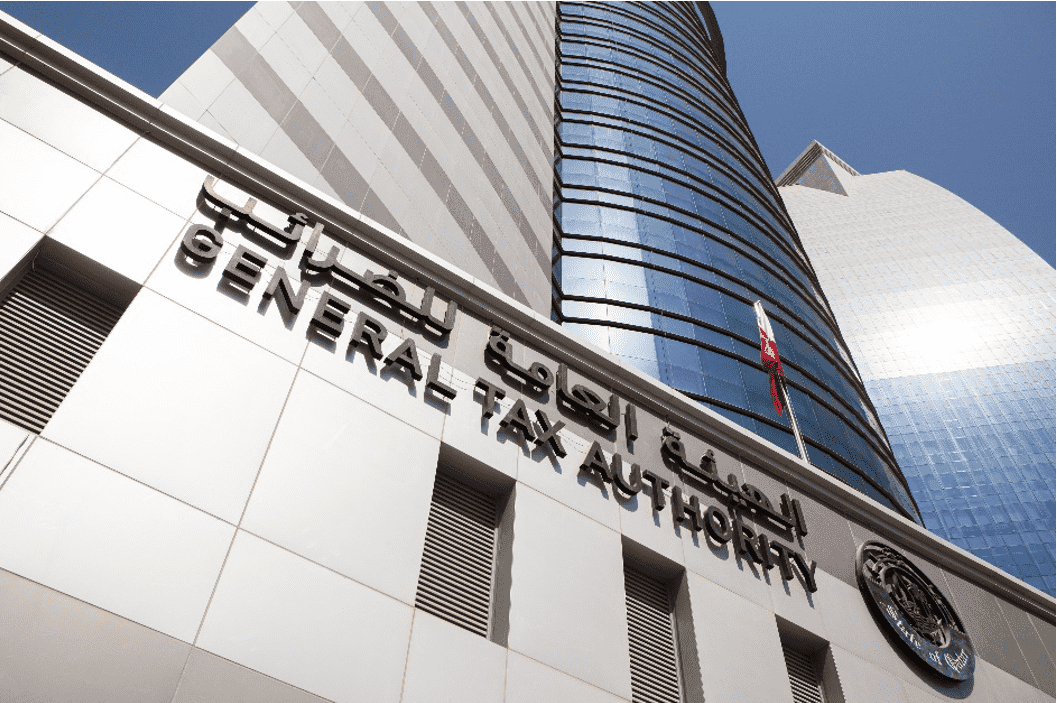
For businesses whose financial year ended on 31 December 2025, the General Tax Authority extended the filing deadline from 30 April 2026 to 30 June 2026. That extended deadline has now passed. As of 3 August 2026, businesses that have not filed should review their position immediately through the Dhareeba portal and address any resulting penalties or outstanding tax.
The extension covered companies and entities holding a commercial registration, trade licence or home licence, including entities that benefit from an income-tax exemption.
This guide to corporate tax in Qatar for 2026 explains the principal rates, ownership exemptions, filing deadlines, Pillar Two requirements and the process for filing and paying through Dhareeba.
Whether you operate a mainland company registered through the Ministry of Commerce and Industry, a business in a special jurisdiction or a Qatar Financial Centre-licensed entity, it is important to identify which tax regime applies before relying on a filing date or payment procedure.
The quick answer: how corporate tax works in Qatar
Qatar applies income tax principally to income arising from sources in Qatar.
The Income Tax Law includes Qatar-source income from activities conducted in the country, contracts performed wholly or partly in Qatar, real estate situated in Qatar, shares in resident companies and other specified sources. The standard rate under the general GTA regime is 10% of taxable income.
Resident companies may qualify for exemptions connected to qualifying Qatari and GCC ownership. Therefore, the taxable amount in a mixed-ownership company may be limited to the share of profit that is not covered by those ownership exemptions, provided all legal conditions are satisfied.
Qatar does not impose a general personal income tax on salaries, wages and similar employment income.
Companies under the general regime register, file returns, receive assessments and make payments through the General Tax Authority’s Dhareeba platform. QFC entities follow the separate QFC tax regime and generally use the QFC Client Portal for their annual tax filings.
Corporate tax rates in Qatar for 2026
The standard 10% rate
The standard income-tax rate is 10% of taxable income under Qatar’s general tax regime.
For a fully foreign-owned resident company, the tax will generally apply to its taxable Qatar-source income, subject to applicable exemptions, deductions, tax treaties and special rules.
For a mixed-ownership resident company, an exemption may apply to the portion of profit attributable to qualifying Qatari or GCC ownership. It is more accurate to describe this as a proportional ownership exemption than to say that Qatar taxes foreign ownership automatically in every case.
The final liability depends on:
- The source and nature of the income
- The company’s ownership throughout the accounting period
- Whether the owners meet the residency and beneficial-ownership requirements
- Deductible expenses and carried-forward losses
- Applicable tax treaties
- Special tax regimes or exemption decisions
The 35% petroleum and petrochemical rate
Petroleum operations and agreements relating to the petrochemical industry are subject to the rates specified in the relevant agreements, provided the applicable rate is not less than 35%.
Certain agreements involving the government, ministries, public authorities or public institutions that pre-date the current Income Tax Law also continue to follow their agreed tax rate. Where such an agreement does not specify a rate, the law provides for a 35% rate.
This higher rate should not be described as applying to every company that supplies goods or services to the energy sector. Its application depends on the taxpayer’s activities, agreement and legal classification.
QFC companies and the 10% rate
Qatar Financial Centre entities are governed by the separate QFC tax regime.
The standard QFC corporation-tax rate is 10% on locally sourced taxable profits. The QFC also provides particular exemptions, concessions and reliefs where the relevant conditions are satisfied.
A QFC entity does not normally file its annual QFC tax return through the standard GTA income-tax-return service on Dhareeba. It registers and submits its return through the QFC Client Portal.
QFC returns and any tax due are generally required within six months after the end of the relevant accounting period. For a QFC entity with an accounting period ending 31 December 2025, the normal QFC deadline would therefore also be 30 June 2026, but this arises from the QFC’s six-month rule rather than the GTA’s extension.
QFC entities that fall within Qatar’s Pillar Two framework must nevertheless complete the relevant Pillar Two registration and compliance processes through Dhareeba.
Who is exempt from corporate tax in Qatar?
Qatari and GCC-owned shares
The income of a resident legal person wholly owned by qualifying Qataris can be exempt from income tax.
A proportional exemption may also apply to the profits of a resident legal person based on the ownership shares of:
- Qatari natural persons
- Legal persons wholly owned by Qataris
- Legal persons partially owned by Qataris, in proportion to their qualifying ownership
GCC nationals are generally granted the same exemptions and conditions available to Qatari nationals under Qatar’s tax legislation and the GCC equal-tax-treatment framework.
However, the exemption is subject to conditions. These include applicable residency, accounting-record, ownership-period and beneficial-ownership requirements.
The persons holding the exempt profit shares must generally be resident in Qatar and hold the relevant ownership throughout the accounting period in which the exempt income is earned.
Therefore, the common example of a company being taxed only on its 49% foreign share may be broadly correct when a qualifying Qatari owner holds the remaining 51%, but it should not be treated as automatic without checking the ownership and exemption conditions.
Tax-exempt companies are also not necessarily exempt from filing. The Income Tax Law requires taxpayers benefiting from an exemption to submit a return, and the GTA specifically included exempt entities in the 2026 filing announcement.
Tax exemptions for qualifying projects
Qatar’s Income Tax Law allows project-specific tax exemptions to be granted under prescribed controls, procedures and approval processes.
The Minister of Finance may issue an exemption decision where the exemption period does not exceed five years. An exemption lasting longer than five years requires Cabinet approval.
The Cabinet may also establish a preferential tax rate for particular sectors or projects because of their nature or the location in which they are established.
These incentives are discretionary and subject to formal approval. A company should not assume that it qualifies merely because its activities support diversification, technology, food security, tourism or another national priority.
Any exemption should be confirmed through the relevant official decision or an advance discussion with the GTA before it is included in a financial forecast.
The global minimum tax—Pillar Two—in Qatar
Qatar has implemented an Income Inclusion Rule and a Domestic Minimum Top-Up Tax as part of the OECD/G20 Pillar Two framework.
The rules apply for fiscal years commencing on or after 1 January 2025.
The framework generally applies to multinational enterprise groups with consolidated annual revenue of at least EUR 750 million in at least two of the four fiscal years preceding the tested year.
For in-scope groups, Qatar’s framework seeks to ensure a minimum effective tax rate of 15% in each relevant jurisdiction.
The two principal mechanisms are:
Domestic Minimum Top-Up Tax
This applies to low-taxed income of qualifying constituent entities and joint ventures located in Qatar.
Income Inclusion Rule
This can apply where the parent entity responsible under the framework is located in Qatar and the group has low-taxed entities or qualifying joint ventures in other jurisdictions.
The GTA launched the Pillar Two registration service on Dhareeba on 2 August 2026. In-scope groups have been instructed to complete their initial registration within three months from the date the electronic service was activated.
The registration requirement can apply to Qatar constituent entities licensed through MOCI, QFC, Qatar Free Zones, Qatar Science and Technology Park or Media City.
Smaller independent companies and purely domestic groups below the Pillar Two revenue threshold are generally outside this framework.
Filing deadlines you cannot miss in 2026
Standard GTA rule
Resident taxpayers and non-residents carrying on activities through a permanent establishment in Qatar must generally submit their income-tax return within four months after the end of the tax year.
A taxpayer using an approved accounting period that differs from the calendar year must normally file within four months after the end of that accounting period.
The GTA may approve an individual extension of up to four months when the taxpayer submits a request supported by acceptable reasons. The normal request should be submitted at least 60 days before the filing deadline, although later requests may be considered where the reason arose after that point.
Extended 2025 tax-year deadline
For taxpayers whose financial year ended on 31 December 2025, the original filing period ran from 1 January to 30 April 2026.
The GTA subsequently extended the deadline to 30 June 2026.
That extension has now expired. A taxpayer that missed it should file as soon as possible and review any applicable late-filing and late-payment penalties.
QFC filing deadline
QFC entities follow a different rule.
A QFC tax return and the related tax payment are generally due within six months after the end of the accounting period. QFC entities file through the QFC Client Portal, not through the ordinary GTA annual-return process.
Capital-gains deadline
A capital-gains declaration and any tax due must generally be submitted within 30 days from the date of concluding the contract or the date the asset is disposed of, whichever occurs first.
A capital-gains declaration is treated as submitted only after the related tax due has been paid.
How to register and pay through Dhareeba
Taxpayers covered by the general GTA regime must register with the General Tax Authority, obtain a Tax Identification Number and activate the relevant tax obligations through Dhareeba.
The broad process is:
- Register the entity through Dhareeba and obtain its TIN.
- Confirm that the correct tax obligations and accounting period are active.
- Prepare the annual tax return and supporting schedules.
- Attach the required financial statements and auditor’s report where applicable.
- Submit the return through Dhareeba.
- Pay the amount due using an available payment method.
- Retain the return confirmation, payment reference and supporting records.
The GTA’s current registration guidance states that taxable persons must register, notify the Authority of changes affecting their tax obligations and obtain a unique TIN.
Dhareeba’s payment documentation identifies the following methods:
- Debit or credit card
- Direct transfer
- Bank transfer
For a bank transfer, the taxpayer must generate the payment-instruction slip and include the Dhareeba payment-reference number in the bank-transfer details.
Do not leave the process until the final day. Problems involving portal access, an incorrect accounting period, an inactive tax obligation or missing audited accounts may take time to resolve.
Financial statements and audit requirements
It is not accurate to say that audited accounts are required for every company in every case.
Under the general GTA regime, audited final accounts prepared by an auditor registered in Qatar must accompany the return where any of the following applies:
- The company’s capital exceeds QAR 200,000
- Its total income exceeds QAR 500,000
- Its main office is outside Qatar
Tax-exempt entities may also be required to attach audited financial statements when these thresholds are met.
Companies should schedule the audit early enough to meet the tax-return deadline. An unfinished audit is not, by itself, a guarantee that an extension or penalty waiver will be granted.
Penalties for late filing and payment
Under Qatar’s general Income Tax Law:
Late filing — QAR 500 for each day of delay, capped at QAR 180,000.
Late payment — 2% of the unpaid tax for each month or part of a month of delay, capped at 100% of the unpaid tax.
The delay period begins on the day after the relevant deadline and continues until the return is filed or the tax is paid, as applicable.
A taxpayer benefiting from an exemption that fails to submit the required return and supporting documents may be subject to a separate QAR 10,000 penalty.
The GTA President or Minister of Finance may grant full or partial relief from financial penalties where the taxpayer submits justifications accepted by the Authority, subject to the statutory approval limits. Relief is discretionary and should not be assumed.
QFC entities are subject to the QFC’s separate financial-sanctions and late-payment rules rather than these GTA penalty provisions.
Capital gains tax in Qatar
The standard tax rate on taxable capital gains under the general regime is 10% of the net taxable gain, not 10% of the full sale proceeds.
Taxable disposals can include:
- Shares in an entity resident or registered in Qatar
- Certain listed securities
- Qatar real estate connected to a taxable business activity
- Tangible or intangible assets connected to a taxable activity in Qatar
- Certain foreign assets held by a Qatari project
However, exemptions apply in several cases. These can include:
- Disposals of real estate or securities by individuals where the assets are not part of a taxable business
- Qualifying gains from securities and investment-fund units traded by non-Qatari investors on the Qatar Stock Exchange
- Certain qualifying corporate restructurings
- Other exemptions provided by the Income Tax Law or an applicable agreement
The 30-day filing and payment window is short. Businesses contemplating a share sale, business restructuring or asset disposal should determine the tax treatment before signing the transaction documents.
FAQs
What is the corporate tax rate in Qatar for 2026?
The standard income-tax rate under Qatar’s general tax regime is 10% of taxable income.
Petroleum operations and petrochemical agreements are generally subject to the rate specified in the relevant agreement, provided it is not less than 35%.
QFC entities are generally taxed at 10% on locally sourced taxable profits under the separate QFC tax regime.
When was the corporate tax filing deadline in 2026?
For companies whose financial year ended on 31 December 2025, the GTA extended the filing deadline to 30 June 2026.
That deadline has passed. The standard GTA rule remains four months after the end of the applicable tax year or accounting period unless an extension is granted.
QFC entities generally file within six months after their accounting-period end under the separate QFC regime.
Are Qatari-owned companies exempt from corporate tax?
A resident legal person wholly owned by qualifying Qataris may be exempt.
A proportional exemption may also apply to profits attributable to qualifying Qatari or GCC owners in a mixed-ownership resident company. Residency, beneficial ownership, accounting records and continuous ownership during the accounting period are among the conditions that may apply.
Exempt status does not necessarily remove the obligation to file a tax return.
How do I pay corporate tax in Qatar?
Companies under the GTA regime register, file and pay through Dhareeba.
Available payment documentation includes debit or credit card, direct transfer and bank transfer. When paying by bank transfer, use the payment reference generated by the portal.
QFC companies normally file and manage their QFC tax obligations through the QFC Client Portal.
What are the penalties for late tax filing?
Under the general GTA regime, late filing can attract QAR 500 per day, capped at QAR 180,000.
Late payment can attract 2% of the unpaid tax for every month or part of a month, capped at the value of the unpaid tax itself.
Do I need an accountant to file corporate tax in Qatar?
There is no universal requirement to appoint an external accountant or tax agent simply to submit a return.
However, audited accounts from an auditor registered in Qatar are required under the general regime when capital exceeds QAR 200,000, total income exceeds QAR 500,000 or the main office is outside Qatar.
Professional assistance is advisable where the company has:
- Mixed Qatari and foreign ownership
- Cross-border transactions
- Transfer-pricing obligations
- Withholding-tax exposure
- Capital gains
- Multiple branches
- Tax-exemption conditions
- QFC obligations
- Pillar Two exposure
Is there a global minimum tax in Qatar?
Yes.
Qatar’s Pillar Two framework applies a Domestic Minimum Top-Up Tax and an Income Inclusion Rule to qualifying multinational groups. The framework generally targets groups with consolidated annual revenue of at least EUR 750 million in two of the four previous fiscal years and seeks to impose a minimum effective tax rate of 15%.
The GTA launched Pillar Two registration through Dhareeba on 2 August 2026, and in-scope groups have been instructed to register within three months from activation of the service.
This guide reflects the principal corporate income-tax rules and official announcements available as of 3 August 2026. Tax treatment depends on the company’s activities, ownership, accounting period, jurisdiction and transactions. Businesses should verify their position through the GTA, QFC Tax Department or a licensed tax adviser before filing or entering a major transaction.
Setting up or growing a company here? Explore business services on Qatar Living, or post a role and find job candidates in Qatar to grow your team.
---
About Qatar Living :
Since 2005, Qatar Living has been the trusted destination for everything Qatar. As the country's largest online community and marketplace, Qatar Living connects people with opportunities through jobs, property, vehicles, services, classifieds, events, local insights, and breaking news. Trusted by residents, newcomers, visitors, and businesses alike, Qatar Living brings Qatar together in one place.
Follow Qatar Living for daily updates:
Instagram - @qatarliving
X - @qatarliving
Facebook - Qatar Living
YouTube - qatarlivingofficial
Up Next
Qatar launches Pillar Two tax registration service for multinational groups
Qatar launches Pillar Two tax registration for MNEs via Dhareeba, aligning with global standards and introducing a 15 percent minimum tax rate.
Aug 2,2026
Qatar Central Bank leaves rates unchanged
Qatar Central Bank keeps deposit, lending, and repo rates unchanged, maintaining stability in Qatar’s monetary policy and financial markets.
Jul 30,2026
Qatar Diamond Exchange joins World Federation of Diamond Bourses
Qatar Diamond Exchange joins the World Federation of Diamond Bourses, enhancing its global standing and securing Qatar as a key diamond trading hub.
Jul 29,2026
CHERY Super Intelligent Valet Parking guards family summer outings with intelligence
CHERY Super Intelligent Valet Parking ensures stress-free family outings with advanced technology for safe, reliable parking in any summer condition.
Jul 28,2026