Hiring a Maid or Domestic Helper in Qatar 2026

Thinking about hiring a maid or domestic helper in Qatar? Here is the fast answer: eligible residents and citizens must first obtain approval through the official process, use an authorised recruitment route, sign and attest the Ministry of Labour contract, arrange the entry visa, complete the required medical and residence procedures, and pay the worker’s salary on time with clear proof of payment.
Most households recruit through a Ministry of Labour-licensed recruitment office. Direct recruitment from overseas may also be possible with prior Ministry approval. Informal employment and so-called “free visa” arrangements are not legal alternatives and can leave both the employer and worker exposed to serious risks.
This guide walks you through hiring a maid or domestic helper in Qatar in 2026—the expected costs in QAR, how to verify licensed agencies and the legal requirements you need to understand. Whether you live in West Bay, The Pearl or a villa in Al Rayyan, the national recruitment and employment rules are generally the same.
Who can sponsor a domestic worker in Qatar?
Sponsor eligibility and income requirements
Qatari citizens and eligible legal residents with a valid QID can apply for approval to recruit and sponsor domestic workers such as maids, nannies, cooks and private drivers.
Approval is not automatic. For expatriate residents, the Ministry of Interior may assess factors including:
- Monthly income
- Profession and employment status
- Family circumstances
- Household size
- Available accommodation
- The number of domestic workers already sponsored
- The type of domestic worker being requested
A universal minimum monthly salary for domestic-worker sponsorship is not currently published on the official service page.
The commonly quoted QAR 10,000 figure is often linked to separate family-residence sponsorship requirements and should not be presented as a fixed legal threshold for hiring a domestic worker.
The safest approach is to check your eligibility through Metrash or the Ministry of Interior before paying an agency or making travel arrangements.
Single applicants, including single male residents seeking to sponsor a female live-in worker, may face additional review depending on their personal and household circumstances. There is no clear public rule establishing one blanket outcome for every case, so applicants should confirm their eligibility directly with the Ministry of Interior.
Documents you may need
The exact document list depends on the sponsor’s nationality, profession, family status and recruitment route.
You may be asked to provide:
- Your valid QID
- A recent salary or employment certificate
- Bank statements or proof of income
- Marriage or family documents
- A tenancy contract or proof of suitable accommodation
- Employer information or supporting documents
- Details of domestic workers already under your sponsorship
An employer no-objection certificate should not be treated as a universal requirement. Check the current document list shown in Metrash for your individual application.
The legal framework you should know
Domestic work in Qatar is governed principally by Law No. 15 of 2017 on Domestic Workers, together with related immigration, recruitment, minimum-wage and ministerial regulations.
The law establishes protections covering contracts, salary payments, working time, accommodation, leave and end-of-service benefits.
A domestic worker is entitled to an official written contract that states the nature of the work, salary and employment conditions.
The legally recognised contract is prepared in Arabic and certified through the competent authority. A translation may be attached or made available to the worker in a language they understand.
Domestic workers are also covered by Qatar’s national minimum wage framework. This includes:
- Minimum basic salary: QAR 1,000 per month
- Housing allowance: QAR 500 per month if suitable accommodation is not provided
- Food allowance: QAR 300 per month if food is not provided
For live-in domestic workers, employers commonly provide accommodation and food directly rather than paying the corresponding allowances.
Other core rights include:
- Suitable accommodation
- Adequate food
- Medical care
- A maximum of 10 working hours per day, excluding recognised breaks
- Weekly rest
- Paid annual leave
- Salary payment on time
- End-of-service gratuity of at least three weeks’ wages for each year of service after the relevant qualifying period
Recruitment fees and related hiring costs must not be deducted from the worker’s salary.
Most overseas recruitment is handled through a Ministry of Labour-licensed recruitment agency. Direct overseas recruitment may also be possible when the employer receives prior approval from the Ministry.
Applications and procedures may involve Metrash, Ministry of Interior systems, Ministry of Labour services, Qatar Visa Centres and government service centres, depending on the worker’s nationality and the stage of the process.
Steps to legally hire a domestic worker in Qatar
Confirm your eligibility
Before choosing a worker or paying recruitment fees, confirm that you are eligible to sponsor the requested category of domestic worker.
Eligible expatriate residents can submit a request for domestic-worker recruitment approval through Metrash. Applications may be reviewed according to the sponsor’s income, family situation, profession, accommodation and existing sponsorship commitments.
Choose an authorised recruitment route
Most households use a Ministry of Labour-licensed recruitment agency.
Check that the agency appears on the Ministry’s current list of registered recruitment offices and verify that the licence details match the company receiving your payment.
Direct recruitment from overseas may also be possible with prior Ministry approval. However, this does not mean you can hire someone informally or employ a worker sponsored by an unrelated person.
Select the worker and sign the contract
Use the official Ministry of Labour domestic-worker contract and complete the required certification or attestation.
The contract should clearly state:
- Job title and duties
- Monthly salary
- Food and accommodation arrangements
- Working hours and rest periods
- Weekly day off
- Annual leave
- Contract period
- Medical-care obligations
- End-of-service benefits
- Any agreed additional benefits
The worker should receive and understand a copy of the contract. A translation should be provided where necessary.
Apply for recruitment approval and the entry visa
The applicable recruitment and entry approvals are processed through the Ministry of Interior and related government systems.
The agency may assist with this stage, but the sponsor should still review all submitted information and keep copies of the approvals, receipts and contract.
Depending on the worker’s country of origin, Qatar Visa Centre or source-country procedures may need to be completed before travel.
Complete the required medical and residence procedures
After the worker arrives—or before departure where Qatar Visa Centre procedures apply—the required medical, fingerprint and immigration steps must be completed.
Do not rely on a universal 30-day deadline. Complete the procedures promptly and within the validity period and deadlines shown on the entry visa, Metrash application or official instructions.
The official residence medical examination currently costs approximately QAR 100.
Issue the residence permit and QID
Once the required medical, biometric and immigration conditions are satisfied, complete the worker’s residence-permit and QID procedures through the Ministry of Interior.
The residence permit is issued for the period approved by the Ministry and must be renewed before expiry.
Current government charges are generally calculated annually rather than on the assumption that every worker receives a standard two-year residence permit.
Pay the salary and maintain proof
Domestic-worker salaries are not universally processed through the Wage Protection System in the same way as salaries paid by companies covered by Qatar’s Labour Law.
Under the Domestic Workers Law, the employer should be able to prove that the full salary was paid.
The safest and most transparent method is a bank transfer into the worker’s account.
Cash payment may also be legally recognised where the worker signs a receipt confirming that the full salary was received.
Salary should be paid at the end of each month or no later than the third day of the following month. Keep bank records or signed receipts for the full employment period.
What it costs in 2026
Government fees
There is no single government-fee total that applies to every first-time domestic-worker hire.
The final amount depends on the recruitment route, visa, residence duration, insurance requirements, delivery options and any source-country procedures.
Current verifiable charges include approximately:
- Work permit: QAR 100 per year
- Residence medical examination: QAR 100
- Residence permit: QAR 300 per year
- QID card: approximately QAR 100, depending on the approved residence validity
The domestic-worker recruitment-approval application for eligible expatriate residents may itself be listed without a service charge, but entry-visa issuance and connected services may carry separate fees.
Additional costs may include:
- Entry-visa issuance
- Fingerprint or government-service procedures
- Contract processing
- Qatar Visa Centre procedures
- Document translation or authentication
- Qatar Post or delivery services
- Health insurance
- Airfare
Do not use a fixed QAR 1,300 to QAR 2,100 government-fee total without obtaining a current itemised quotation.
Health insurance and medical care
The sponsor is responsible for providing the domestic worker with medical care.
Health-insurance requirements and premiums can depend on the applicable residence process, insurance product and current implementation rules.
There is no reliable universal government premium of QAR 500 to QAR 1,200 that applies to every domestic worker.
Confirm the current requirement during the residence process and obtain a written premium quotation from an approved insurer where insurance is required.
One-time recruitment and setup costs
The largest expenses are usually the agency’s recruitment charge, airfare and source-country processing costs.
The total can vary according to:
- Worker nationality
- Source-country requirements
- Job category
- Experience
- Airfare
- Recruitment agreements
- Whether the worker is recruited from overseas or transferred legally within Qatar
- Replacement or probation protections included by the agency
Ask for a written, itemised quotation separating:
- Official Qatar government fees
- Agency service charges
- Airfare
- Source-country fees
- Medical and Qatar Visa Centre costs
- Insurance
- Translation and documentation
- Refund or replacement conditions
Do not allow the agency or employer to recover recruitment expenses by deducting them from the worker’s salary.
Ongoing monthly costs
Beyond the initial recruitment process, budget for:
- Monthly salary
- Food for a live-in worker
- Suitable accommodation
- Medical care or insurance
- Residence and work-permit renewals
- Annual airfare or return-ticket obligations where applicable
- Paid annual leave
- End-of-service gratuity
- Any additional benefits included in the contract
The basic monthly salary must meet Qatar’s minimum-wage rules. Housing and food allowances apply where those benefits are not provided directly.
Choosing a licensed agency and red flags to watch
A licensed agency can handle much of the recruitment process, including candidate sourcing, document coordination, contract procedures and travel arrangements.
Before committing:
- Confirm that the office appears on the Ministry of Labour’s current list of registered recruitment agencies.
- Check that the agency licence matches the business collecting your payment.
- Request a complete written quotation.
- Demand a receipt for every payment.
- Review the official employment contract carefully.
- Ask about probation, replacement and refund conditions.
- Confirm who pays for flights, medical procedures and source-country documentation.
- Check the expected salary, food and accommodation arrangements.
- Ask for a realistic arrival estimate rather than a guaranteed date.
Be wary of anyone offering to arrange a domestic worker through an informal sponsorship or “free visa” system.
Do not employ someone who is sponsored by an unrelated individual or company unless they are legally assigned through an authorised service arrangement.
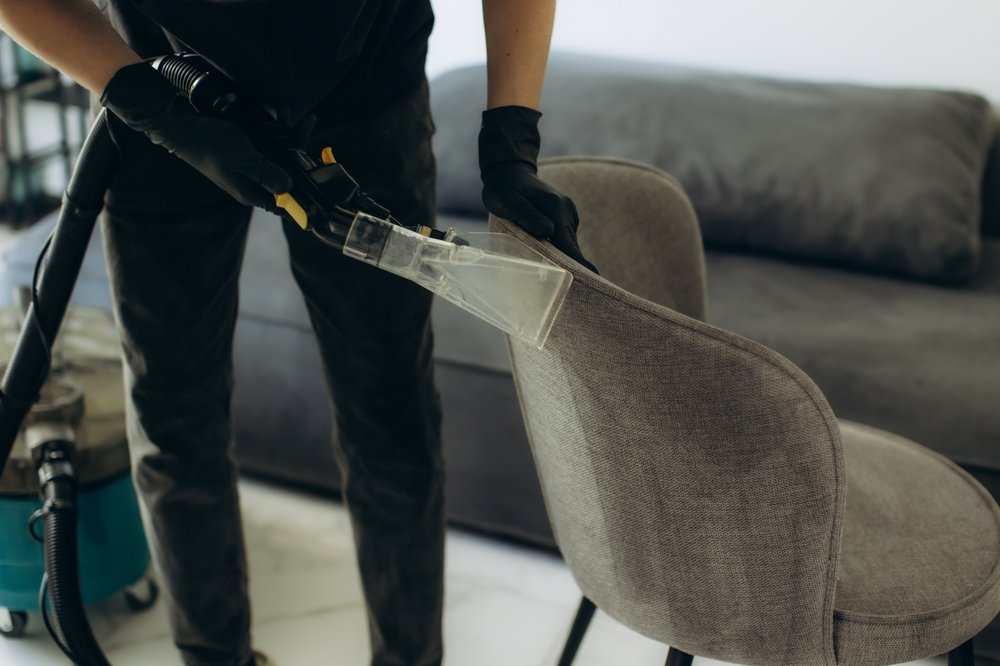
You can compare licensed cleaning companies, part-time domestic services and home-service providers on Qatar Living before deciding between full-time sponsorship and part-time support.
Live-in vs part-time help
Not every household needs a full-time, live-in domestic worker.
If you only need weekly cleaning or occasional household support, using a properly licensed cleaning or domestic-services company may be a more suitable option.
Under this arrangement, the service company—not the household—is normally responsible for the worker’s:
- Employment contract
- Salary
- Residence permit
- Work authorisation
- Insurance and medical responsibilities
- Labour compliance
The household pays the licensed company under a service agreement or invoice.
Full-time or live-in domestic worker
This option may suit families requiring regular childcare, cooking, cleaning or daily household support.
The household becomes the personal sponsor and assumes responsibility for the worker’s salary, accommodation, food, medical care, residence procedures, leave and end-of-service benefits.
Part-time help through a company
This option offers greater flexibility and does not require the household to personally sponsor the worker.
Before booking, confirm that:
- The company holds a valid commercial licence for the service.
- The worker is legally employed and assigned by that company.
- Payments are made to the company and supported by invoices.
- The arrangement is not an individual informally supplying a worker sponsored elsewhere.
For occasional cleaning and household services, a licensed part-time arrangement may be more practical than recruiting a live-in worker.
FAQs
Can a single man hire a live-in maid in Qatar?
Approval depends on the applicant’s personal circumstances and the Ministry of Interior’s assessment.
Single male residents seeking to sponsor a female live-in domestic worker may face additional review, but a clear public rule establishing one blanket outcome for every applicant is not currently published.
Check your eligibility through Metrash or directly with the Ministry of Interior before paying recruitment costs.
What is the minimum income to sponsor a maid?
The Ministry of Interior does not currently publish one universal minimum salary for every domestic-worker sponsorship application.
Eligibility may depend on the applicant’s income, profession, family circumstances, accommodation and existing sponsorship commitments.
The frequently quoted QAR 10,000 amount should not be treated as a confirmed legal threshold for domestic-worker recruitment.
What are my helper’s legal rights in Qatar?
Domestic workers are entitled to an official written contract, timely salary payment, suitable accommodation, food, medical care, weekly rest, annual leave and end-of-service benefits.
The national minimum wage includes a basic salary of at least QAR 1,000 per month, plus housing and food allowances where those benefits are not provided directly.
Working time should not exceed the legal limit, excluding recognised breaks, and recruitment costs must not be deducted from the worker’s wages.
Do I have to pay the salary by bank transfer?
Bank transfer is the safest and most transparent method, but it is not the only form of proof recognised under the Domestic Workers Law.
Cash payment may be used where the worker signs a receipt confirming that the full salary was received.
Whichever method is used, pay on time and keep reliable records.
Is the domestic worker registered under WPS?
Private household domestic workers are not generally described as being registered in the Wage Protection System in the same way as employees of companies covered by the Labour Law.
The employer must nevertheless pay the full salary on time and maintain acceptable proof of payment.
How long does the whole process take?
There is no guaranteed end-to-end timeline.
Overseas recruitment can take several weeks or longer depending on:
- Sponsor approval
- Worker nationality
- Source-country procedures
- Qatar Visa Centre requirements
- Contract processing
- Medical and fingerprint procedures
- Flight availability
- Ministry of Interior approvals
Ask the agency for an estimated timeline, but avoid treating it as guaranteed.
Is hiring a maid outside an agency legal?
Using a licensed agency is the standard route.
Direct recruitment from overseas may also be possible with prior Ministry approval.
Informally employing someone sponsored by an unrelated person, or using a so-called “free visa” arrangement, is not a lawful substitute for approved recruitment or a licensed service-company arrangement.
How much are the government fees in total?
There is no single total that applies to every application.
Currently identifiable charges include approximately QAR 100 per year for the work permit, QAR 100 for the residence medical examination, QAR 300 per year for the residence permit and around QAR 100 for the QID card.
Entry visas, insurance, fingerprints, delivery, contract services and other procedures may add further costs.
Ask the recruitment agency for a written quotation separating official government fees from recruitment, airfare and service charges.
Ready to get started? Find licensed maid agencies and cleaning companies on Qatar Living and choose the option that fits your household.
---
About Qatar Living :
Since 2005, Qatar Living has been the trusted destination for everything Qatar. As the country's largest online community and marketplace, Qatar Living connects people with opportunities through jobs, property, vehicles, services, classifieds, events, local insights, and breaking news. Trusted by residents, newcomers, visitors, and businesses alike, Qatar Living brings Qatar together in one place.
Follow Qatar Living for daily updates:
Instagram - @qatarliving
X - @qatarliving
Facebook - Qatar Living
YouTube - qatarlivingofficial
Up Next

Gym Summer Membership Deals Qatar: New Member Promos
Score the best gym summer membership deals in Qatar. New member promos, joining-fee waivers, and how to compare offers across Doha in 2026.
Jul 22,2026
Doha Locanto: Smart Classifieds Buying Guide 2026
Searching Doha Locanto for furniture, electronics or deals? Here's how to buy and sell safely in Qatar — plus a trusted local alternative on Qatar Living.
Jul 22,2026
Buying Second-Hand Electronics in Qatar: Shop & Spot Fakes
Buying second-hand electronics in Qatar? Where to shop in Doha, how to haggle, and how to spot fakes on phones, laptops, TVs and consoles — a practical guide.
Jul 21,2026
How to Safely Ship Used Items Within Qatar
How to safely ship used items within Qatar: real courier options, costs in QAR, packing tips and how to avoid damage or scams.
Jul 21,2026