Pitching to Qatari Investors: What They Look For

Based on common themes shared by Qatar-based investors, advisers and founders.
Many investors operating in Qatar look for a credible founder, a well-supported business model, genuine commitment to the local market and a company that can withstand proper due diligence. Relationships can play an important role, but a strong introduction cannot replace traction, defensible numbers or a clean legal structure.
If you are raising money in Doha, here is what investors are likely to examine and how to prepare your pitch.
Who you are actually pitching in Qatar
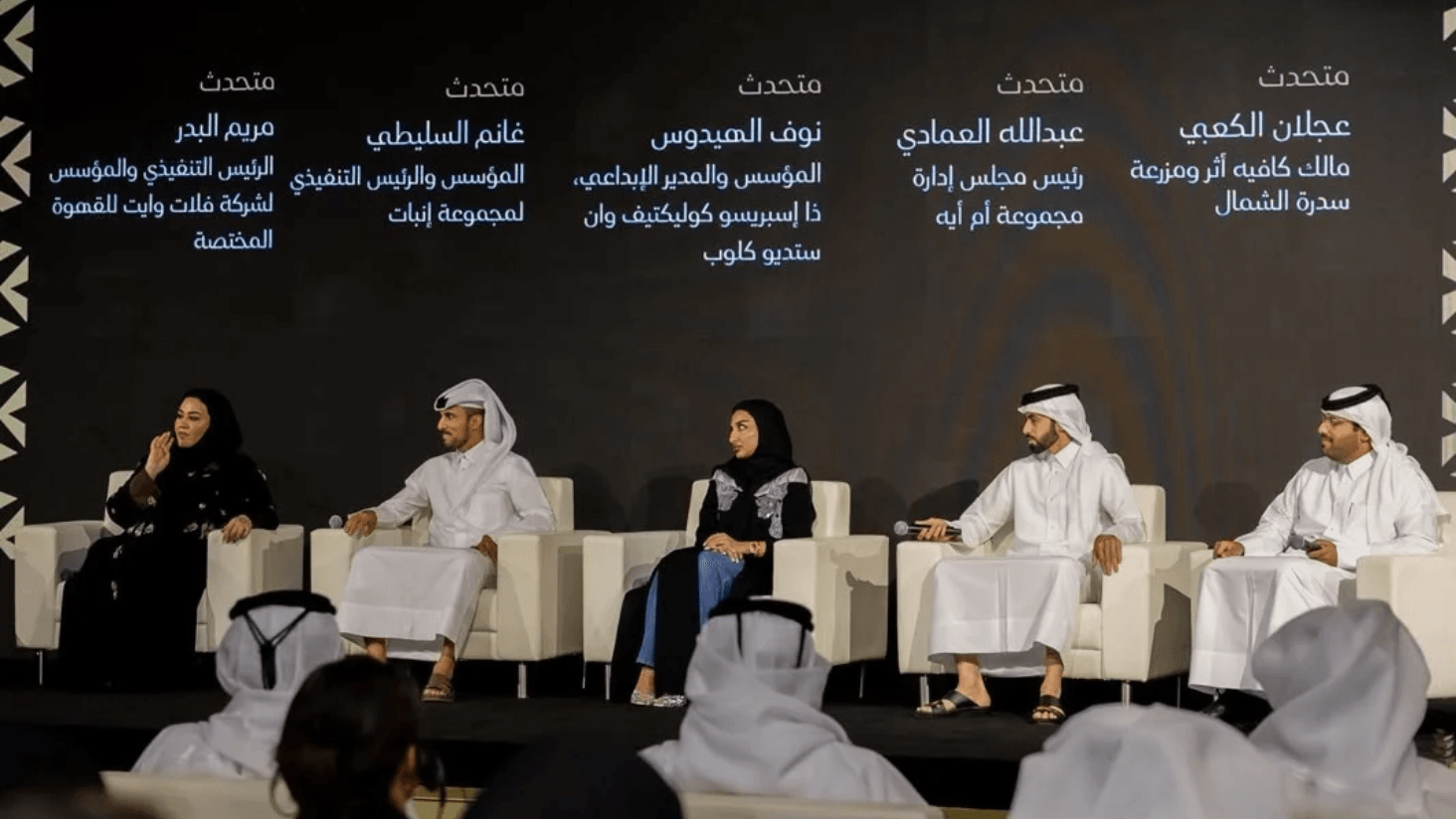
The investor landscape in Qatar is broad. You may be sitting across from a family office, a government-backed investment programme, a venture capital firm, a corporate investor or a high-net-worth individual introduced through a mutual contact.
Their investment mandates can be very different. An early-stage technology fund may prioritise innovation, scalability and market traction, while a family office may place more weight on cash flow, downside protection and the founder’s reputation.
Qatar’s official startup programmes similarly focus on innovative and scalable companies that can establish or expand operations in Qatar, solve genuine market problems and demonstrate credible growth potential.
Introductions, references and repeat meetings can help establish trust, particularly in a relatively connected business community. However, founders should not assume that a warm introduction guarantees funding. Investors will still evaluate the team, market, financial model, legal position and investment terms.
What investors in Qatar look for
Across family offices, venture funds, corporate investors and angel investors, several themes frequently appear. Build your pitch around these areas.
1. A credible founder, not just a clever idea
Investors assess the people responsible for executing the plan.
Show relevant experience, industry knowledge, resilience and evidence that the founding team can recruit, sell and deliver. Explain why you are building the business, why your team has an advantage and why Qatar is part of your long-term strategy.
Avoid claiming that you are committed to Qatar without evidence. Local employees, clients, partnerships, pilots, licences, incubator participation or a physical operating presence make the commitment more credible.
2. Commitment to Qatar and the local market
A plan that uses Qatar as a base for wider GCC growth can be attractive, but it needs genuine local grounding.
Explain which Qatar-based customers you serve, how you will enter the market and which local problem you are solving. Where relevant, connect the business to Qatar National Vision 2030 and the Third National Development Strategy 2024–2030.
The current strategy prioritises economic diversification and growth clusters including manufacturing, logistics, tourism, information technology and digital services, financial services, education, food and agriculture, and healthcare.
Do not force a connection to the national strategy simply because it sounds good in a deck. Investors will expect a practical explanation of how the business contributes to the market.
3. Clear unit economics and a route to sustainability
Not every investor in Qatar has the same risk appetite. Some venture investors will accept early losses when a company is growing quickly, while family offices and strategic investors may place greater emphasis on margins, cash flow and capital preservation.
Bring numbers that match your business stage. These may include:
- Customer acquisition cost
- Customer lifetime value
- Gross margin
- Monthly recurring revenue
- Burn rate and runway
- Churn or retention
- Average order value
- Contribution margin
- Expected breakeven point
Your forecasts should be ambitious enough to justify investment but realistic enough to survive detailed questioning.
4. A clean legal and regulatory setup
Investors will examine whether your business is properly established for its activities.
Depending on the business, this may involve a mainland company registered through the Ministry of Commerce and Industry, a Qatar Financial Centre entity, a Qatar Free Zones entity or another sector-specific structure.
A mainland limited liability company does not have a universal minimum-capital requirement, although capital, approval and licensing requirements can differ according to the activity and legal structure. Qatar’s foreign-investment framework can also permit up to 100% foreign ownership in eligible activities, subject to the applicable approvals and conditions.
Before pitching, organise your:
- Commercial registration or equivalent registration certificate
- Commercial or professional licence
- Articles of association
- Shareholder and beneficial-ownership records
- Material customer and supplier contracts
- Intellectual-property ownership
- Financial statements and management accounts
- Employment and contractor agreements
- Regulatory approvals, where applicable
Having these documents ready can significantly reduce delays during due diligence.
5. A realistic ask and use of funds
Be precise about how much you are raising, what instrument you are offering and how the valuation was calculated.
Show exactly where the capital will go. Instead of broad categories such as “marketing” or “growth”, connect the spending to measurable milestones.
For example:
- QAR 700,000 to complete product development and regulatory approval
- QAR 500,000 to recruit a five-person sales and customer-success team
- QAR 300,000 to enter two additional GCC markets
- QAR 200,000 for working capital and operational contingency
- A milestone-linked funding plan is generally more credible than an unsupported hockey-stick forecast.
How to structure a winning pitch
A deck of around 10 to 12 slides is a useful practical target, although there is no official Qatar-specific rule governing pitch-deck length.
A strong pitch usually covers:
- The problem — define a genuine and valuable customer problem.
- The solution — explain the product clearly and provide a live demonstration or product evidence where possible.
- The local opportunity — show how the business works in Qatar before moving into broader GCC or international projections.
- The market — separate the total addressable market from the segment you can realistically serve.
- Traction — include revenue, users, retention, signed pilots, letters of intent or commercial partnerships.
- The business model — show how the company earns money and the margins available at scale.
- Competition — explain the alternatives customers currently use and why your position is defensible.
- The team — show why the founders and key employees can execute the plan.
- Financials — include historical performance, forecasts, burn rate and funding requirements.
- The ask — state the amount, proposed terms and milestones the funding will achieve.
Do not assume the first meeting will end with a term sheet. Institutional investors will usually require further meetings, document reviews, financial verification and legal due diligence.
The residency and setup facts that make Qatar attractive
Founders should understand the difference between company establishment, company-linked residence permits, the new Entrepreneur Residency and property-linked residency. They are separate routes with different conditions.
Business investment route
There is no general rule stating that every founder must invest QAR 200,000 in a QFC, Qatar Free Zones or mainland company to receive residency.
The Ministry of Commerce and Industry states that there is no universal minimum or maximum capital requirement when establishing a company, although particular legal forms, regulated activities and licensing authorities may impose their own conditions.
A company established through MOCI, QFC or another authorised jurisdiction may be able to process work and residence permits under its respective immigration arrangements. For example, QFC-registered firms can process residence permits for eligible personnel through QFC’s immigration services.
Qatar also introduced a dedicated Entrepreneur Residency in February 2026. This provides eligible founders, co-founders and entrepreneurs with a five-year, self-sponsored residence permit that may be renewed.
Applicants must be endorsed by a recognised business incubator in Qatar. They must also provide a three-month bank statement showing a minimum balance of QAR 36,500. Overseas applicants are required to demonstrate the equivalent of at least USD 10,000.
This financial-balance requirement should not be confused with a mandatory investment of QAR 200,000 in a company.
Real estate investment route
Non-Qatari property buyers may qualify for property-linked residency when the registered property value reaches QAR 730,000.
Under the first category, a property valued at QAR 730,000 or more can provide a residence permit without a sponsor, subject to the applicable property and residency conditions.
At QAR 3,650,000 or more, the owner may receive a real-estate residence permit carrying privileges similar to permanent residency, including certain healthcare, education and investment benefits. This is not the same as receiving an unrestricted lifetime permanent-residency card.
Both property-residency categories are subject to a requirement to spend at least 90 days per year in Qatar, either continuously or across multiple visits.
The property must fall within a category open to non-Qatari ownership or usufruct. These include designated ownership areas, designated usufruct areas and certain eligible units in residential or commercial developments.
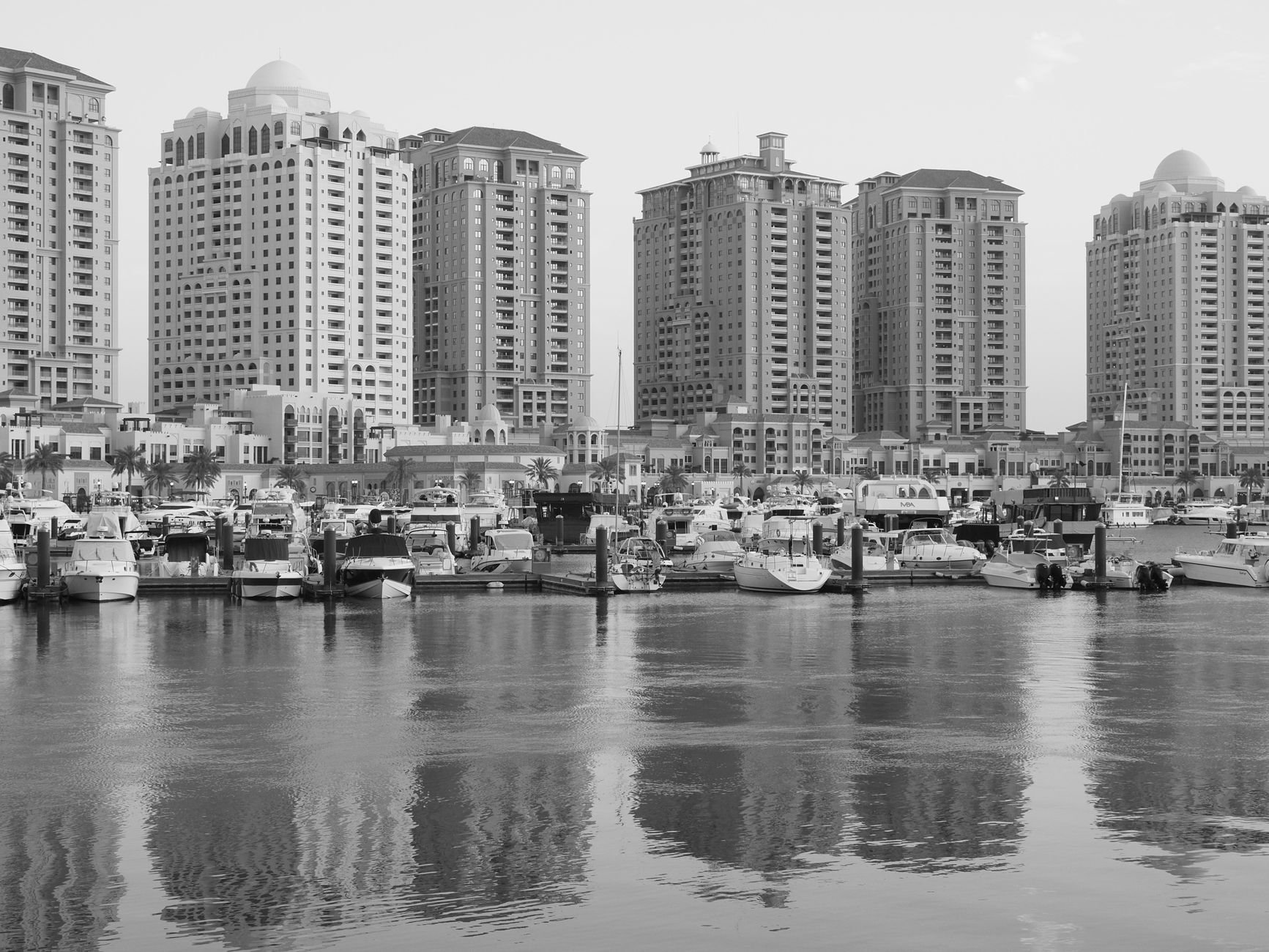
The approved ownership areas currently include locations such as The Pearl, Lusail, West Bay–Legtaifiya, Al Khor Resort and the Simaisma Resort and Beach Project. Qatar amended the designated ownership framework through Cabinet Decision No. 21 of 2026, which took effect following publication in the Official Gazette on June 7, 2026.
Because the approved areas and property categories can be amended, buyers should verify the individual title and development through the Ministry of Justice or the Real Estate Regulatory Authority before paying a deposit.
How the process works
The process depends on the residency route.
For the Entrepreneur Residency, the current journey is:
- Obtain acceptance and an endorsement letter from a recognised Qatar-based incubator.
- The incubator nominates the entrepreneur to Jusour.
- Complete the online application and upload the required documents.
- Overseas applicants receive an entrepreneur visa after approval.
- Enter Qatar and complete the medical examination, fingerprinting and QID issuance.
For property-linked residency, the applicant must first complete the qualifying purchase and property registration. The property-ownership or real-estate-residency application is then processed through the relevant Ministry of Justice, Real Estate Regulatory Authority and Ministry of Interior channels.
Metrash and the MOI e-services portal may be used for certain residency services and application follow-ups, but they should not be described as the sole application channel for every investor or entrepreneur route.
Document requirements vary. Overseas Entrepreneur Residency applicants currently need:
- A passport valid for at least six months
- A recent photograph
- A CV
- An attested three-month bank statement
- An attested police-clearance certificate
- An endorsement letter from a recognised local incubator
- Applicants already residing in Qatar are asked for documents including their QID, photograph, stamped bank statement, CV, incubator endorsement and establishment card.
- Property-residency applicants should confirm the latest checklist for their property and application type rather than relying on the entrepreneur-residency document list.
Validity and the rules to remember
The 2026 Entrepreneur Residency is issued for five years and can be renewed, subject to continued eligibility and the renewal requirements.
The QAR 730,000 property category provides sponsor-free property-linked residency. The QAR 3.65 million category provides additional privileges similar to permanent residency. Neither category should be described as automatic lifetime permanent residency.
For ordinary residence permits, remaining outside Qatar for more than six months may mean that a return permit is required before re-entry. It is more accurate to describe this as a return-permit and residency-status issue rather than saying that the permit is automatically cancelled on the six-month date.
Family eligibility also depends on the residence category. MOI provides application forms covering investors, property owners, property beneficiaries and their relatives.
The frequently cited salary rule of QAR 10,000, or QAR 6,000 with employer-provided family housing, applies to qualifying private-sector employees seeking employee-sponsored family residence. It should not be treated as a universal salary condition for every investor, entrepreneur or property-owner application.
Common mistakes that lose the deal
- Skipping relationship-building — asking for a term sheet before the investor properly understands the founder and business.
- Ignoring the local angle — presenting a foreign-market pitch with no clear Qatar customer, operation or strategic relevance.
- Weak financials — using assumptions that cannot be defended under questioning.
- Messy legal structure — unclear ownership, missing licences, undocumented intellectual property or conflicting shareholder agreements.
- Over-inflated valuation — using international valuation comparisons without adjusting for the company’s stage, market and traction.
- Confusing government support with guaranteed investment — participation in an incubator or startup programme can increase credibility, but it does not guarantee private funding.
- Using residency as the investment case — residency can make Qatar more attractive to founders, but investors will fund the commercial opportunity, not the founder’s immigration objective.
FAQs
What do investors in Qatar value most in a pitch?
There is no single formula shared by every investor. Common priorities include founder credibility, a real customer problem, evidence of traction, realistic financials, a clean legal structure and a clear reason for operating in Qatar.
Relationships and introductions can help secure meetings, but they do not replace commercial evidence or due diligence.
What makes investors say no?
Common deal-breakers include financial assumptions that cannot be defended, unclear ownership, missing licences, weak market validation, an unsupported valuation and a founder who cannot explain how the funding will produce measurable results.
Investors may also hesitate when a company describes Qatar as its base but has no local clients, employees, partnerships or operating plan.
How much do I need to invest to qualify for investor residency in Qatar?
There is no universal QAR 200,000 company-investment requirement.
For the 2026 Entrepreneur Residency, eligible founders need endorsement from a recognised Qatar-based incubator and a three-month bank balance of at least QAR 36,500, or USD 10,000 for overseas applicants.
For property-linked residency, the qualifying property values begin at QAR 730,000. Properties valued at QAR 3,650,000 or more may provide additional privileges similar to permanent residency.
Which type of company should I set up before pitching?
The best structure depends on the activity, target customers, ownership requirements, office location, regulatory needs and planned regional operations.
A mainland company, QFC entity and Qatar Free Zones company are not interchangeable. Founders should compare permitted activities, licensing rules, immigration arrangements, tax treatment, physical-presence requirements and operating costs before choosing.
Investors are more concerned that the structure is appropriate, transparent and legally ready for investment than that the company uses one particular jurisdiction.
Can I sponsor my family as an investor in Qatar?
Potentially, yes. MOI provides residence-entry and permit forms for investors, property owners, property beneficiaries and qualifying family members. Approval and document requirements depend on the applicant’s exact residence category and family relationship.
The employee-sponsorship salary requirement should not automatically be applied to self-sponsored entrepreneurs or property owners.
How do I actually apply for investor or entrepreneur residency?
For the Entrepreneur Residency, begin with a recognised Qatar-based incubator. Once endorsed, the incubator submits the nomination to Jusour and the applicant completes the online process. Overseas applicants then receive an entrepreneur visa and complete the medical examination, fingerprints and QID process after arriving in Qatar.
For property-linked residency, complete the qualifying purchase and registration before applying through the relevant real-estate and residency authorities.
How long should my pitch deck be?
Around 10 to 12 focused slides is a sensible working guideline, not a formal requirement.
The deck should be short enough to keep the discussion moving while giving investors enough information to understand the opportunity, traction, business model, team, financial position and funding request. Supporting financial models and legal documents can be placed in a separate data room.
Ready to build your venture here? Find your next office, warehouse, or business opportunity in our Qatar classifieds on Qatar Living, and explore commercial spaces in our Qatar properties listings.
---
About Qatar Living :
Since 2005, Qatar Living has been the trusted destination for everything Qatar. As the country's largest online community and marketplace, Qatar Living connects people with opportunities through jobs, property, vehicles, services, classifieds, events, local insights, and breaking news. Trusted by residents, newcomers, visitors, and businesses alike, Qatar Living brings Qatar together in one place.
Follow Qatar Living for daily updates:
Instagram - @qatarliving
X - @qatarliving
Facebook - Qatar Living
YouTube - qatarlivingofficial
Up Next

Raising Venture Capital in Qatar: Investors & Process
Raising venture capital in Qatar in 2026: QIA, QDB, the Invest Qatar Gateway, ticket sizes, eligibility and the step-by-step process for founders.
Aug 2,2026
Business Loans & SME Financing in Qatar: 2026 Guide
A practical guide to business loans and SME financing in Qatar — banks, QDB programmes, eligibility, costs in QAR and how to apply. Qatar Living explains.
Aug 2,2026
Audited Financial Statements in Qatar: Rules & Deadlines
Audited financial statements in Qatar: who must file, deadlines, penalties and typical costs. A clear, practical compliance guide for businesses in Doha.
Aug 1,2026
Employee Sponsorship Costs in Qatar 2026 for SMEs
Employee Sponsorship Costs in Qatar 2026: full breakdown for SMEs — visa, work permit, QID, medical & insurance fees in QAR, plus renewals via Metrash2.
Aug 1,2026