Long-Term Residence & Permanent Residency Qatar 2026
Yes — you can hold long-term, sponsor-free residency in Qatar without an employer tying you to the country, and in the right circumstances even secure permanent residency. This is the story behind Long-Term Residence & Permanent Residency in Qatar 2026: the 'Golden Visa' explained. Qatar's Golden Visa is actually a suite of investment-linked residency options — built mainly around real estate and business investment, and grounded in Law No. 10 of 2018 and its related decisions. Here's how it broadly works in 2026, what it typically costs in QAR, and who it's really for.
What is Qatar's 'Golden Visa'?
"Golden Visa" is shorthand for a set of long-term residence permits that let qualifying investors — and in most cases their families — live in Qatar without a traditional company sponsor. Instead of an employer sponsoring your QID, your investment anchors your right to stay.
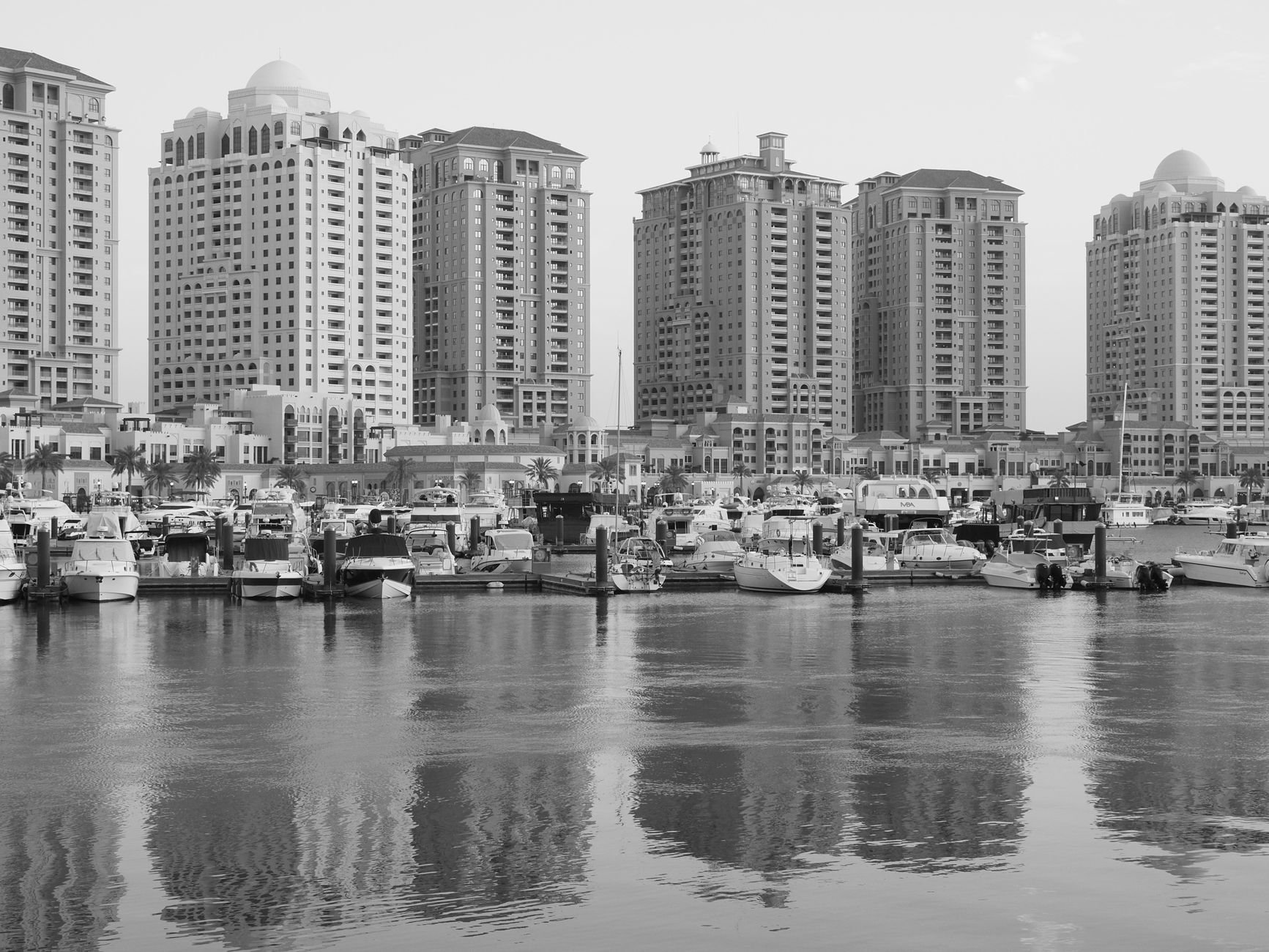
In practice, most people arrive here through property. Buy in one of Qatar's designated freehold zones — think The Pearl, Lusail and other approved districts — above a certain value, and you unlock a renewable residence permit for yourself and your dependents. Invest more, or invest in a qualifying business, and you may move up the ladder toward permanent residency, depending on the specific programme and category you qualify under.
For the full legal framework, see Law No. 10 of 2018 and the related Ministry of Interior decisions.
Long-term residence vs permanent residency — the key difference
These two terms get mixed up constantly, so it's worth being precise:
- Long-term (renewable) residence — a sponsor-free permit tied to your investment, typically issued for 1 to 5 years and renewable as long as you keep the qualifying asset. This is what most property buyers get.
- Permanent residency — a higher status with broader entitlements (access to public healthcare, public schooling and some commercial rights), and approvals are limited and selective rather than automatic.
So while marketing often blurs the line, buying property at the entry level gets you secure, renewable residency — not a permanent-residency card in the strict legal sense.
Investment routes and thresholds in 2026
There are three main doors in, each with its own price of entry.
Property route (freehold zones)
- From around QAR 730,000 in real estate in a designated freehold zone → a sponsor-free, typically 5-year renewable residence permit. You generally keep it as long as you hold the qualifying property and meet programme conditions.
- From around QAR 3,650,000 in real estate → potential eligibility for permanent residence, with access to public healthcare, public schooling and certain commercial activities, subject to programme criteria and limited approvals.
Business and company investment
- From around QAR 3,000,000 invested in a qualifying company or commercial project → potential access to long-term or permanent-residency-linked status. This suits investors who want an operating footprint in Qatar, not just a title deed, and the exact threshold should be confirmed with the competent authority or programme advisor.
Entrepreneur route
- From around QAR 250,000 invested, plus endorsement from a recognised incubator and at least 20% equity in your venture → in some programmes, a 5-year renewable permit. This is the most accessible door for founders building something new in Doha, but you should verify current criteria with the relevant programme.
What permanent residency gets you
Beyond the obvious — not needing an employer to stay — the permanent-residency tier is where the real perks sit:
- Access to public healthcare.
- Public schooling access for your children.
- The right to conduct certain commercial activities and own economic interests more freely.
- Stability: no annual scramble over a sponsor, and continuity for your family.
The entry-level property permit doesn't include all of these — it's primarily about the right to reside without sponsorship. Match your investment to the benefits you actually need.
The real costs — official fees in QAR
Here's where planning matters. On top of the property or business price itself, you'll face a set of government and processing fees. These are indicative 2026 figures, so treat them as typical ranges rather than guaranteed numbers; actual fees vary by category, provider and due-diligence complexity:
- Visa application / state fee — typically around QAR 200, one-time.
- Golden Visa processing fee — typically around QAR 3,000–5,000, depending on category and processing speed.
- Residency permit (QID) issuance — typically around QAR 500–1,000.
- Medical exam and biometrics — typically around QAR 500–1,000.
- Due-diligence / background check (main applicant) — typically around QAR 2,000–5,000.
- Document attestation / legalisation — typically around QAR 200–500 per document.
- Property registration fee — typically around 0.25%–1% of property value, or a flat charge in the QAR 20,000–50,000 range on higher-value deals.
- Company registration and licensing (business route) — typically around QAR 15,000–50,000, plus roughly QAR 5,000–10,000 annual renewal.
- Dependent residency card — typically around QAR 500 per dependent.
- Mandatory health insurance (2026) — typically the equivalent of USD 300–1,000 per person per year, through an approved insurer.
Put together, a basic property-linked Golden Visa package commonly runs around QAR 8,000–15,000 per main applicant in government and processing costs — separate from the property itself — based on those typical ranges.
How to apply, step by step
- Pick your route and hit the threshold — buy qualifying property in a freehold zone, invest in a qualifying business, or set up an incubator-backed venture.
- Register the asset — complete the property registration or company licensing and secure your title deed or trade licence.
- Prepare and attest documents — passport, proof of investment and background-check paperwork; attest and legalise where required.
- Submit the application — file through the Ministry of Interior’s investor-residency channels, often via the designated online systems, and pay the application and processing fees.
- Complete medical and biometrics — do your medical exam and fingerprints at an approved centre.
- Receive your QID — once approved, collect your residence permit and add dependents.
- Sort insurance — arrange the mandatory 2026 health insurance through an approved provider.
Timelines vary by category and due-diligence complexity, so build in a buffer rather than banking on the fastest quoted turnaround.
Who should consider it
The Golden Visa suits three profiles well: property investors who want residency security alongside a Doha home, business investors building a long-term presence, and founders using the entrepreneur route to launch in Qatar. If you're a salaried expat happy with employer sponsorship, you may not need it — but for anyone who wants control over their own residency, it's a genuinely powerful option. Weigh the benefits you'll actually use against the fees and the property or business commitment.
Ready to take the first step? Browse investment properties on Qatar Living Properties, and explore business opportunities in our Qatar Living Classifieds.
FAQs
Is Qatar's Golden Visa the same as permanent residency?
No. Entry-level property investment (from around QAR 730,000) generally gets you a sponsor-free renewable permit. Full permanent residency — with access to public healthcare and schooling — typically requires around QAR 3,650,000 in real estate and is granted selectively under programmes that limit approvals rather than offering them automatically to every eligible investor.
How much does the Golden Visa cost in fees?
Excluding the property or business price, a basic property-linked package commonly costs around QAR 8,000–15,000 plus mandatory health insurance.
Can I include my family?
Yes. Dependents can be added, with a dependent residency card fee of typically around QAR 500 plus their own medical and insurance requirements.
Do I need an employer to sponsor me?
No — that's the whole point. Your qualifying investment replaces the traditional company sponsor, giving you sponsor-free residency.
Which areas count as freehold zones for property?
Designated freehold districts include areas such as The Pearl, Lusail City, parts of West Bay and Al Khor, among others. Always confirm a specific property sits in an approved zone before buying for residency purposes.
Is there income tax on Golden Visa holders?
Qatar levies no personal income tax on individuals, which is a major part of the appeal for long-term residents and investors.
---
About Qatar Living :
Since 2005, Qatar Living has been the trusted destination for everything Qatar. As the country's largest online community and marketplace, Qatar Living connects people with opportunities through jobs, property, vehicles, services, classifieds, events, local insights, and breaking news. Trusted by residents, newcomers, visitors, and businesses alike, Qatar Living brings Qatar together in one place.
Follow Qatar Living for daily updates:
Instagram - @qatarliving
X - @qatarliving
Facebook - Qatar Living
YouTube - qatarlivingofficial
Up Next
How to Apply for Qatar Residency Permit (RP) in 2026
How to apply for a Qatar Residency Permit (RP) in 2026: step-by-step guide to work, family, talent and investor RP, costs, medicals and Metrash2.
Jul 27,2026
Getting a Qatar SIM & Mobile Plan as a New Arrival
Getting a Qatar SIM & mobile plan as a new arrival? Buy at Hamad Airport, Ooredoo or Vodafone Qatar stores — prices, eSIM, visitor SIMs and postpaid.
Jul 27,2026
Iqama Renewal in Qatar 2026: Timeline & Fees
Your 2026 guide to the Iqama renewal process in Qatar — timeline, documents, fees, Metrash2 steps and how to avoid overstay fines.
Jul 24,2026
Opening a Bank Account in Qatar as an Expat
Opening a bank account in Qatar as an expat: the documents you need, QID rules, dependant accounts and the timeline from application to activation.
Jun 30,2026