Qatar's New Traffic Law 2026: Key Changes, Fines, Penalties and Rules You Need to Know
Qatar's new Traffic Law is bringing important changes to how drivers, pedestrians, motorcyclists and electric scooter users navigate the country's roads. From stricter penalties for traffic violations to new licensing requirements and vehicle confiscation provisions, there is plenty that road users need to understand.
Issued under Law No. 19 of 2026, the legislation was published in the Official Gazette on 18 November 2026 and is scheduled to take effect on 19 December 2026, according to the Ministry of Interior.
The new law replaces the previous Traffic Law issued under Decree-Law No. 19 of 2007. It introduces updated regulations covering road safety, vehicle licensing, modern transport and traffic enforcement.
Here is a detailed breakdown of the key rules, changes and penalties under Qatar's new Traffic Law.
When does Qatar's new Traffic Law take effect?
Qatar's new Traffic Law will come into force on 19 December 2026, following its publication in Official Gazette Issue No. 22 on 18 November 2026.
The legislation also provides a transitional period for owners of previously registered vehicles to comply with the new requirements.
Under Article 2 of the promulgating law, vehicle owners have up to six months from the law's commencement to bring their vehicles into compliance. The Minister of Interior may extend this period by another six months.
Existing vehicle registrations, driving licences and permits generally remain valid until their expiry, with renewals subject to the new provisions.
Important: Some requirements will depend on executive regulations and implementing decisions that establish the relevant procedures.
1. Pedestrian violations can attract fines of up to QAR 10,000
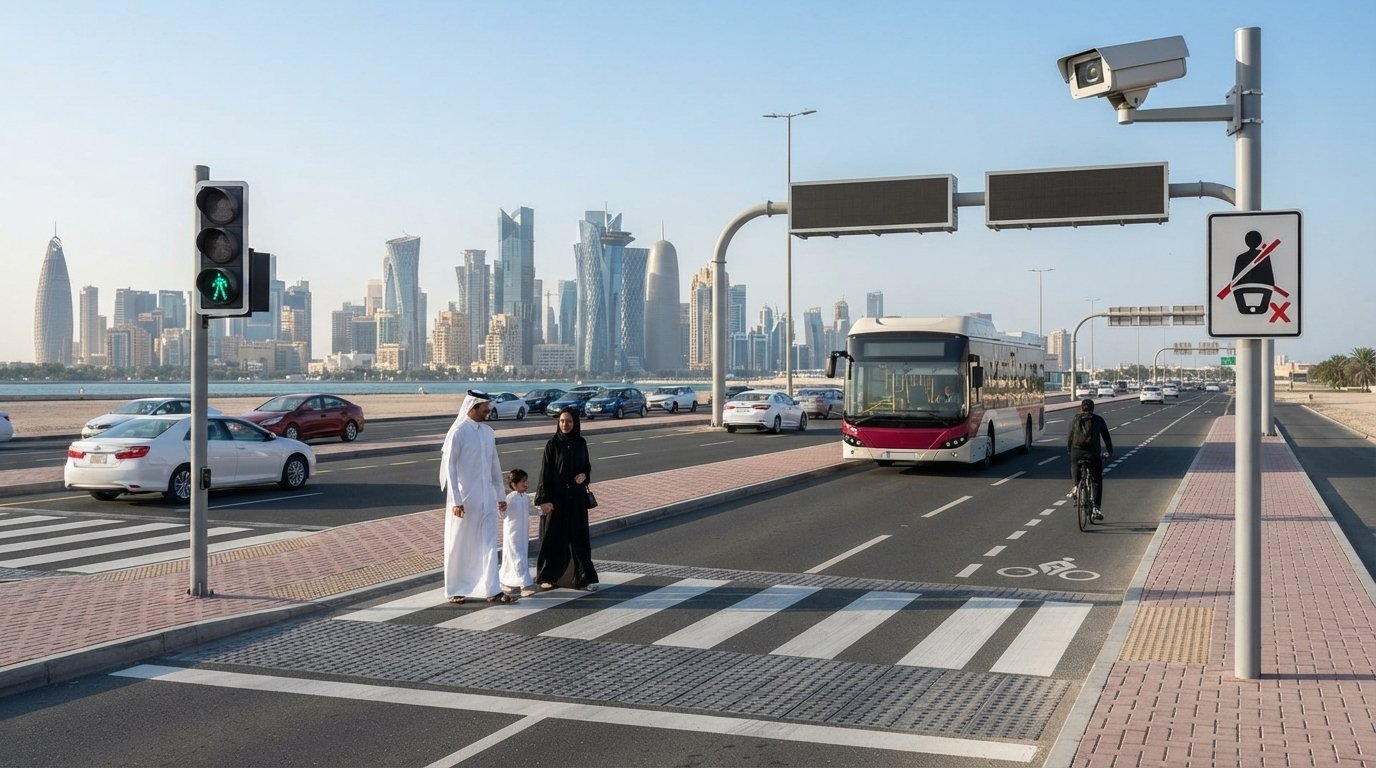
Qatar's new Traffic Law sets out responsibilities for pedestrians, including using designated crossings and obeying pedestrian signals.
Under Article 68, pedestrians must use the nearest available crossing when crossing the road and ensure that they can do so without endangering themselves or obstructing traffic.
Violations may result in court penalties of up to QAR 6,000 and/or three months' imprisonment, under Article 114.
Meanwhile, Article 69 requires pedestrians to follow traffic signals at designated crossings. Disregarding these signals may result in court penalties of up to QAR 10,000 and/or one year's imprisonment, under Article 111.
The law also provides a listed settlement amount of QAR 500 for each of these offences.
These figures distinguish the maximum penalties that courts may impose from the amount payable to settle an eligible offence.
Legal references: Articles 68, 69, 111 and 114.
2. Minimum age for motorcycle driving licences increases to 21
One of the notable licensing changes is the increase in the minimum age for obtaining a motorcycle driving licence.
Under Article 37, the minimum age for motorcycle licence applicants increases from 18 to 21 years.
The requirement also applies to the relevant motorcycle learner licences.
The new law additionally provides penalties for operating a vehicle without obtaining the required driving licence.
Under Articles 35 and 109, qualifying unlicensed-driving offences can attract court penalties of up to QAR 50,000 and/or three years' imprisonment.
It is important to distinguish driving without having obtained the required licence from other licensing violations, such as failing to renew an expired licence, which may be treated differently.
Legal references: Articles 35, 37 and 109.
3. Temporary learner's licences for 17-year-old Qataris
The new Traffic Law introduces a provision allowing eligible Qatari citizens to begin learning to drive light vehicles at the age of 17.
Under Article 37, the licensing authority may grant a temporary learner's licence to Qatari citizens who have reached 17 years of age.
However, the learner must be accompanied by a licensed driver who is at least 18 years old.
The permission is not equivalent to a full driving licence. It is specifically for learning to drive, and applicants must comply with the conditions and procedures established by the relevant regulations.
The standard minimum age for obtaining a light-vehicle driving licence remains 18.
Legal reference: Article 37.
4. Electric scooters face new registration and safety requirements
Electric scooters are now specifically addressed in Qatar's Traffic Law, reflecting the growing use of alternative transport.
Under Article 7, electric scooters and similar vehicles must be registered with the licensing authority before being operated.
Article 15 also requires these vehicles to carry official number plates as determined by the relevant authorities.
Operating an unregistered electric scooter may attract a QAR 1,000 settlement amount, while court penalties under Article 114 can reach QAR 6,000 and/or three months' imprisonment.
The legislation also addresses safety requirements under Article 55.
Electric scooter users must wear appropriate helmets and use designated cycling lanes where available. When such lanes exist, riders are prohibited from using the remaining road space intended for cars.
Violating applicable helmet or designated-lane rules may result in court penalties of up to QAR 10,000 and/or one year's imprisonment.
Detailed administrative procedures for registration, number plates and associated requirements will be governed by implementing regulations and decisions.
Legal references: Articles 7, 15, 55, 111 and 114.
5. Tram safety violations can result in fines of up to QAR 10,000
The new Traffic Law also establishes specific obligations for motorists driving near trams.
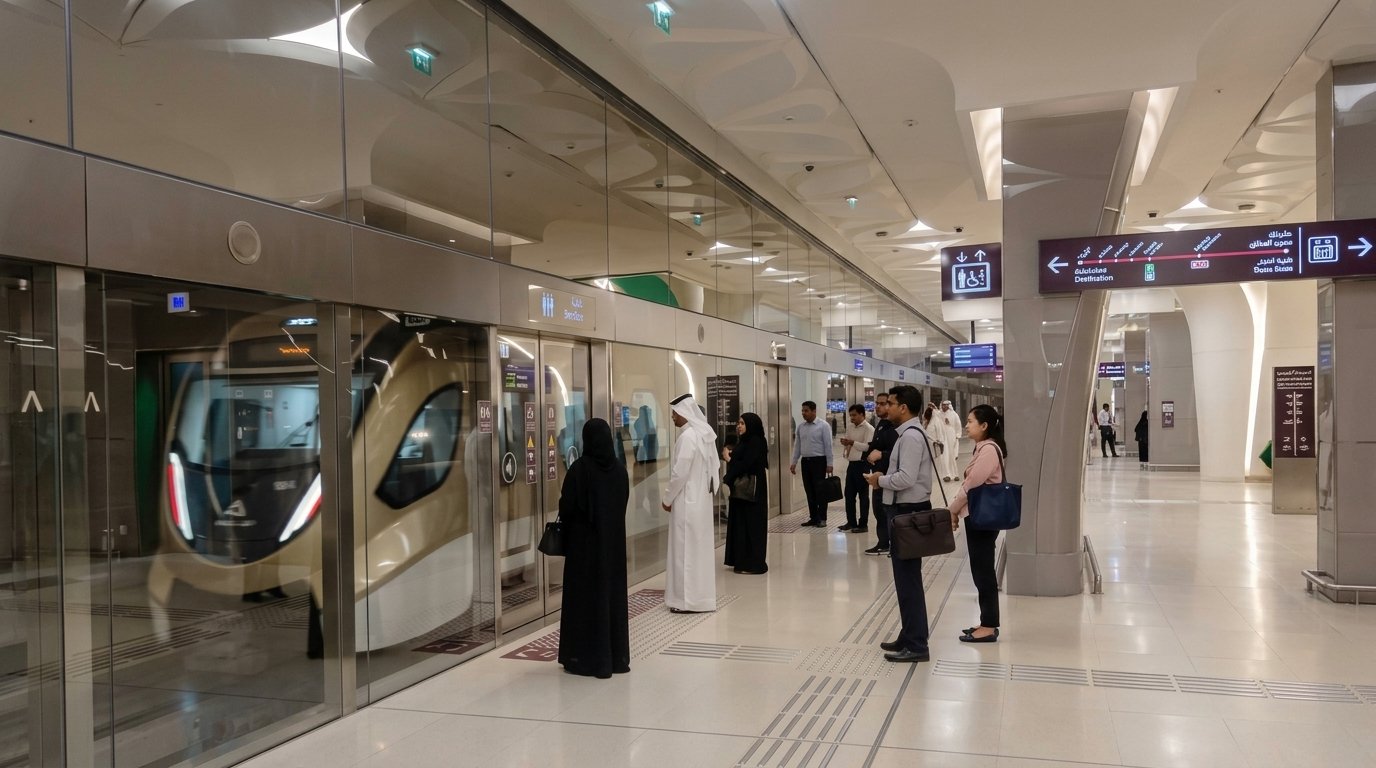
Under Article 71, drivers must maintain a safe distance of at least five metres when travelling behind a tram.
Drivers are also prohibited from overtaking trams from either the left or right side.
These requirements aim to reduce the risk of collisions and protect passengers and other road users.
Violations may attract court penalties of up to QAR 10,000 and/or one year's imprisonment, under Article 111.
The official settlement schedule lists QAR 1,000 for offences covered by the relevant paragraph of Article 71.
Legal references: Articles 71 and 111.
6. Courts can order vehicle confiscation for serious traffic violations
A significant provision under Qatar's new Traffic Law concerns the potential confiscation of vehicles involved in certain offences.
Under Article 117, courts may order the confiscation of a vehicle following conviction for specified traffic violations.
These include reckless driving that endangers lives, running red lights, exceeding the speed limit by more than 60 km/h, driving against traffic on expressways and participating in unauthorised road races.
The provision also covers repeated use of handheld mobile phones or other devices while driving.
Confiscation is not automatic. It is a discretionary measure that a court may impose after conviction, subject to the law's conditions and the rights of innocent third parties.
Legal reference: Article 117.
7. Leaving children under 13 alone in vehicles is prohibited
The new Traffic Law includes an important child-safety provision.
Under Article 71, drivers are prohibited from leaving children who have not reached the age of 13 alone inside a vehicle without an accompanying adult.
The prohibition also extends to people lacking legal capacity and to people with disabilities, illnesses or age-related conditions that require adult supervision.
Under Article 110, violations may result in court penalties of up to QAR 20,000 and/or three years' imprisonment.
The official settlement table lists QAR 10,000 for this offence.
The provision reinforces the importance of protecting vulnerable passengers, particularly in situations where leaving someone unattended in a vehicle could place their safety at risk.
Legal references: Articles 71 and 110.
8. Handheld mobile phone use can lead to vehicle impoundment for up to 90 days
Using a handheld mobile phone while driving can have consequences beyond a standard traffic fine.
Under Article 62, drivers are prohibited from holding or using mobile phones or other devices by hand while driving.
Article 99 gives the relevant traffic authority the power to order administrative vehicle impoundment for up to 90 days in specified circumstances, including handheld mobile phone violations.
Repeated violations may also lead to court-ordered vehicle confiscation under Article 117, following conviction.
While handheld mobile phone use was already prohibited under Qatar's earlier traffic legislation, the new law strengthens the available enforcement measures.
Legal references: Articles 62, 99 and 117.
9. Littering or spitting from vehicles carries a QAR 10,000 court fine
Drivers who throw rubbish, spit or discharge materials onto the road from their vehicles can face penalties under the new Traffic Law.
Under Article 64(13), these actions are prohibited whether the vehicle is moving or stationary.
Article 116 prescribes a statutory court fine of QAR 10,000 for violations.
However, the official settlement table lists QAR 2,000 for this offence.
The law also states that the court penalty doubles if a similar offence is repeated within six months following the date of the final judgment.
The provision reinforces the responsibility of motorists to maintain road cleanliness and protect public spaces.
Legal references: Articles 64(13) and 116.
10. Failure to return vehicle plates after an overseas permit expires can lead to penalties of up to QAR 100,000
Vehicle owners should also be aware of the requirements governing vehicles authorised to remain outside Qatar.
Under Article 28, vehicle owners must return their registration plates within 30 days after the authorised period for keeping the vehicle abroad expires, unless the relevant permit is renewed within that period.
Failure to comply can result in court penalties of up to QAR 100,000 and/or one year's imprisonment, under Article 112.
The court is also required to order the return of the plates.
This provision relates specifically to vehicles subject to the overseas-permit requirements. It should not be interpreted as requiring drivers to surrender their registration plates after every ordinary trip outside Qatar.
Legal references: Articles 28 and 112.
What is the difference between a traffic fine and a settlement amount?
One important aspect of Qatar's new Traffic Law is the distinction between the maximum penalties stated in the legislation and the amounts payable to settle eligible offences.
The law sets out criminal penalties that courts can impose for particular violations, including fines and imprisonment.
Separately, Article 123 provides for the settlement of specified offences upon payment of the amount listed in the official settlement schedule.
For example, throwing rubbish from a vehicle carries a statutory court fine of QAR 10,000, while the listed settlement amount is QAR 2,000.
Article 123 also allows the licensing authority to waive up to 50% of the settlement amount if it is paid within 30 days of the violation being recorded.
This reduction is discretionary and should not be assumed to apply automatically in every case.
What should drivers in Qatar do before the new law takes effect?
With the law scheduled to take effect on 19 December 2026, motorists and other road users should familiarise themselves with the provisions relevant to them.
Drivers should review the rules covering mobile phone use, vehicle safety, speed limits and passenger protection.
Motorcycle licence applicants and electric scooter users should pay particular attention to the updated licensing, registration and safety requirements.
Vehicle owners and operators should also monitor official Ministry of Interior announcements for implementing procedures, transitional arrangements and any additional guidance.
Most importantly, not every violation mentioned in the new legislation represents a completely new offence. Some existing traffic rules have been retained, while others have been revised or supported by additional enforcement powers.
Final takeaway
Qatar's new Traffic Law represents a major update to the country's road safety and traffic enforcement framework.
From electric scooter registration and updated motorcycle licensing requirements to stronger vehicle confiscation powers and protections for children, the legislation places greater emphasis on responsible road use.
Understanding these provisions before their implementation can help residents avoid violations, comply with the law and contribute to safer roads across Qatar.
For the latest updates on Qatar's traffic laws, regulations and public safety announcements, follow Qatar Living.
Official sources and references
Primary legal source:
Qatar Official Gazette – Law No. 19 of 2026, issuing the Traffic Law
Official Gazette Issue No. 22, published 18 November 2026, pages 28–82.
Additional official sources:
Amiri Diwan – HH the Amir Issues Traffic Law
This article reflects the published legislation and official information available as of 19 November 2026. Court penalties, settlement amounts and administrative measures are distinguished throughout. Readers should consult the Ministry of Interior for the latest implementation procedures.
About Qatar Living:
Since 2005, Qatar Living has been the trusted destination for everything Qatar. As the country's largest online community and marketplace, Qatar Living connects people with opportunities through jobs, property, vehicles, services, classifieds, events, local insights, and breaking news. Trusted by residents, newcomers, visitors, and businesses alike, Qatar Living brings Qatar together in one place.
Instagram - @qatarliving
X - @qatarliving
Facebook - Qatar Living
YouTube - qatarlivingofficial
Up Next

Mowasalat (Karwa) Strengthens Organizational Resilience with International Certifications
Mowasalat (Karwa) earns ISO 22301 and ISO 31000 certifications, boosting organizational resilience, risk management, and service reliability.
Nov 18,2026
HH The Deputy Amir receives credentials of six new ambassadors to Qatar
HH The Deputy Amir welcomes six new ambassadors to Qatar, strengthening diplomatic ties and fostering international cooperation.
Nov 18,2026
MOEHE wins Sustainable Work Environment Award
Qatar’s Ministry of Education wins the Sustainable Work Environment Award, highlighting workplace sustainability and resource efficiency initiatives.
Nov 18,2026
The Minister of State at the Ministry of Foreign Affairs meets with the British Minister of State for the Middle East and North Africa
Qatar and UK ministers discuss strengthening diplomatic ties, joint mediation, and regional peace efforts during a meeting in London.
Nov 18,2026