Qatar Treated Water Fees & Exemptions Guide
Trying to understand treated water and wastewater fees in Qatar in 2026? The key thing to know is that different charges apply depending on whether you're using treated sewage effluent, connecting a property to a drainage network or simply paying the monthly wastewater charge attached to your water consumption.
For treated sewage effluent (TSE), the current fee structure includes rates as low as QAR 0.01 per cubic metre for agricultural and fodder use and QAR 0.25 per cubic metre for landscaping and industrial purposes.
For wastewater disposal, the standard charge for applicable non-exempt accounts is 20% of the value of the water-consumption bill.
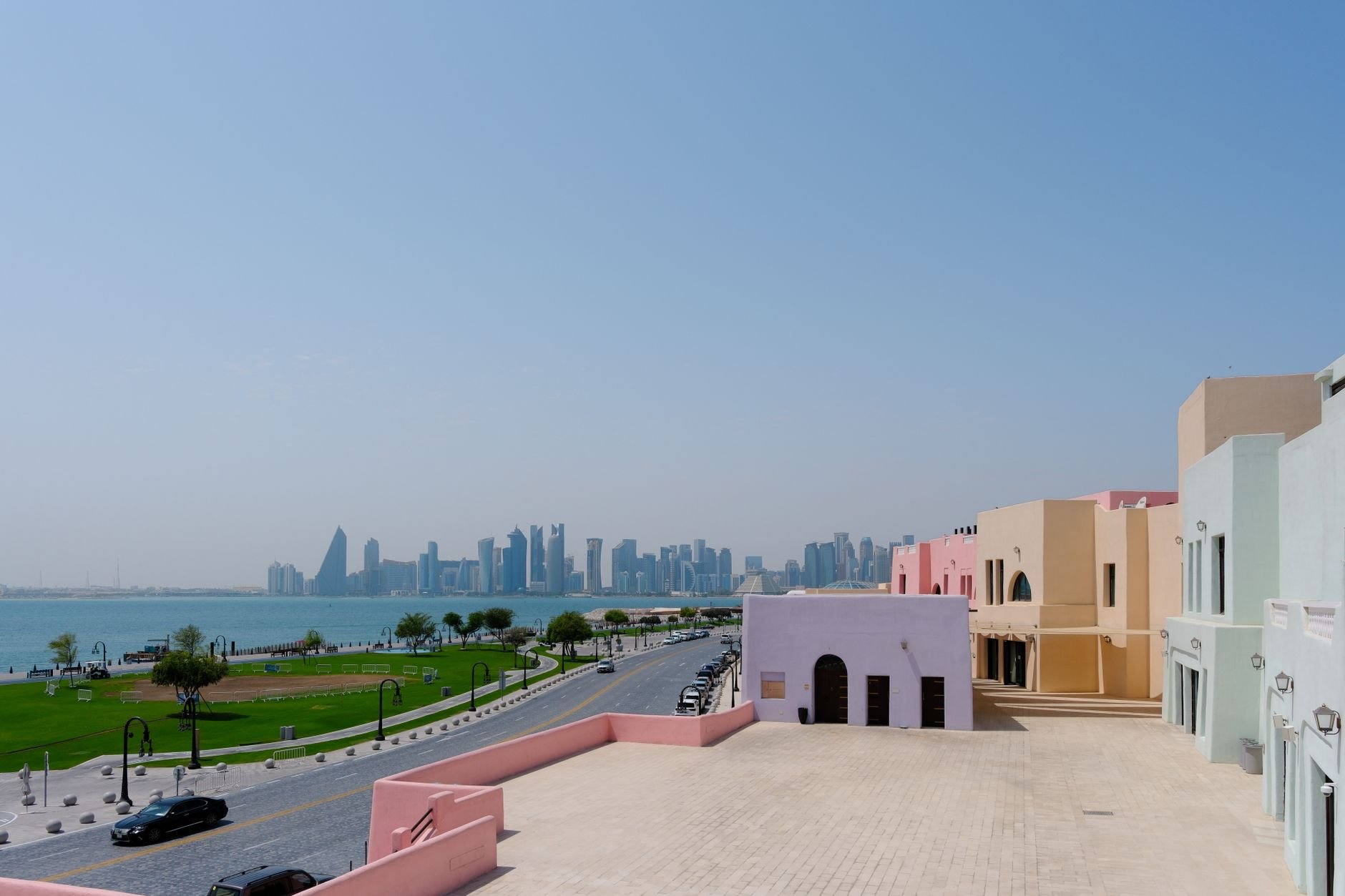
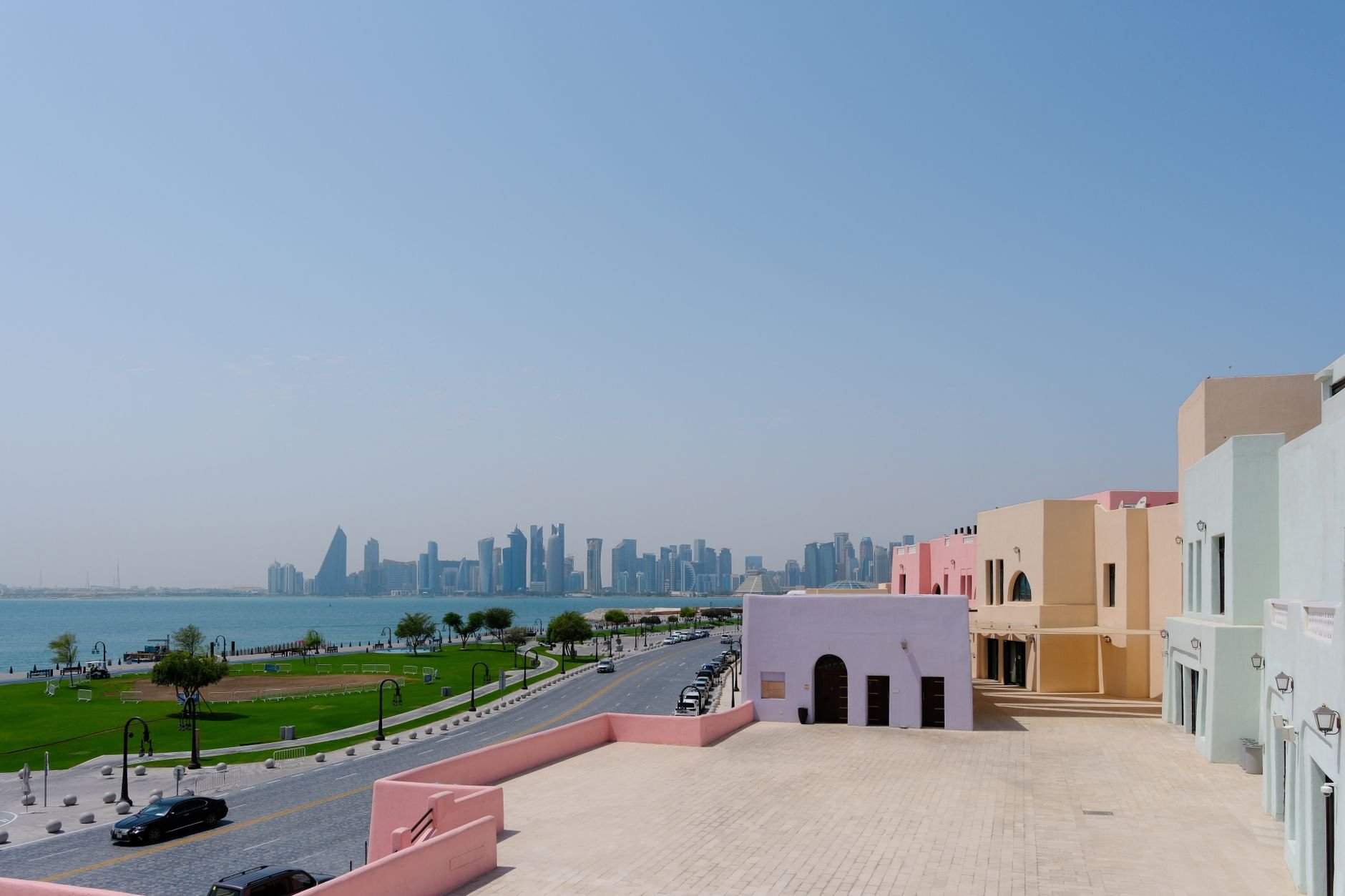
And since 16 March 2026, an important new exemption applies: all residential units and establishments within the administrative boundaries of The Pearl Island and Lusail City are exempt from that 20% wastewater-disposal fee.
Here's how the system works.
What changed in 2026?
Qatar introduced a new Ashghal service-fee framework through Minister of Municipality Decision No. 35 of 2026.
The decision was published in the Official Gazette on 15 March 2026 and took effect the following day, 16 March 2026.
It replaced Ministerial Decision No. 211 of 2019, which had governed many of Ashghal's drainage and service charges since 2020.
One of the biggest changes for residents and businesses is a new exemption for:
The Pearl Island and Lusail City
All residential units and establishments of any type located within the administrative boundaries of:
- The Pearl Island
- Lusail City
are exempt from the wastewater-disposal fee calculated at 20% of the water bill.
What is treated sewage effluent?
Treated sewage effluent, commonly called TSE or treated water, is wastewater that has gone through treatment and is reused instead of being discharged as waste.
In Qatar, it is used for purposes including:
- Irrigation
- Landscaping
- Fodder agriculture
- Road beautification
- Cooling systems
- Industrial processes
- Sand washing and some construction-related uses
Ashghal manages the treated-water network and related connection services.
Treated water usage fees in Qatar
The fee depends on how the treated water is being used.
Agriculture and fodder
For agricultural and fodder-production purposes:
QAR 0.01 per m³
That's 1 dirham per cubic metre.
Landscaping and industrial use
For purposes including landscaping, beautification and industrial applications:
QAR 0.25 per m³
That's 25 dirhams per cubic metre.
The current 2026 Ashghal fee framework continues to provide treated-water charges ranging from 1 to 25 dirhams per cubic metre depending on use.
Connecting to the treated-water network
The per-cubic-metre charge is only the usage fee.
If a development, farm, industrial facility or other establishment needs a new connection to the TSE network, an application must be submitted to Ashghal.
The customer is responsible for the:
Actual cost of constructing the connection
rather than paying one universal fixed connection fee.
Ashghal's application process asks for information including:
- Project details
- Required flow rate
- Expected daily TSE requirement
- Intended use
- Seasonal demand
- Storage capacity
- Proposed connection details.
So developers should budget separately for:
connection cost + ongoing TSE consumption charges.
Wastewater charges on your Kahramaa bill
This is the charge ordinary residents are most likely to notice.
For applicable premises connected to and benefiting from the sewerage network, the wastewater-disposal fee is calculated as:
20% of the water-consumption charge
For example:
If the water portion of your monthly bill is:
QAR 300
the wastewater charge would be:
QAR 60
It is important to understand that this is 20% of the water charge, not 20% of your entire electricity-and-water bill. KAHRAMAA's current prepaid-service guidance continues to describe the sewerage fee this way.
Who is exempt from the wastewater fee?
Qualifying Qatari residential accounts
Wastewater fees for homes of Qatari citizens follow the exemption rules applied by KAHRAMAA.
Where the water consumption itself falls within the applicable citizen exemption, an additional wastewater charge is not added.
Avoid describing this simply as “every Qatari household pays nothing,” because the current rules are tied to the applicable exemption framework.
The Pearl Island
Since 16 March 2026, all residential units and establishments within The Pearl Island's administrative boundaries are exempt from the 20% wastewater-disposal charge.
Lusail City
The same exemption applies to all residential units and establishments within Lusail City's administrative boundaries.
This exemption applies regardless of the type of establishment, according to Article 3 of Ministerial Decision No. 35 of 2026.
Government entities
The 2026 decision also exempts ministries, government bodies, public authorities and public institutions from the service fees contained in Table 1 attached to the decision.
That should not be interpreted as a blanket exemption from every possible water or utility charge.
Foul-water tanker fees
Sites that are not directly connected to the drainage network may use authorised tankers to transport foul water to approved treatment facilities.
Ashghal's current service documentation lists:
Foul-water tanker permit
QAR 50
for issuing or renewing the permit.
Foul-water discharge
QAR 1 per m³
for sewage discharged by tanker into an authorised treatment facility.
Treated-water tanker permits are treated separately.
Foul-water network connection fees
Don't confuse the monthly wastewater charge with the fee for constructing a new sewerage connection.
Under the current 2026 framework, different rules apply depending on the property type.
Current published summaries of Decision No. 35 of 2026 indicate:
- Certain existing residential connections can be free
- A qualifying first Qatari residential connection can be exempt
- A first non-Qatari residential connection can attract a QAR 6,000 charge
- Subsequent residential connections can cost QAR 12,000
- Organisation/commercial connections can cost QAR 12,000
The precise classification of a project matters, so developers and owners should confirm the fee directly through Ashghal before beginning connection works.
What about potable drinking water?
Potable water is different from TSE.
It is the water supplied through KAHRAMAA's normal distribution network for household and commercial use.
KAHRAMAA currently categorises water tariffs according to the type of customer, including:
- Residential flat
- Residential villa
- Commercial
- Hotel
- Industrial
- Government
- Productive farms
- Livestock facilities
- Other categories.
For non-Qatari private residences, QAR 4.40 per m³ has been the published residential water tariff benchmark.
However, because KAHRAMAA maintains a live tariff system by account category, check the current KAHRAMAA tariff calculator for the tariff attached to your specific premises rather than assuming one rate applies to every property.
What about water connection and meter fees?
The original article listed detailed residential and commercial fees for water connections by pipe diameter.
Those figures come from an older KAHRAMAA connection-fee table, which lists amounts such as:
- QAR 300 for a 15 mm residential connection
- QAR 960 for 22 mm
- QAR 1,920 for 28 mm
- Higher amounts for larger pipe sizes.
However, I would not reproduce that historic table as a definitive 2026 price list.
KAHRAMAA published a newer decision in 2025 setting fees and charges for its services, and current project costs can also depend on the type of property, infrastructure and technical connection required.
For a 2026 guide, direct property owners, contractors and developers to KAHRAMAA for a quotation or the current service-fee schedule for their specific connection.
Treated water vs potable water vs wastewater fees
It's easy to mix these up.
Potable water
Clean water supplied through KAHRAMAA for normal residential and commercial use.
Treated sewage effluent
Recycled wastewater supplied through the Ashghal TSE network for approved uses such as irrigation, landscaping and industry.
Wastewater-disposal fee
A sewerage-service charge that, where applicable, equals 20% of the water-consumption value on your KAHRAMAA account.
They are three separate parts of Qatar's water system.
FAQs
How much does treated water cost in Qatar?
For the relevant approved uses, treated sewage effluent is currently charged at:
- QAR 0.01/m³ for agriculture and fodder
- QAR 0.25/m³ for landscaping, beautification and industrial use.
What is Qatar's wastewater fee?
For applicable non-exempt customers receiving sewerage services, the charge is:
20% of the water-consumption bill
It is not 20% of the entire Kahramaa bill.
Do Qatari citizens pay the wastewater fee?
Qualifying Qatari residential accounts follow KAHRAMAA's citizen exemption rules.
Where the water consumption is exempt, no additional wastewater-disposal fee is added.
Are properties in Lusail charged the 20% wastewater fee?
No.
Since 16 March 2026, all residential units and establishments within the administrative boundaries of Lusail City are exempt.
Are properties on The Pearl charged the wastewater fee?
No.
The same 2026 exemption applies to residential units and establishments within The Pearl Island.
How much does it cost to connect to the treated-water network?
There is no single flat connection rate.
Ashghal charges the actual cost of constructing the connection, followed by the applicable per-cubic-metre consumption charge.
How much is a foul-water tanker permit?
Ashghal lists:
- QAR 50 for issuing or renewing the foul-water tanker permit
- QAR 1/m³ for foul water discharged at the treatment plant.
Who should confirm the final charges?
For TSE, sewerage connections and tanker services, check with Ashghal.
For potable-water tariffs, water meters and KAHRAMAA connections, check the current KAHRAMAA tariff and service-fee system.
Figures are based on Ashghal and Kahramaa tariff schedules and may be updated by the authorities over time.
Want to plan your monthly costs better? Explore more water bills, utilities and cost-of-living guides on Qatar Living.
About Qatar Living:
Since 2005, Qatar Living has been the trusted destination for everything Qatar. As the country's largest online community and marketplace, Qatar Living connects people with opportunities through jobs, property, vehicles, services, classifieds, events, local insights, and breaking news. Trusted by residents, newcomers, visitors, and businesses alike, Qatar Living brings Qatar together in one place.
Instagram - @qatarliving
X - @qatarliving
Facebook - Qatar Living
YouTube - qatarlivingofficial
Up Next

International Driving Permit (IDP) for Qatar Visitors
IDP for visitors to Qatar: requirements, the six-month rule, GCC exceptions, car rental needs and how to drive legally on your national licence.
Sep 13,2026
Transferring Your Driving Licence to Qatar: Full Process
Transferring your driving licence from your home country to Qatar? Full process, MOI fees from QAR 250, eye test, translation and step-by-step tips.
Sep 3,2026
Company and Family Sponsorship in Qatar: Documents and Process
Learn about company and family sponsorship in Qatar, required documents, eligibility, fees, and step-by-step application processes for residence permits.
Aug 2,2026