Health Card in Qatar: Apply, Renew & Use It
If you live in Qatar, an active public-health registration gives you access to subsidised services through the Primary Health Care Corporation and Hamad Medical Corporation.
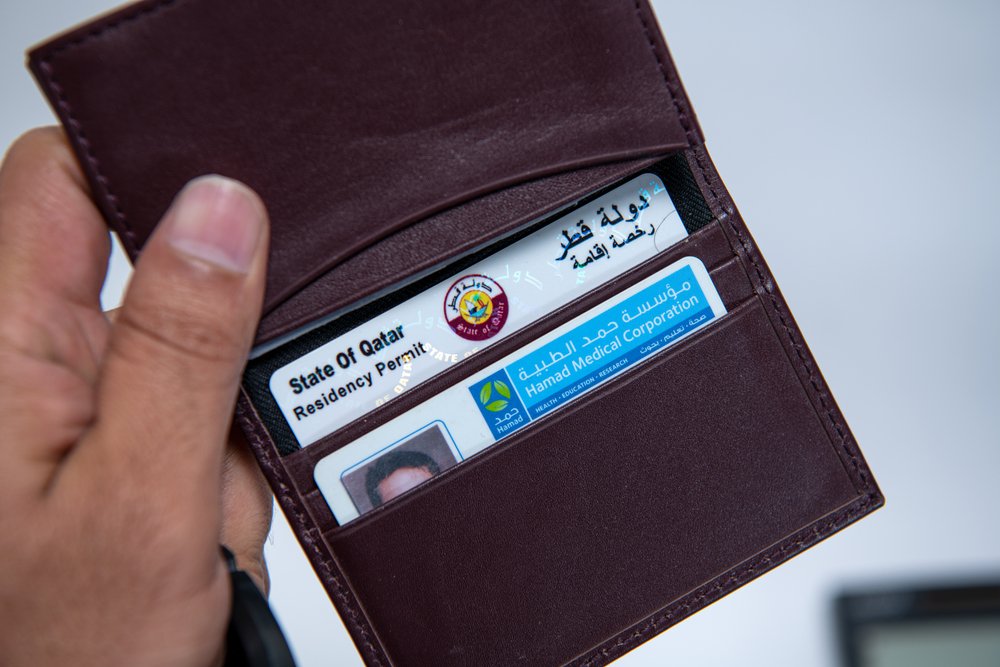
The way residents prove that registration has changed. Since April 17, 2026, residents use their valid Qatar ID instead of a separate printed health card when visiting PHCC, HMC and other government health-sector facilities. Physical health cards are no longer printed for residents, although the applicable registration and annual renewal fees continue to be collected.
Here is how to register, renew and use your public-health record in Qatar under the current 2026 system.
What is the health card in Qatar?
The term “health card” now refers more accurately to your active health registration and health number within Qatar’s public-healthcare system.
Residents no longer need to carry a separate plastic card. When you present your valid QID at a government health facility, staff can use it to find and verify your health number electronically.
An active registration gives residents access to subsidised consultations, non-emergency treatments and prescriptions at PHCC health centres, HMC hospitals and government-run pharmacies. Charges may still apply, but valid health registration generally reduces the cost.
Each family member needs their own health number and registration, including children. Parents and guardians can manage eligible dependants under the age of 18 through their Nar’aakom account, provided the dependant has a valid QID.
For routine PHCC care, you are assigned to a health centre according to your registered residential address and PHCC’s patient-registration policy. You should therefore not assume that you can register for routine care at any PHCC centre of your choice.
Health registration fees in Qatar in 2026
The current position differs between Qatari citizens and residents.
Qatari citizens — no health-card issuance or renewal fee
Since September 12, 2025, Qatari citizens have used their QID instead of a separate health card, free of charge.
The following previously approved annual fees continue to apply to residents:
GCC national residents — QAR 50
Other resident expatriates — QAR 100
Resident domestic staff and qualifying manually sponsored worker categories — QAR 50
The corresponding resident fee is generally the same for adults and children within each category. PHCC and HMC’s published fee schedules list QAR 50 for GCC residents and domestic staff, and QAR 100 for other adult and child residents.
Payment through PHCC is made by credit or debit card, and PHCC states that cash is not accepted at its health centres. Online renewals are paid electronically.
Lost or damaged health cards
The previous replacement-fee system is no longer the relevant process for most residents.
Circular No. 10 of 2026 discontinued the printing of physical health cards for residents. If you lose an old plastic health card, you can use your valid QID when accessing government healthcare instead of requesting another printed card.
If your QID itself is lost or damaged, you must follow the Ministry of Interior’s process for replacing the QID. That is separate from health-registration renewal.
Older PHCC and HMC webpages may still display replacement charges of QAR 50 to QAR 200. These relate to the former physical-card system and should not be presented as the current process without explaining the April 2026 policy change.
Documents you need to apply
The documents depend on the applicant’s nationality, age and application route.
For most resident applications, prepare:
- A valid QID
- Proof of residential address, such as a rental contract, KAHRAMAA bill or another accepted utility bill
- A recent 4cm × 3cm photograph if requested
- A vaccination or inoculation card for eligible first-time child registrations
- The sponsor’s QID for domestic staff or sponsored dependants where required
- A birth certificate for certain child applications
PHCC’s Nar’aakom guidance states that online applicants upload a copy of the QID and a rental contract or KAHRAMAA bill. PHCC’s wider in-person checklist also asks applicants for proof of address and lists additional documents according to the applicant category.
PHCC currently states that a person using the Nar’aakom new-registration service must have a QID valid for at least one year. Applicants should check the app for the current eligibility message before submitting.
How to apply in person at PHCC or HMC
For a first-time resident registration, the clearest in-person route is through the PHCC health centre assigned to your residential area.
The process generally works as follows:
- Visit the PHCC health centre covering your registered address.
- Complete the required registration form.
- Submit your QID, proof of address and any category-specific documents.
- Pay the applicable resident fee by card.
- PHCC creates or activates your health-file number and links it to your QID.
PHCC’s published information says that first-time health-registration services are processed during morning working hours.
Do not assume that every HMC hospital registration desk processes new applications for all residents. Some HMC facilities limit new registration services to inpatients. HMC and PHCC facilities do, however, provide in-person renewal services, subject to the service arrangements at the individual facility.
Because residents now use their QID, you should expect the health number to be activated electronically rather than receiving a new printed health card.
Avoid promising that every application will be completed immediately. Processing can depend on document verification, address assignment and the application route.
How to apply or renew online
There are two main official digital routes, but they serve slightly different purposes.
Renew through Hukoomi
Hukoomi provides the official online health-registration renewal service.
To renew:
- Open the Hukoomi health-card renewal service.
- Enter the required QID and health-registration details.
- Select whether you are renewing for yourself or another person.
- Enter the requested contact information.
- Choose the renewal period offered by the system.
- Pay the applicable fee electronically.
- Save the confirmation or receipt.
Hukoomi states that renewal is completed immediately once payment has been processed successfully. The service can also be used to renew for family members or another person when the necessary QID and health details are available.
Residents can also use Hukoomi’s free service to check the expiry date connected to their health registration by entering the QID.
Register through the Nar’aakom app
Nar’aakom is PHCC’s mobile application. It can be used to request a new health registration for yourself or eligible dependants.
To use it:
- Download the official PHCC Nar’aakom app.
- Sign in through Qatar’s National Authentication System, or Tawtheeq.
- Select the new health-card registration service.
- Choose yourself or an eligible dependant.
- Complete the personal and contact information.
- Upload the requested QID and address documents.
- Submit the application.
Applicants must be at least 18 to operate their own Nar’aakom account. Dependants under 18 can be added to an adult’s account, while anyone aged 18 or above must create a separate account.
PHCC has previously stated that Nar’aakom can display health-registration expiry information and support online renewal. However, Hukoomi remains the clearest current official route specifically documented for renewals.
Validity and when to renew
Residents continue to pay an annual health-registration renewal fee even though a physical card is no longer issued.
Check the expiry date through Hukoomi or Nar’aakom and renew before it lapses. An expired registration can affect access to subsidised consultations, treatments and government-pharmacy prices.
The online system may allow you to select the number of years being renewed. The applicable resident fee is calculated according to the category and renewal period selected. HMC’s official renewal instructions specifically ask applicants to enter the required number of renewal years.
Do not describe an expiry as automatically blocking all medical treatment. The more accurate point is that an active registration is required to maintain the applicable subsidised public-healthcare benefits and avoid administrative or billing complications.
How to use your health registration
Once your registration is active:
- Carry and present your valid QID when visiting a PHCC or HMC facility.
- Attend your assigned PHCC health centre for routine primary-care services.
- Use your family physician as the normal first point of contact for primary care and referrals.
- Present your QID at HMC when attending a referred appointment, hospital service or other eligible care.
- Keep the resident health-registration fee and renewal period up to date.
- Use Nar’aakom to manage PHCC appointments and eligible dependant accounts.
Your QID now functions as the identification document at the point of care. Healthcare staff use it to retrieve the linked health number through their internal systems.
A health registration does not replace private medical insurance, and it does not mean that every consultation, test, treatment or medicine will be free. Its main benefit is access to Qatar’s public-healthcare system at the applicable subsidised rates.
Registering with PHCC after receiving your QID is therefore an important step for residents, particularly those who expect to use public primary-care, specialist or pharmacy services.
FAQs
How much does a health registration cost in Qatar?
Qatari citizens use their QID to access government healthcare without a separate health-card fee.
The annual fees that continue to apply to residents are generally:
- QAR 50 for GCC national residents
- QAR 100 for other adult and child residents
- QAR 50 for resident domestic staff and qualifying manually sponsored categories
How long is the health registration valid?
Residents must renew their registration and pay the applicable fee annually. The online renewal process may allow the user to select more than one renewal year.
The precise expiry date can be checked through Hukoomi using the QID.
Can I renew my health registration online?
Yes. The official Hukoomi renewal service allows residents to renew for themselves or another person and pay electronically. The renewal is recorded once payment has been processed successfully.
What documents do I need for a first-time registration?
Most residents need a valid QID and proof of address, normally a rental contract, KAHRAMAA bill or other accepted utility bill.
Depending on the applicant category, PHCC may also request a photograph, vaccination card, birth certificate or sponsor’s QID.
What happens if I lose my health card?
Residents no longer need a printed health card. Since April 17, 2026, a valid QID is used instead, and physical health-card printing for residents has been discontinued.
If you lose an old health card, carry your QID. If you lose the QID itself, apply for a replacement QID through the relevant Ministry of Interior service.
Where do I apply in person?
For first-time registration, visit the PHCC health centre assigned according to your residential address. Bring the required documents and a credit or debit card.
Renewals can be completed at PHCC health centres, participating HMC hospital service points or online through Hukoomi.
Do I still need a health registration if my QID replaces the card?
Yes, for residents.
The QID replaces the physical document presented at the facility, but it does not eliminate the resident’s health number, registration requirements or annual renewal fees.
New to Qatar and sorting out the essentials? Browse more practical guides and health and community services on Qatar Living.
---
About Qatar Living :
Since 2005, Qatar Living has been the trusted destination for everything Qatar. As the country's largest online community and marketplace, Qatar Living connects people with opportunities through jobs, property, vehicles, services, classifieds, events, local insights, and breaking news. Trusted by residents, newcomers, visitors, and businesses alike, Qatar Living brings Qatar together in one place.
Follow Qatar Living for daily updates:
Instagram - @qatarliving
X - @qatarliving
Facebook - Qatar Living
YouTube - qatarlivingofficial
Up Next

Qatar Expat Health Insurance 2026: Costs & Rules
Qatar expat health insurance 2026: coverage types, typical costs in QAR and what your employer must pay under the mandatory scheme. A clear expat guide.
Jul 27,2026
Heat Safety and Hydration Tips for Expats in Qatar
Summer hydration and heat safety for expats in Qatar: medical tips to beat Doha's heat, spot heat exhaustion and know when to call 999.
Jul 12,2026