Qatar to host international conference on Islamic family mediation charter
Efforts in the State of Qatar are geared towards the preparation of a global Islamic charter for family mediation, which combines Sharia reference, legal controls, professional and ethical standards, in a way that contributes to protecting rights, developing reform mechanisms, preserving family ties, and enhancing the stability of society in the State of Qatar and beyond.
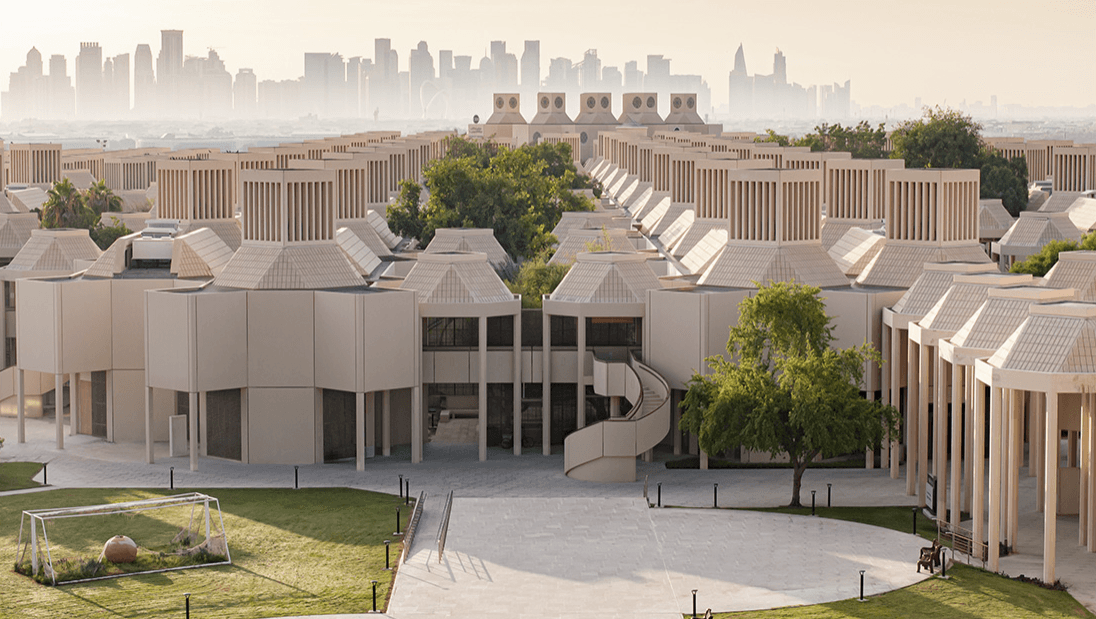
The International Conference on the Islamic Charter for Family Mediation, scheduled to be held at Qatar University on November 23, comes within the framework of these efforts, organized by the Colleges of Sharia, Islamic Studies and Law, and in partnership with the Supreme Judicial Council and the Ministry of Social Development and Family.
The importance of this initiative is highlighted in light of the challenges and disputes that the family may face related to marital relations, understanding between family members, responsibilities of care and upbringing, and other issues that require dealing with them wisely and balancely, in a way that preserves rights and limits the expansion of disputes and their repercussions on family life.
Family mediation is gaining increasing importance as one of the mechanisms that contribute to addressing family disputes in an amicable way, protecting ties between family members, and reducing the social and psychological effects of family disputes, especially those that are protracted and have repercussions on children and the stability of family life.
The organization of the conference reflects an interest in developing the family mediation system, and moving it from practices based on individual experiences and professional jurisprudence to a more integrated frame of reference that defines the principles and controls that govern the work of mediators, clarifies their responsibilities, and enhances the confidence of community members in the services provided to them, taking into account the social and cultural specificity of Islamic societies.
In this context, the cooperation between Qatar University, the Supreme Judicial Council, and the Ministry of Social Development and Family represents a model for the integration of roles between academic, judicial and social institutions, as universities contribute to scientific and legal rooting, the development of knowledge and training programs, while judicial institutions provide practical experience in dealing with disputes, and the authorities concerned with social development support the efforts of awareness, counseling, and family reform.
In addition, the international dimension of the conference is of added importance, as it allows for the exchange of experiences between scholars, researchers and practitioners from different legal and social environments, and the benefit of diverse experiences in the development of family reform mechanisms, taking into account the cultural specificity and social values of Islamic societies.
Regarding the importance of preparing an Islamic charter for family mediation, Dr. Ibrahim bin Abdullah Al-Ansari, Dean of the College of Sharia and Islamic Studies at Qatar University, said in special statements to Qatar News Agency (QNA), that in light of the increasing challenges faced by the family in general, and the Muslim family in particular, and the high rates of divorce and family disintegration in societies, there is an urgent need to consolidate the function of mediation and family reform, as a societal and institutional mechanism to protect the family and settle its disputes, within an integrated Shariah, ethical and professional framework.
He added that the importance of issuing the Islamic Charter for Mediation and Family Reform stems from the absence of an inclusive Islamic reference that regulates this function professionally and ethically, and the disparity in the countries of the Islamic world in recognizing and regulating it legally and institutionally, as well as the limited scientific and professional qualification of practitioners, and the weakness of the institutional framework that embraces them.
Hence, the Charter establishes an Islamic frame of reference that defines professional standards, ethical controls, and societal obligations for practitioners of mediation and family reform.
Dr. Al-Ansari stressed the need for the charter to be based on the general rules and principles of Islamic law in the establishment of justice and fairness between the parties to the family dispute, foremost of which is justice and the removal of injustice, the principle of "no harm and no harm", and its derivatives that "the harm is removed", the obligation to preserve and perform rights to their owners, prevent abuse in the use of the right, consider consensual as a basis for reconciliation, bring interests and ward off corruption, and settle between the parties.
He pointed out the importance of the charter to emphasize that the goal of reform is not only to maintain the marital relationship, but to establish justice, preserve rights and dignity, and remove harm from both parties, in a way that enhances affection, compassion and family stability, whether the reform ends in the sustainability of the marriage or a benevolent separation.
With regard to the moral and professional values that the Charter is expected to establish, Dr. Ibrahim pointed out that the Charter should base the practice of mediation and family reform on a set of ethical values and controls derived from the teachings of Islam.
He explained that the most prominent of these values are verifiability and objectivity, by verifying the facts, listening to the two parties, not basing professional positions or assessments on impressions and prejudices, and disciplined neutrality, by standing at the same distance from the two parties, and not taking sides in either of them, while adhering to justice and fairness at all stages of mediation.
These values also include integrity and honesty, by ensuring that rights are shown and safeguarded, avoiding anything that would affect the independence of the mediator or direct the mediation process in the interest of one of the parties, and advising and stating that the mediator should be a clear advisor who clarifies to the parties their rights, obligations and the effects of the options presented, and avoids them from making decisions out of ignorance or misjudgment.
It also includes the preservation of dignity and respect for the will, by preserving the dignity of both parties, providing each of them with an equal opportunity to express his position and needs freely, without pressure or derogation, and respecting his right to make his decision voluntarily and by choice, confidentiality and privacy, by maintaining the confidentiality of the sessions and the personal and family information and secrets circulated therein, while explaining the limits of confidentiality and the exceptions required to protect persons from serious harm, especially physical harm.
Al-Ansari pointed out that these values are not only desirable etiquette, but are also basic controls that ensure the integrity of mediation, enhance trust in it, and achieve the goals of family reform.
At the end of his remarks to QNA, Dr. Ibrahim bin Abdullah Al-Ansari, Dean of the College of Sharia and Islamic Studies at Qatar University, praised the Qatari experience in mediation and family reform, saying that it was distinguished in several aspects.
He explained that the first of these aspects is the legislative and organizational aspect, as mediation and family reform have been integrated into judicial procedures, so the judge refers divorce cases to the family reconciliation office in the court, to take over the mediation and reform procedures, and then submits his report to the judge, allowing the court to be informed of the results of the reform efforts before proceeding with the case.
The Qatari experience has also adopted the system of two judgments, which the judge uses to determine the nature, causes and party of the abuse.
The second aspect is rehabilitation, as the Supreme Judicial Council, in cooperation with Qatar University, has adopted a specialized program for the rehabilitation of family mediators and reformers, which is the professional diploma in family mediation, in a way that enhances the scientific and professional competence of practitioners and raises the level of this job.
For his part, Dr. Mahmoud Abdulaziz Abu Al-Maati, a professor of family law at the Faculty of Law at Lusail University, said in a similar statement to Qatar News Agency (QNA), that the Islamic Charter for Family Mediation represents an important step towards developing the family justice system, if it succeeds in transforming the principles of family reform from a mere ethical and social orientation to a clear institutional and professional framework that combines Sharia reference, legal controls and professional standards.
He added that the main addition to this charter is that it views family dispute as an issue that goes beyond the boundaries of legal rivalry between spouses, as it affects family stability, children's mental health, and extended relationships between family members, and may have social effects that continue even after the dispute ends judicially.
Dr. Abu Al-Maati pointed out that family mediation derives its importance from the purposes of Islamic Sharia, which urge reform, removal of damage, justice and preservation of rights, because the Almighty says: "And reconciliation is good", and because of the words of the Almighty regarding the dispute between the spouses: "If they want reform, God will reconcile them."
Regarding the possibility that family mediation can contribute to reducing the escalation of disputes and reducing the burdens on the courts, Dr. Mahmoud Abdel Aziz Abu Al-Maati explained that family mediation can contribute significantly to reducing the escalation of family disputes, when applied in accordance with clear professional and legal controls, because it allows the dispute to be resolved at an early stage, before it turns into a protracted dispute in which the circle of conflict expands and its psychological, social and financial effects increase.
Mediation could contribute to reducing the burden on the courts, by settling some disputes that were acceptable to a contractual solution, and by allowing more judicial time for cases requiring investigation, binding adjudication or urgent protective measures.
Dr. Abu Al-Maati pointed out that the amount of this impact remains related to the quality of mediation, the extent of commitment to the agreements, and the efficiency of the institutions based on them.
With regard to legal guarantees, he explained that such guarantees should be based on a set of basic principles, foremost of which is free and informed consent, so that the parties enter into mediation without coercion or threat, while enabling each party to understand its rights and the legal implications of the agreement.
These guarantees also include impartiality and independence, through the professional qualification of mediators, the prevention of conflicts of interest, the protection of rights and the non-exploitation of the power disparity between the two parties, especially in cases where one is more capable of financial, psychological, or social influence on the other.
It also includes legally disciplined confidentiality to protect the privacy of the family, taking into account the exceptions established by law, in particular with regard to reporting duties and protection from violence or danger.
These guarantees also include the legal review of the agreements, to ensure their legitimacy and clarity of their clauses, and that they do not violate the law or detract from the rights that may not be waived, as well as documentation and implementation and follow-up mechanisms, so that the settlement does not remain mere oral undertakings that are difficult to prove or implement when violated.
With regard to children's issues, Dr. Abu Al-Maati said that issues related to children, alimony, custody and visitation require greater precision, because the dispute in them is not limited to the personal interests of the spouses, but also relates to legal and legal rights, some of which may be related to persons who are not involved in the mediation proceedings, especially children.
In this context, he pointed out the importance of distinguishing between agreeing on how to exercise and regulating rights and disposing of or assigning the origin of the right in a manner that is detrimental to the owner or contrary to the law.
In matters of custody and visitation, mediation can assist parents in making practical arrangements for visitation dates, handover and pick-up of the child, and communication between parents about their education, treatment and daily needs.
Dr. Mahmoud Abdel Aziz Abu Al-Maati, professor of family law at the Faculty of Law at Lusail University, concluded his remarks to QNA, stressing the importance of reminding that the preparation of an Islamic charter for family mediation with an international reference requires moving from the stage of formulating principles to the stage of building an integrated system for implementation, rehabilitation, monitoring and evaluation.
The success of a charter depends not only on the soundness of its theoretical provisions, but also on its ability to bring about a tangible change in institutional practice and in the lives of families benefiting from mediation services.
He indicated that there are main requirements that should be taken into account, namely the legislative requirements, to determine the legal status of family mediation, its relationship to litigation procedures, cases of referral to it, and the legal effects of the agreements resulting from it.
As for the institutional requirements for effective implementation, they include the existence of clear coordination between the courts, social authorities, family reform centers, universities and institutions concerned with family protection, and the responsibilities of each of the relevant authorities.
He added that building successful family mediation requires the preparation of mediators who possess scientific qualification and practical skills that combine legal and legal knowledge, family psychology, communication and negotiation skills, conflict management, understanding children's needs, and dealing with sensitive cases.
As a result, the International Conference on the Islamic Charter for Family Mediation represents an important step towards strengthening the scientific and professional references on which the practice of mediation is based, and developing conflict resolution tools that balance the protection of rights with the preservation of family ties.
The organization of the conference in the State of Qatar also embodies the importance of partnership between national institutions in facing social challenges, and benefiting from legal and legal knowledge and judicial expertise in building a more efficient system of family reform, in a way that supports family stability, protects children, and enhances social cohesion.
About Qatar Living:
Since 2005, Qatar Living has been the trusted destination for everything Qatar. As the country's largest online community and marketplace, Qatar Living connects people with opportunities through jobs, property, vehicles, services, classifieds, events, local insights, and breaking news. Trusted by residents, newcomers, visitors, and businesses alike, Qatar Living brings Qatar together in one place.
Instagram - @qatarliving
X - @qatarliving
Facebook - Qatar Living
YouTube - qatarlivingofficial
Up Next

Teens take centre stage at Youth Fest 2026 in Al Bidda Park
Youth Fest 2026 in Al Bidda Park empowers teens with workshops, networking, and sustainability events, uniting over 120 community contributors.
Nov 4,2026
Qatar Museums' Teen Hub, Earthna Partner to Launch Youth Fest 2026
Qatar Museums' Teen Hub and Earthna launch Youth Fest 2026, uniting youth and partners for skills, networking, and sustainability in Qatar.
Nov 4,2026
FIP World Cup Qatar 2026: Tickets and Schedule
FIP World Cup Qatar 2026 guide: full schedule (2–7 Nov), tickets from QAR 50, and everything you need at Khalifa International Tennis and Squash Complex.
Nov 3,2026
Dana Al Fardan at Heenat Salma Farm: Tickets & Timings
Dana Al Fardan live at Heenat Salma Farm on 20 November 2026. Here's what we know about tickets, timings, farm day-pass prices and how to get there.
Nov 3,2026