Prime Minister Tells Oxford Union Prosperous States Can Play Pivotal Role in International Peace
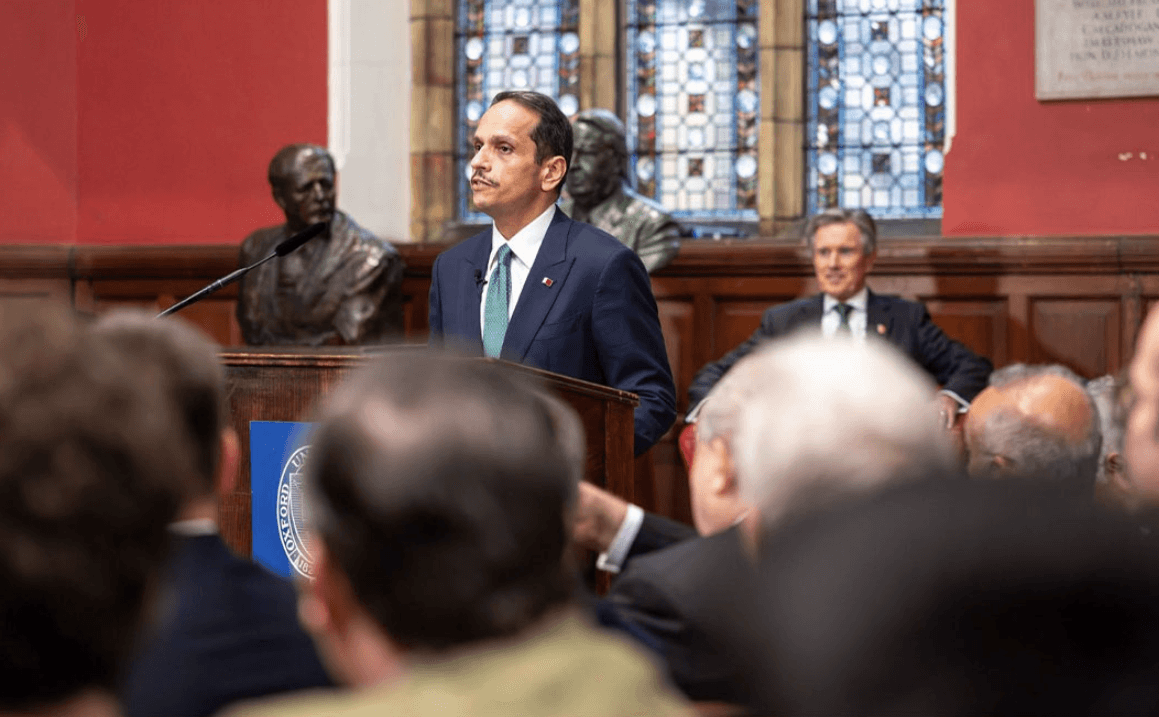
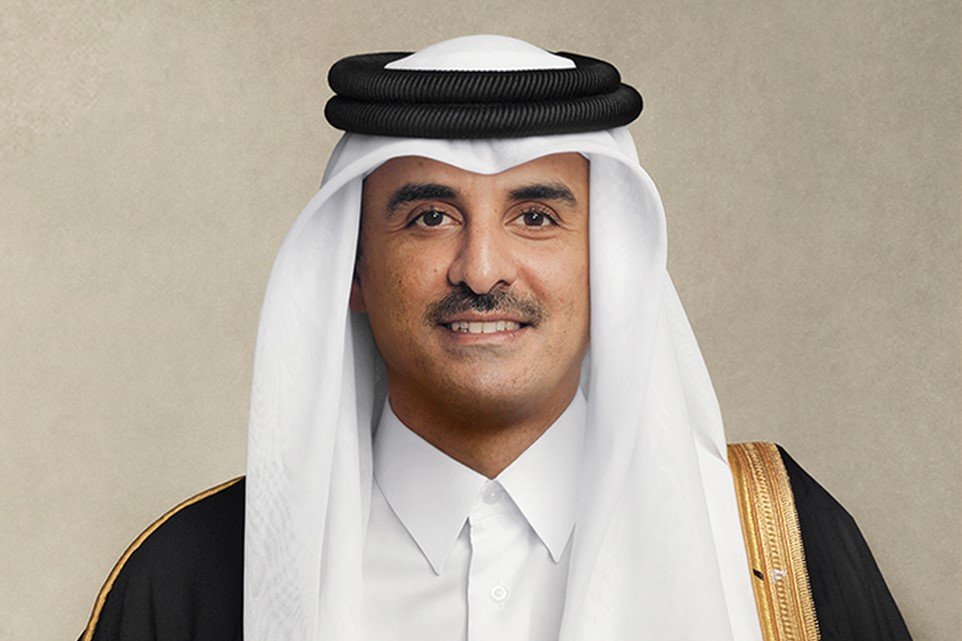
HE Prime Minister and Minister of Foreign Affairs Sheikh Mohammed bin Abdulrahman bin Jassim Al-Thani affirmed that prosperous states which have made essential contributions to global prosperity now enjoy a unique standing that equips them to assume a similar role in achieving international peace—not through individual initiatives, but through a collective, organised and cumulative approach.
His Excellency made the remarks in a speech before the Oxford Union titled “Prosperity in a Divided World: Small States and Redrawing the Map of Global Influence” in Oxford.
His Excellency explained that the international order established after the Second World War was founded on the understanding that peace could not be maintained through force alone. It established a system of rules, international institutions and open markets.
His Excellency said more than 120 countries have joined the international community since 1945, giving peoples who previously had no voice their own voice on the global stage. This opened the door for smaller states such as the State of Qatar to prosper by protecting them from annexation, regional domination and great-power competition, while enabling them to develop their own economic models and open themselves to global trade.
HE the Prime Minister and Minister of Foreign Affairs noted that many of these countries are neither regional powers nor global superpowers. Nevertheless, they achieved prosperity by investing in their people, infrastructure and economic models, gained international importance and became integral parts of the global economy.
He said that, alongside strengthening their prosperity, many of these countries use their collective strength to advance peace and stability worldwide.
His Excellency said: “According to traditional classifications, countries are categorised as developed or developing.” He explained that these classifications, largely shaped by the perspectives of traditional centres of economic power, do not always reflect what countries pursuing different paths to prosperity have achieved or their contributions to the international community.
In this context, His Excellency proposed a different name for a particular group of states: resilient, stable, prosperous and trusted states that have turned their size into an advantage and become prominent contributors to global peace and prosperity. He called them “prosperous states.”
He added: “Today, we find ourselves at a crossroads where conflicts, technological discoveries and the realignment of geopolitical blocs intersect. Such historic moments occur only once in a generation, and our generation still faces the challenge of rising to this moment.”
His Excellency affirmed that the international order which emerged after the Second World War was not always fair, nor were its rules consistently applied. He said the international order should not be idealised, as power has always played an influential role within it.
He continued: “Nevertheless, just as has been said about democracy, the same can be said about this world order: it is the worst form of system, yet it remains better than all the other alternatives.”
His Excellency explained that the Charter of the United Nations enshrined the principles of sovereign equality among states and the peaceful settlement of disputes. He noted that international institutions and rules enabled small states to make their voices heard, protect their rights and make international relations more predictable. While these institutions did not eliminate power imbalances, they expanded the space available for small states to make independent decisions, away from the “might makes right” logic that prevailed in previous centuries.
His Excellency added: “Nevertheless, while economic opportunities have become increasingly global, decisions concerning international peace and security have remained concentrated in the hands of a very small number of actors. This has largely excluded countries—which are indispensable to global prosperity—from the decisions that determine international peace and stability.”
His Excellency explained that the current war in the region has exposed the danger of this imbalance. Decades of military adventurism, unresolved conflicts, violations of international law and ambitions for regional domination have disrupted energy supplies, threatened vital maritime routes and exposed international markets to uncertainty. Even countries that are not parties to these conflicts bear their economic and security consequences.
HE the Prime Minister and Minister of Foreign Affairs noted that these developments reveal a fundamental imbalance. The world has become more interconnected in generating prosperity, while decisions concerning peace and war remain far less collective in how they are made than in their consequences. Small states have increasingly become the first victims of conflicts they played no part in starting.
His Excellency asked: “How can states that lack significant strategic depth and do not possess substantial coercive power play a role in preserving the global order and international peace without compromising their sovereignty and national interests?”
He explained that the State of Qatar recognised that its future depended not only on the resources it possessed, but also on the capabilities it could build and the relationships it could establish. Qatar chose to invest in its people, develop its economy and become a reliable and trusted partner in the international community.
His Excellency added that the realities of the State of Qatar’s geographical location and the nature of the international economy led it to recognise that its prosperity could not be isolated from regional and international conflicts. This prompted Qatar to invest in peace facilitation and mediation and maintain channels of communication with parties that others could not always reach. He noted that lessons learned through countless mediation efforts gave the State of Qatar unique and profound expertise.
HE the Prime Minister and Minister of Foreign Affairs said the State of Qatar’s journey to this point is the journey of a people who achieved prosperity and extended their hand to the world to share its fruits. Despite this, Qatar today finds itself targeted by campaigns promoting false narratives and by military attacks from parties that do not believe peace is humanity’s natural state.
He added: “They believe in a world governed by the Hobbesian principle, where the natural state of the international order is one of conflict, governed by force alone. They do not merely theorise about it; they actively work to turn it into a tangible reality. For them, the rules-based order that has protected us since the Second World War is unnatural. We must protect it from them in particular.”
His Excellency stressed that the challenges facing the Gulf states extend far beyond their own experience. They reveal a deeper threat to the international order itself, its ability to preserve peace, uphold its principles and protect the opportunities that enabled states such as Qatar to prosper. He said the State of Qatar is not alone in facing these challenges, as other prosperous states similarly benefited from the opportunities provided by an open international environment to build strong institutions, develop economies integrated with the global economy and establish capabilities that broaden the scope of their contributions beyond their borders.
His Excellency explained that prosperous states cannot overcome these challenges alone or replace the great powers. However, by combining their expertise, economic capabilities and diplomatic networks, they can contribute to establishing and sustaining an integrated system of foundations for global peace and stability.
He affirmed that achieving stability in a conflict-ridden world requires a comprehensive vision of peace based on preventive measures, crisis response and work to end conflicts, while preserving the foundations that ensure peace remains sustainable. He noted that ignoring these conditions causes peace to erode gradually until conflict becomes the prevailing state.
His Excellency noted that many legitimate questions are being raised about international institutions and their place within a rapidly changing global order. Regional and non-regional groupings are increasingly intervening to fill the vacuum where existing institutions have failed to respond effectively to international crises.
He affirmed that international peace and stability are not luxuries for prosperous states, but the foundation of their national journeys. He noted that the State of Qatar’s mediators are currently working to prevent a new wave of escalation in the region.
HE the Prime Minister and Minister of Foreign Affairs concluded his speech by stressing that responsibility for maintaining stability cannot be assigned to others and that surrendering to inaction must not be accepted. History is filled with the memory of those who merely watched passively, but it immortalises only those who took the initiative to shape its events and course.
Source: QNA
--
About Qatar Living:
Since 2005, Qatar Living has been the trusted destination for everything Qatar. As the country's largest online community and marketplace, Qatar Living connects people with opportunities through jobs, property, vehicles, services, classifieds, events, local insights, and breaking news. Trusted by residents, newcomers, visitors, and businesses alike, Qatar Living brings Qatar together in one place.
Instagram - @qatarliving
X - @qatarliving
Facebook - Qatar Living
YouTube - qatarlivingofficial
Up Next
International Energy Agency: Fuel Market Disruptions Drive Renewable Energy Growth
Global fuel market disruptions are accelerating renewable energy growth, with solar power leading expansion in emerging and developing countries.
Nov 6,2026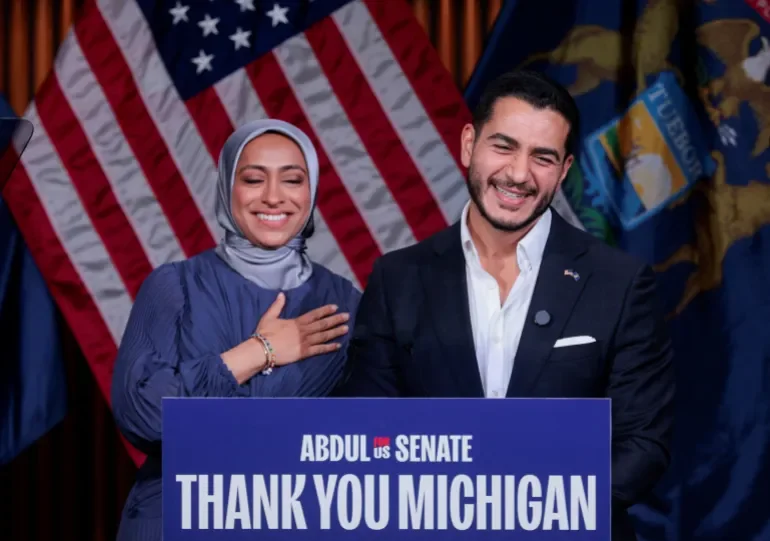
Abdul El-Sayed becomes first Muslim elected to US Senate
Abdul El-Sayed wins Michigan’s US Senate race, making history as the first Muslim elected to the Senate in the United States.
Nov 4,2026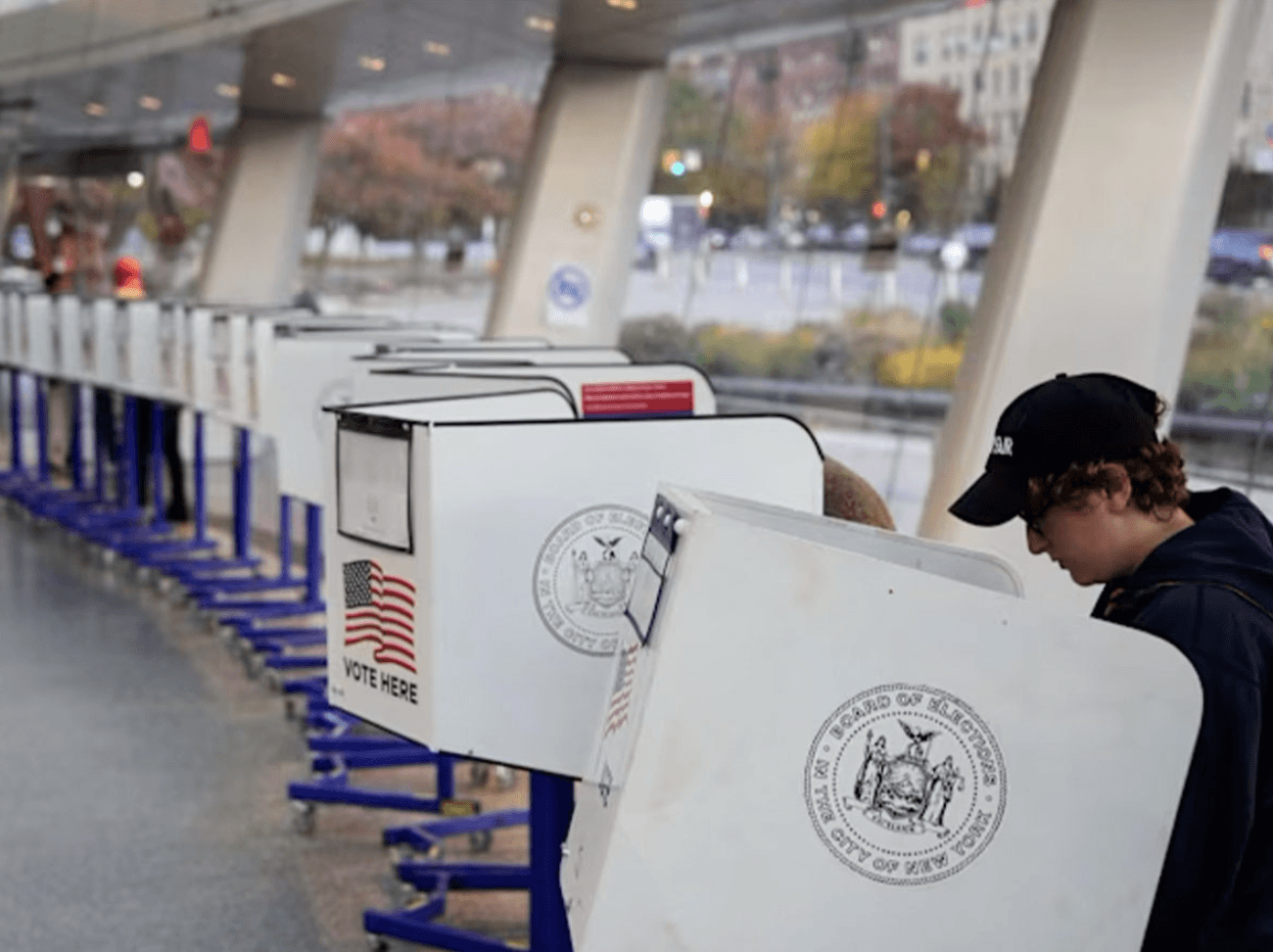
Americans Cast Their Votes in Congressional Midterm Elections
Americans are voting in the 2026 congressional midterms, with control of the House and Senate and 36 gubernatorial contests at stake.
Nov 4,2026
UN strongly condemns attack on Qatari LNG tanker
The UN condemns the attack on a Qatari LNG tanker, urging protection of shipping in the Strait of Hormuz and highlighting global economic impact.
Nov 3,2026