Teaching English in Qatar: Salary, Visas & Agencies

If you are a qualified English teacher comparing opportunities in the Gulf, Qatar can be a strong option, especially for licensed teachers with classroom experience. Salaries vary widely by employer, but many English-teaching roles in Doha sit roughly between QAR 6,000 and QAR 18,000 per month, while stronger international school roles can go higher depending on qualifications, experience and benefits.
The best packages are usually found at established international schools, private schools and higher education institutions. Many offers may also include housing or a housing allowance, annual flights, medical insurance and paid leave.
This guide breaks down expected salaries, the qualifications you are likely to need, how the work visa and Qatar ID process works, and the main routes for finding teaching jobs in Doha.
Salary figures are indicative only. Always check the full offer, including housing, flights, medical cover, school fees for dependants, transport and end-of-service benefits before accepting a role.
How Much Can You Earn Teaching English in Qatar?
Pay depends heavily on the type of employer, your teaching licence, your experience and the curriculum you can teach. A licensed English teacher at a strong international school will usually earn more than a new TEFL-qualified teacher at a small language centre.
Because Qatar does not impose personal income tax on employed individuals’ salaries, wages and allowances, your monthly salary is not reduced by local income tax. However, your overall savings will still depend on rent, transport, family costs and your lifestyle.
Salary by Employer Type
Language Centres and TEFL Roles
Language centre and ESL roles are often the entry point for teachers with a bachelor’s degree and a TEFL, TESOL, CELTA or CertTESOL qualification. Salaries can vary widely, but a realistic guide is around QAR 6,000 to QAR 14,000 per month, depending on the centre, hours, schedule and experience required.
These roles may offer fewer benefits than full international school packages, so check whether housing, flights and medical cover are included.
Private and International Schools
Licensed teachers at private and international schools can usually expect stronger packages. A realistic range for many qualified school roles is around QAR 10,000 to QAR 18,000 per month, with some 2026 job postings advertising higher monthly packages for experienced teachers.
Schools following British, American, IB or other international curricula may require a teaching licence, PGCE, B.Ed or equivalent qualification, plus classroom experience.
Higher-End School and Senior Roles
Some higher-end schools, leadership roles and hard-to-fill positions can offer higher salaries, especially when the teacher has strong curriculum experience, a subject degree and several years of teaching experience.
Do not judge the offer by salary alone. A slightly lower salary with free furnished housing, annual flights and medical cover can be better than a higher salary with no housing support.
Universities and Higher Education
University, foundation programme and academic English roles may offer competitive packages, but they usually require stronger qualifications, such as a master’s degree, relevant teaching experience and sometimes experience in EAP, IELTS, academic writing or foundation-level teaching.
Salaries vary by institution and role, so treat university figures as job-specific rather than a fixed market range.
The Benefits That Make the Package Worth It
In Qatar, the base salary is only part of the offer. A good package may include:
Employer-sponsored work visa and residence permit
Furnished accommodation or a housing allowance
Annual return flights
Medical insurance
Paid annual leave
End-of-service gratuity
Professional development support
School fee discounts or allowances for dependants, depending on the employer
When comparing offers, calculate the full package. A QAR 11,000 salary with free accommodation can be stronger than QAR 14,000 where you pay your own rent.
Qualifications You Need to Teach English in Qatar
Requirements depend on the employer, but most serious teaching roles in Qatar expect a university degree and a recognised teaching qualification.
For School Teaching Roles
International and private schools usually prefer or require:
A bachelor’s degree in English, Education or a relevant subject
A teaching licence, PGCE, PGDE, B.Ed or equivalent qualification
At least two years of relevant classroom experience
Experience with the school’s curriculum, such as British, American or IB
Strong English language proficiency
For Language Centres
Language centres are usually more flexible, but they commonly expect:
A bachelor’s degree
A recognised TEFL, TESOL, CELTA or CertTESOL qualification
A 120-hour TEFL or TESOL certificate as a common minimum standard
Teaching experience, especially for adult English, IELTS, business English or exam preparation
For Universities and Academic English Roles
Higher education roles usually expect:
A master’s degree in TESOL, Applied Linguistics, English, Education or a related field
Relevant university, foundation or EAP teaching experience
Experience in academic writing, IELTS, English for Academic Purposes or pathway programmes
Native or Near-Native English Proficiency
For English-teaching roles, employers usually expect native or near-native English proficiency. Some schools may prefer candidates from countries where English is the first language, but strong non-native English-speaking teachers with the right qualifications, experience and classroom record can also be considered.
The Work Visa and Qatar ID Process
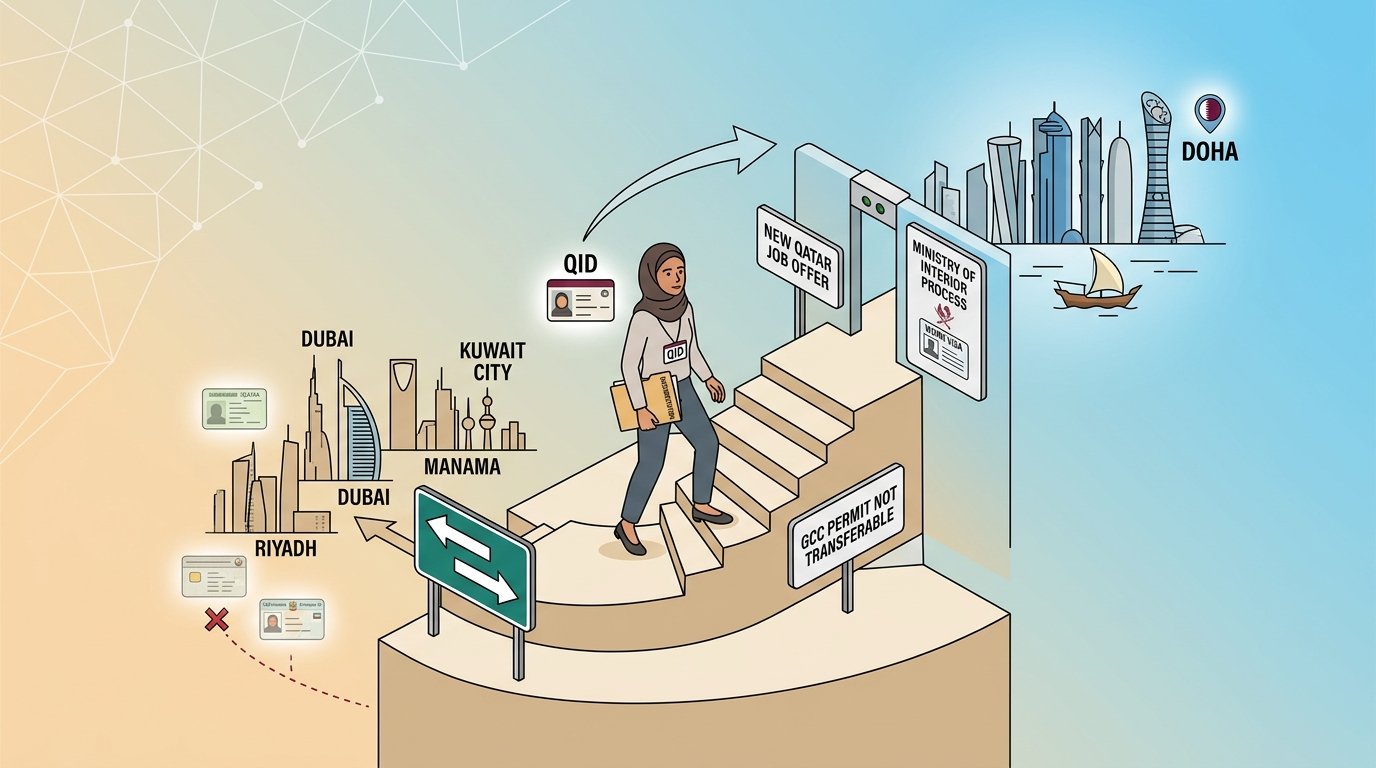
You cannot legally work in Qatar on a tourist or visitor entry. The standard route is to secure a signed employment contract first. Your employer then sponsors your work visa and residence permit process.
Step by Step: From Contract to Qatar ID
1. Sign Your Contract
Confirm your salary, housing, flights, medical insurance, probation period, working hours, teaching load, school calendar and start date before signing.
Your employer becomes your sponsor for the work and residence process.
2. Prepare and Attest Your Documents
You will usually need attested copies of your degree and teaching qualification. Depending on the role, you may also need transcripts, a police clearance certificate, employment references and a medical check.
Start this early. Attestation can take weeks.
3. Employer Arranges the Work Entry Process
Your employer applies for the relevant work entry or visa process. In some cases, pre-arrival checks may be completed before travelling.
4. Complete the Medical Examination
After arrival, you will normally complete a medical examination as part of the residence permit process. This may include blood tests and a chest X-ray.
5. Complete Fingerprints or Biometrics
Fingerprinting or biometric registration is part of the residence process for expatriates.
6. Receive Your Qatar ID
Once approved, your residence permit is issued through your Qatar ID. The validity depends on your employer, contract and sponsor arrangements. For many employees, residence permits are commonly issued for one to three years, depending on the channel and approval.
Once you have your Qatar ID, you can set up more of your life in Qatar, including opening a bank account, getting a local SIM and arranging other services.
Keep digital and physical copies of every attested document. You may need them again for renewals, job changes, family sponsorship or school administration.
Where to Find Teaching Jobs in Qatar
There are several routes into a teaching job in Qatar.
Direct School Applications
Many international schools in Doha recruit months before the academic year begins. The main hiring window is often between January and April for an August or September start, although vacancies can appear year-round.
Check school career pages directly and apply with a tailored CV.
International Recruitment Platforms
Platforms and recruiters such as Teach Away, TES, Search Associates, Schrole and Edvectus often list Gulf teaching roles. They can be useful for licensed teachers looking for international school positions.
Always verify the school, salary, benefits and visa sponsorship before resigning from your current job.
Language Centres
Language centres may hire more flexibly throughout the year. These roles can suit TEFL-qualified teachers, IELTS instructors, business English teachers and those looking for a first step into the Qatar market.
Local Job Boards
Local platforms can help you find current education and teaching roles in Qatar. Browse the jobs section on Qatar Living to find teaching, tutoring and education vacancies posted by Doha employers.
Tips for Landing a Teaching Role in Doha
Get your documents attested early. Schools cannot usually move forward with visa processing until your documents are in order.
Put your qualifications at the top of your CV. Include your degree, teaching licence, TEFL or TESOL hours, curriculum experience and years of classroom experience clearly.
Apply in the right season. For schools, start several months before the new academic year.
Compare the full package, not just the salary. Housing, flights, medical cover, dependants’ benefits and gratuity can change the value of the offer.
Ask about workload. Teaching hours, planning time, class sizes, supervision duties and admin expectations vary widely.
Check the employer carefully. Make sure the job offer, visa sponsorship and contract terms are clear before relocating.
Ready to make the move? Browse the latest teaching and education roles in the jobs section on Qatar Living and apply directly to employers in Doha.
FAQs
Do I Need a Teaching Licence to Teach English in Qatar?
For school roles, a teaching licence, PGCE, PGDE, B.Ed or equivalent qualification is usually preferred and often required. For language centres, a bachelor’s degree plus a recognised TEFL, TESOL, CELTA or CertTESOL qualification may be enough, depending on the employer.
How Much Do English Teachers Earn in Qatar?
English-teaching salaries vary widely. Language centre roles may sit around QAR 6,000 to QAR 14,000 per month, while licensed school teachers often earn around QAR 10,000 to QAR 18,000 or more, depending on experience, school type and benefits.
Is Teaching Salary in Qatar Tax-Free?
Qatar does not impose personal income tax on employed individuals’ salaries, wages and allowances. However, teachers should still check tax obligations in their home country if applicable.
Can I Come to Qatar and Look for a Teaching Job on Arrival?
You should not work on a tourist or visitor entry. The standard and safest route is to secure a job offer first, then let the employer sponsor your work visa and residence permit process.
What Documents Do I Need to Attest?
You will usually need to attest your degree and teaching qualification. Depending on the employer and role, you may also need transcripts, a police clearance certificate, previous employment letters and other supporting documents.
How Long Does the Residence Permit Last?
The validity depends on the employer, contract and sponsor process. Many employee residence permits are issued for one to three years, depending on the approval channel and employer arrangements.
--
About Qatar Living:
Since 2005, Qatar Living has been the trusted destination for everything Qatar. As the country's largest online community and marketplace, Qatar Living connects people with opportunities through jobs, property, vehicles, services, classifieds, events, local insights, and breaking news. Trusted by residents, newcomers, visitors, and businesses alike, Qatar Living brings Qatar together in one place.
Instagram - @qatarliving
X - @qatarliving
Facebook - Qatar Living
YouTube - qatarlivingofficial
Up Next

Labour Sponsorship vs Free Zone Work in Qatar
Labour sponsorship vs free zone work in Qatar explained: who sponsors your QID, visa validity, fees and worker rights. A clear expat guide.
Jul 22,2026
Switching Jobs in Qatar: No NOC Needed to Transfer
Switching jobs in Qatar? No NOC needed. Learn notice periods, visa transfer steps, the 90-day grace period and the Ministry of Labour process.
Jul 22,2026
Freelance & Remote Work Visa in Qatar: 2026 Status
Is there a freelance or remote work visa in Qatar in 2026? Here's the real legal status, the Mustaqel self-sponsorship route, costs and how to stay legal.
Jul 21,2026
Job Interview Tips for Qatar: Cultural Expectations
Discover essential job interview tips for Qatar, including cultural expectations, dress code, etiquette, and how to impress employers in 2026.
Jul 21,2026