Labour Sponsorship vs Free Zone Work in Qatar

Last updated: June 2026
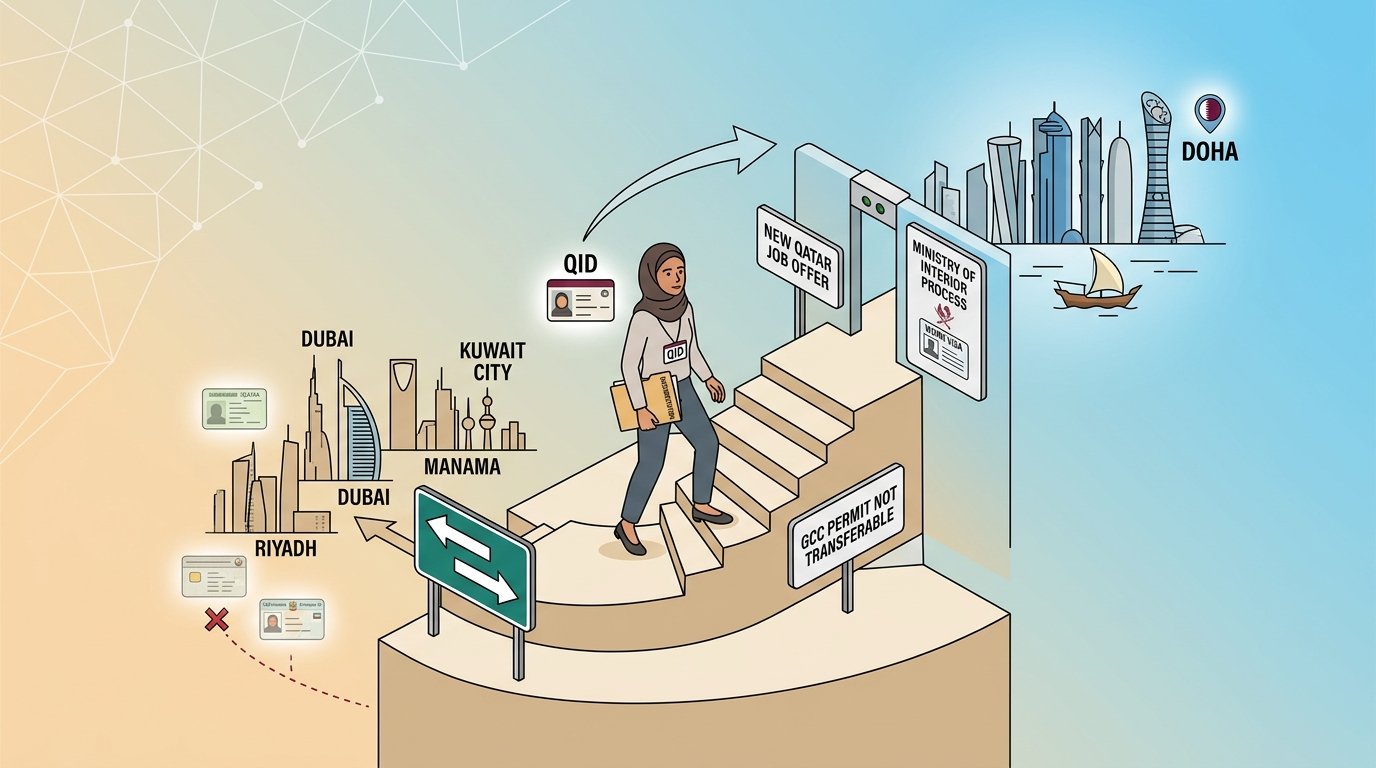
Landed a job offer in Doha and noticed the paperwork mentions a "free zone" employer instead of a regular company sponsor? Here's the short answer: for your day-to-day rights, entry visa and QID, the two routes are far more similar than they look. Understanding labour sponsorship vs free zone work in Qatar: key differences explained comes down to three things — who holds your sponsorship, which authority approves your work permit, and the internal rules that govern your employment. This guide walks you through exactly what you're signing up for.
The quick answer: what actually changes for you
Both routes lead to a legal job, a work residence permit and a Qatar ID (QID) issued by the Ministry of Interior. The real distinctions are:
- Your sponsor — an onshore Qatari-registered company versus a company licensed inside a free zone.
- The approving authority — the Ministry of Labour for onshore roles versus a free zone authority for zone-based roles.
- The internal employment rules — standard Qatar Labour Law onshore versus zone-specific employment regulations in the free zones.
Immigration itself — the entry visa, medical, biometrics and QID — runs through the same national system for everyone. So a nurse in West Bay and an engineer at Ras Bufontas walk into the same Medical Commission and end up holding the same style of QID card.
What is labour sponsorship (onshore) in Qatar?
This is the classic setup that covers the vast majority of expats in Doha. You're sponsored by a company (or in some cases an individual) registered in the State of Qatar commercial registry that holds a labour quota approved by the Ministry of Labour. Your employment relationship is governed mainly by Qatar Labour Law No. 14 of 2004, while immigration and residency are handled by the Ministry of Interior.
In practice, this covers people working for banks, hospitals, hotels, construction firms, schools, retail chains and the thousands of small and medium businesses across Doha, Al Wakra, Al Khor and beyond. Work permits are issued through the Ministry of Labour's electronic systems, and your QID and entry visa are processed by the MOI.
What is free zone work in Qatar?
Qatar's free zones — most notably the areas around Ras Bufontas (near Hamad International Airport) and Umm Alhoul (near Hamad Port) — are business districts run by their own regulatory authority. Companies set up there for logistics, aviation, technology, manufacturing and emerging industries.
If a free zone entity hires you, your sponsorship sits with that company under the zone authority's system rather than through the standard Ministry of Labour quota channel, and your employment terms may follow zone-specific employment regulations instead of the standard onshore Labour Law. But here's the key point most people miss: your entry visa and QID are still processed under national immigration law through the MOI. The card in your wallet looks exactly the same.
Who is your sponsor on the QID?
Onshore
Your QID names the commercial company or individual sponsor that holds a labour quota with the Ministry of Labour. If you change jobs, the new employer takes over sponsorship through the standard transfer process.
Free zone
Your QID lists the free zone company that sponsors you via the zone authority's quota system rather than the Ministry of Labour. Even so, the card itself is issued by the Ministry of Interior as a state residence permit — identical in status to any other resident's QID.
Work visa and residence permit validity
Because immigration law is unified across Qatar, the visa and residency timelines are effectively the same whether you're onshore or in a free zone:
- Work visa entry permit — typically a single-entry permit valid for around 30 days from issuance, giving you a window to enter Qatar and begin the QID process. Validity can vary by visa type, so check the dates printed on your permit.
- Work Residence Permit (QID) — commonly issued with a 2-year validity, renewable while your employment continues.
Free zone employers use this same entry-visa and QID scheme; the only real difference is the internal approval channel (the free zone authority versus the Ministry of Labour) before your file reaches the MOI.
Government fees — and who pays them
Under Qatar's labour framework, the employer must bear all government fees for your work visa, residence permit, medical exam and renewals. As a worker, you should not be paying these out of pocket, and you should be wary of any "agent" asking you to. This applies to both onshore and free zone employers.
Typical government fee ranges seen across both routes in 2025–2026 are:
- Entry work visa — typically around QAR 200 (single-entry, roughly 30-day validity).
- Conversion to Work Residence Permit (QID) — typically around QAR 500.
- Annual work permit fee — reported to be around QAR 100 under the standardised fee structure.
On top of these you'll go through a mandatory medical examination and biometrics as part of the QID process — again, employer-funded. If an offer expects you to reimburse these, that's a red flag worth questioning before you sign.
Your rights and protections either way
Whether you're onshore or in a free zone, you're entitled to a written contract, timely wage payment (protected through the Wage Protection System), end-of-service benefits, and legal recourse if things go wrong. Onshore employment falls squarely under Qatar Labour Law No. 14 of 2004; free zone roles may follow zone-specific regulations, so read your contract closely to understand notice periods, leave and gratuity calculations for your specific zone.
Regardless of route, keep copies of your signed contract, offer letter and QID, and remember you can raise disputes through the official labour channels. Ready to start looking? Browse the latest jobs in Qatar on Qatar Living.
Which one is better for you?
Neither route is universally "better" — it depends on the role and the company. Choose based on the job, not the label, because the free zone versus onshore distinction rarely changes your visa or QID experience day to day.
Where it does matter is the fine print. Read the employment regulations that apply to your role, and confirm gratuity, notice and leave before signing, since free zone roles can carry different internal terms. Either way, check who your sponsor is and make sure all government fees are employer-paid — that holds true in both cases.
Free zones are often attractive to multinationals in logistics, aviation and tech, so the opportunity may simply reflect the industry you're entering. What matters most is a clear, fair contract and a legitimate, licensed employer.
FAQs
Is a free zone QID different from a regular QID? No. It's the same state residence permit issued by the Ministry of Interior. The difference is which company sponsors you and through which authority the approval was routed.
Can I transfer between a free zone job and an onshore job? Job changes are possible, but because the sponsoring authority differs, the transfer process may involve extra steps and approvals. Confirm the specifics with your new employer's HR or PRO before resigning.
Should I ever pay for my own work visa or QID? No. In Qatar, the employer is required to cover all government fees for the work visa, residence permit and medical exam, whether onshore or in a free zone. Treat requests to pay as a warning sign.
How long is my work entry visa valid? A work entry visa is typically single-entry with around 30 days' validity from issuance, giving you time to enter Qatar and start your QID processing. Validity can vary by visa type, so always check the dates on your own permit.
Which law protects free zone employees? Free zone roles may follow zone-specific employment regulations rather than the standard Qatar Labour Law No. 14 of 2004, while national immigration law still governs your visa and QID. Always read your contract to see which terms apply.
Do free zone salaries go through the Wage Protection System? Employees should receive contracted wages through recognised, traceable channels. If in doubt, clarify how and when you'll be paid before accepting an offer.
--
About Qatar Living:
Since 2005, Qatar Living has been the trusted destination for everything Qatar. As the country's largest online community and marketplace, Qatar Living connects people with opportunities through jobs, property, vehicles, services, classifieds, events, local insights, and breaking news. Trusted by residents, newcomers, visitors, and businesses alike, Qatar Living brings Qatar together in one place.
Instagram - @qatarliving
X - @qatarliving
Facebook - Qatar Living
YouTube - qatarlivingofficial
Up Next

Switching Jobs in Qatar: No NOC Needed to Transfer
Switching jobs in Qatar? No NOC needed. Learn notice periods, visa transfer steps, the 90-day grace period and the Ministry of Labour process.
Jul 22,2026
Freelance & Remote Work Visa in Qatar: 2026 Status
Is there a freelance or remote work visa in Qatar in 2026? Here's the real legal status, the Mustaqel self-sponsorship route, costs and how to stay legal.
Jul 21,2026
Job Interview Tips for Qatar: Cultural Expectations
Discover essential job interview tips for Qatar, including cultural expectations, dress code, etiquette, and how to impress employers in 2026.
Jul 21,2026
Career Progression for Expats in Qatar: Timelines
Career progression for expats in Qatar: realistic timelines, salary bands from entry to senior, job-change rules, and how to climb faster in Doha.
Jul 20,2026